
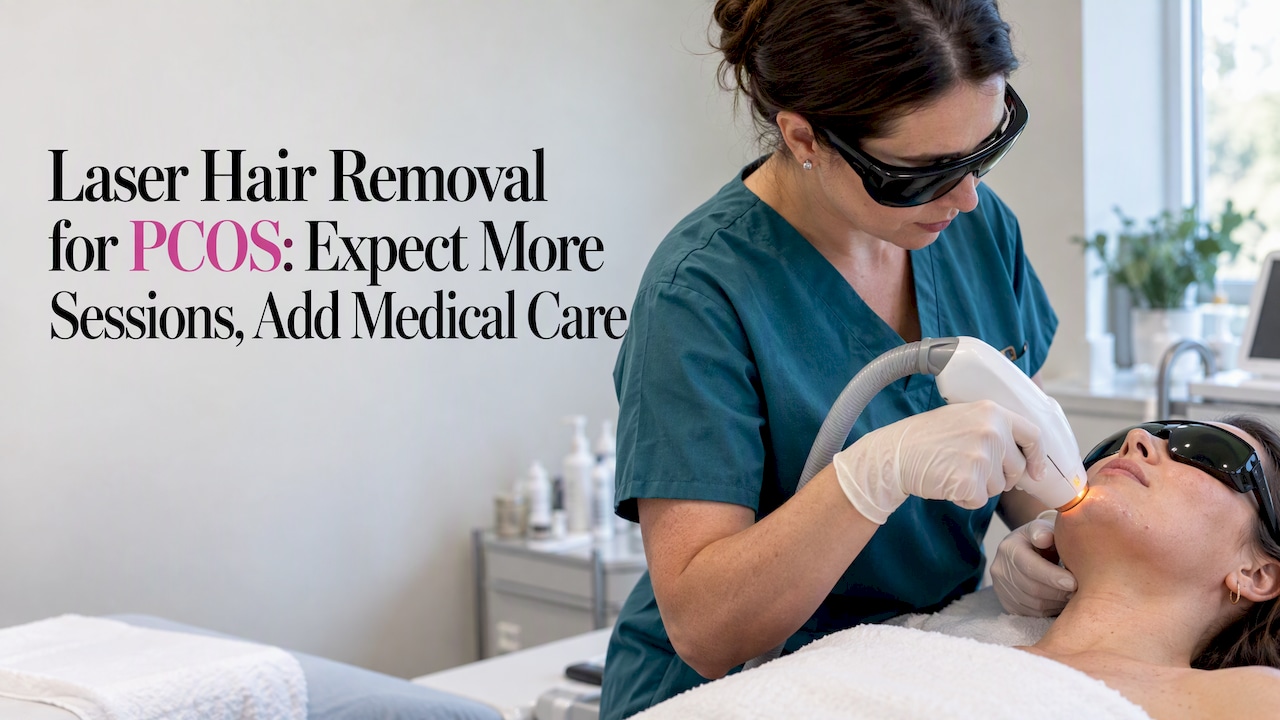

Laser hair removal reduces PCOS-related hirsutism and can meaningfully improve quality of life, but it usually takes more sessions than hair growth that is not hormone-driven, and the results tend to last longer when paired with medical treatment. If you have polycystic ovary syndrome, think of laser as one part of a longer plan rather than a one-time fix.
TL;DR:
- A split face trial found six alexandrite treatments yielded a median interval of seven weeks without visible hair, versus two weeks with intense pulsed light.
- Dark, coarse hair responds best; blond, gray, or white hair responds poorly, and Nd:YAG is generally preferred for darker skin tones.
- Facial treatment often needs a longer initial series and maintenance visits months apart, so ask for a yearlong schedule and cost estimate.
- Combining laser with metformin or combined oral contraceptives improved outcomes in some studies; coordinate treatment timing because hormonal medicines can take months to affect regrowth.
- Choose a qualified clinician who checks skin type and medications, and request a test spot; incorrect settings can cause burns or lasting pigment changes.
Table of Contents
- What the clinical evidence says about laser hair removal for PCOS
- How laser hair removal works and who is a good candidate
- What to expect: sessions, spacing, and maintenance with PCOS
- Staying safe: side effects and how to reduce your risk
- How to choose a provider: questions worth asking at your consultation
- Why combining laser with medical therapy often works better
- Our perspective on treating PCOS-related hair growth
- Ready to start your laser hair removal consultation
- FAQ
- Sources
What the clinical evidence says about laser hair removal for PCOS
The strongest guidance on this question comes from the 2023 International Evidence-based Guideline for the Assessment and Management of Polycystic Ovary Syndrome, developed by international PCOS researchers and endorsed by groups including ASRM and Monash University. It recommends that mechanical laser and light therapies be considered for facial hirsutism, noting that these treatments can improve quality of life. The guideline also makes an important point for anyone with PCOS: you may need more laser sessions than someone whose excess hair is not hormone-driven.
A systematic review published in JAMA Dermatology looked specifically at laser and light-based therapies in women with PCOS and found they reduced hirsutism severity and improved psychological well-being across the studies reviewed. The review found that alexandrite lasers often produced larger reductions than intense pulsed light, though the authors cautioned that many of the underlying studies were small and used different methods, which makes it harder to draw one universal conclusion about durability.
A few practical takeaways follow from this evidence:
- Expect a real reduction in visible terminal hair, not complete elimination.
- Durability varies by person, device, and how well any underlying hormone imbalance is managed.
- Quality-of-life improvements show up consistently across trials, even when hair-count reductions vary.
A randomized split-face study found that after six treatments, women with PCOS treated with an alexandrite laser had a median hair-free interval of 7 weeks compared with 2 weeks for intense pulsed light, with a 52% hair-count reduction versus 21% at one month. That gap illustrates why device choice matters for someone managing hormone-driven regrowth.
How laser hair removal works and who is a good candidate
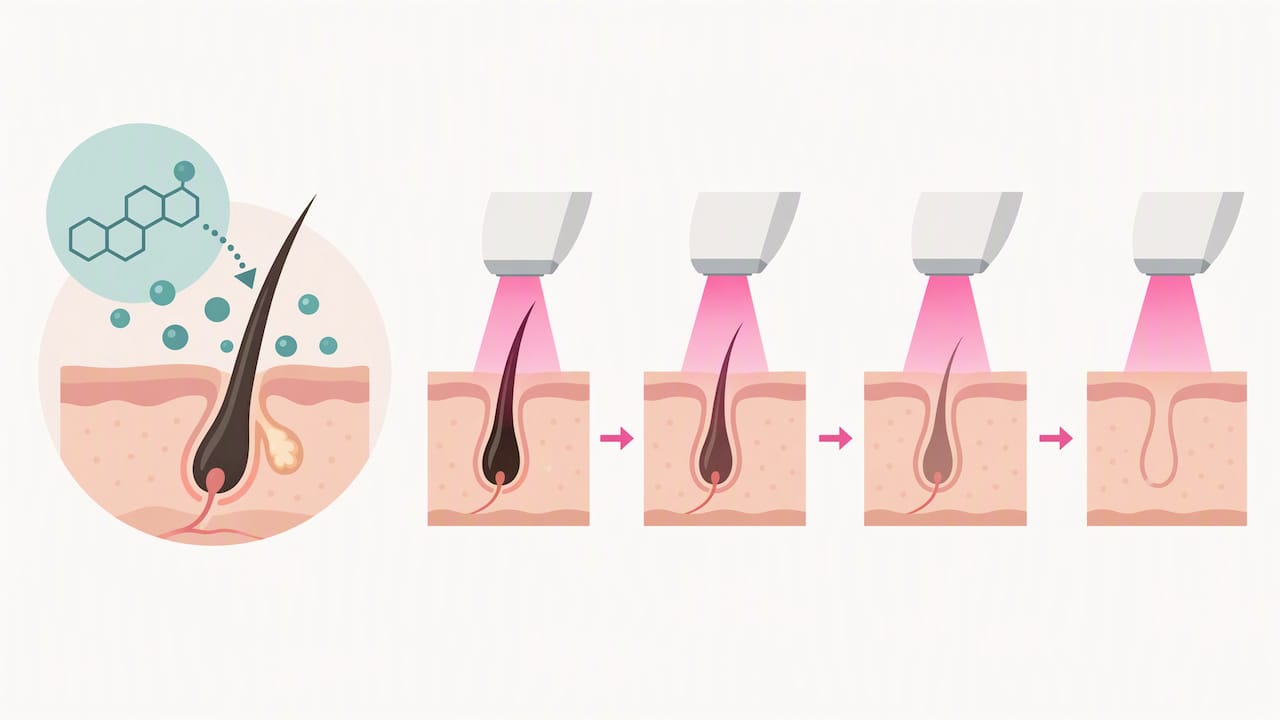
Laser hair removal works through selective photothermolysis: the device targets pigment (melanin) in the hair follicle, heats it, and damages the follicle’s ability to produce new hair. This is why the treatment responds to color contrast between hair and skin rather than hair texture alone.
That mechanism shapes who gets the best results:
- Dark, coarse terminal hairs absorb laser energy efficiently and respond best.
- Blond, gray, or white hair contains little melanin, so lasers are far less effective on it, and electrolysis is often recommended instead.
- Skin tone affects device selection: lighter to medium skin tones are typically treated with alexandrite or diode lasers, while Nd:YAG lasers are generally preferred for darker skin tones to reduce the risk of pigment changes.
- Fine vellus hair (the soft, barely visible hair many people have) usually does not respond as well as thicker terminal hair, which is the type PCOS tends to produce in androgen-sensitive areas like the chin, jawline, and upper lip.
Pro Tip: Ask your provider for a test spot on a small area before committing to a full treatment course, especially if you have darker skin or have never had laser hair removal before.
What to expect: sessions, spacing, and maintenance with PCOS
Because PCOS involves ongoing androgen stimulation, hair follicles can keep converting from fine vellus hair into coarse terminal hair even after a treatment course. That is the main reason the international PCOS guideline flags the need for more sessions in this population compared with people whose hirsutism is not hormone-related.
A realistic course generally looks like this:
- Facial areas often require a longer initial series, since terminal hair here is more androgen-responsive, with periodic maintenance sessions afterward.
- Body areas, such as the chest or lower abdomen, sometimes need fewer sessions or different spacing depending on hair density.
- Sessions are spaced to match the hair’s growth cycle, generally every few weeks for the face and longer for body areas, so the laser catches follicles in their active growth phase.
- Maintenance visits, spaced months apart, are common for PCOS patients even after the initial series is complete.
When budgeting time and cost, build in room for maintenance rather than treating the initial series as the finish line. Ask your provider to map out a full-year plan at your first visit so there are no surprises.
Staying safe: side effects and how to reduce your risk
Laser hair removal is generally well tolerated, but it is a medical procedure that carries some risk if performed incorrectly. According to the American Academy of Dermatology, common effects include temporary redness and swelling around treated follicles, while rarer but more serious risks include burns, blistering, and changes in skin pigment, particularly when the wrong device or settings are used for a given skin tone.
A short checklist before and after treatment helps minimize these risks:
- Avoid sun exposure and tanning for several weeks before and after sessions.
- Tell your provider about all medications and skin conditions, since some increase photosensitivity.
- Request a test spot if you have a new device, a new provider, or sensitive skin.
- Apply sunscreen to treated areas as part of your regular routine.
The American Academy of Dermatology recommends that laser hair removal be performed by a qualified clinician specifically because incorrect technique raises the risk of burns, scarring, and permanent pigment changes. Choosing an experienced provider who evaluates your skin type before treatment is one of the simplest ways to protect against these outcomes.
How to choose a provider: questions worth asking at your consultation
Picking the right clinic matters as much as picking the right device. Use your consultation to get clear answers on these points:
- Ask who provides medical oversight and whether the practice has specific experience treating PCOS patients, since hormone-driven hair behaves differently than typical hirsutism.
- Ask which laser or light device they plan to use on you and why, given your hair color and Fitzpatrick skin type.
- Ask how many sessions they typically recommend for someone with PCOS, what maintenance looks like, what it costs, and whether they can show before-and-after photos from similar cases.
- Watch for red flags: a provider who skips a patch test, promises permanent results after one session, or does not ask about your medical history or current medications.
Pro Tip: Bring a list of your current medications and any hormonal treatments to your consultation so your provider can flag anything that affects photosensitivity or treatment timing.
Why combining laser with medical therapy often works better
Laser treats the hair that is already there. It does not address the androgen excess that keeps producing new terminal hair in PCOS, which is why many clinicians and guideline authors recommend pairing laser with systemic treatment.
- The JAMA Dermatology systematic review found that combining laser with metformin or combined oral contraceptives produced better outcomes in some studies than laser alone.
- Androgen-suppressing medications work by reducing the hormonal signal that converts vellus hair into terminal hair, which can make laser results last longer and reduce how many maintenance sessions you eventually need.
- Because these medications can take months to affect hair regrowth, coordinating timelines between your prescriber (a primary care physician, OB-GYN, or dermatologist) and your laser provider helps set realistic expectations for when you will see the combined benefit.
Treating laser and medical therapy as two parts of the same plan, rather than separate decisions, tends to produce more stable, longer-lasting results.
Our perspective on treating PCOS-related hair growth
We approach PCOS-related hair removal as a longer conversation, not a single appointment. Every free consultation starts with a personalized treatment plan built around your hair type, skin tone, and history, drawing on experience from many treatments performed. Where hormonal care is part of the picture, we encourage coordinating with your physician alongside your laser plan.
— Chris
Ready to start your laser hair removal consultation
If PCOS has made unwanted facial or body hair a recurring frustration, a personalized plan can make the difference between temporary results and a routine you can maintain. At Sudbury Med Spa, we build every laser hair removal plan around your hair type, skin tone, and treatment history, starting with a free consultation to map out realistic session counts and costs before you commit to anything.

A few ways we make ongoing treatment more manageable:
- Free consultations to assess your eligibility and set expectations before your first session.
- Financing options for those planning a longer treatment course.
- SILVER, GOLD, and PLATINUM memberships that can make repeat maintenance sessions more affordable over time.
Book a consultation with our team to talk through your options and get a plan tailored to how PCOS has affected your hair growth.
This article is general information, not a substitute for advice from a qualified doctor. Consult a qualified healthcare professional about your own circumstances before acting on anything here.
FAQ
Does insurance cover laser hair removal for PCOS?
Laser hair removal for cosmetic hirsutism, including PCOS-related hair growth, is generally considered an elective cosmetic procedure and is typically not covered by health insurance. Coverage policies vary by insurer, so it is worth checking directly with your plan if you believe your case may qualify for an exception.
Is it better to shave or pluck PCOS facial hair?
Shaving is generally gentler on the skin and does not affect the hair follicle in a way that interferes with future laser treatment, while plucking or waxing removes the hair from the root and can temporarily make you ineligible for laser sessions since the laser needs a hair shaft present to target. If you are considering laser hair removal, shaving between sessions is usually the safer interim option.
What disqualifies you from laser hair removal?
Very light blond, gray, or white hair generally does not respond well to laser because the treatment depends on pigment in the hair to absorb the laser energy. Certain medications that increase photosensitivity, active skin infections in the treatment area, or a recent suntan can also mean your provider recommends waiting before treatment.
How do doctors treat PCOS-related hirsutism overall?
Clinical guidance supports a multimodal approach that combines physical hair removal methods like laser with androgen-suppressing medical therapy, such as combined oral contraceptives or anti-androgens, since medication addresses the hormonal cause while laser treats existing hair. The international PCOS guideline specifically recommends considering laser and light therapies as part of this broader hirsutism management plan.
Sources
- Recommendations from the 2023 International Evidence-based Guideline for the Assessment and Management of Polycystic Ovary Syndrome
- Laser and light-based therapies for hirsutism management in women with polycystic ovarian syndrome: a systematic review
- American Academy of Dermatology — Laser hair removal FAQs


