
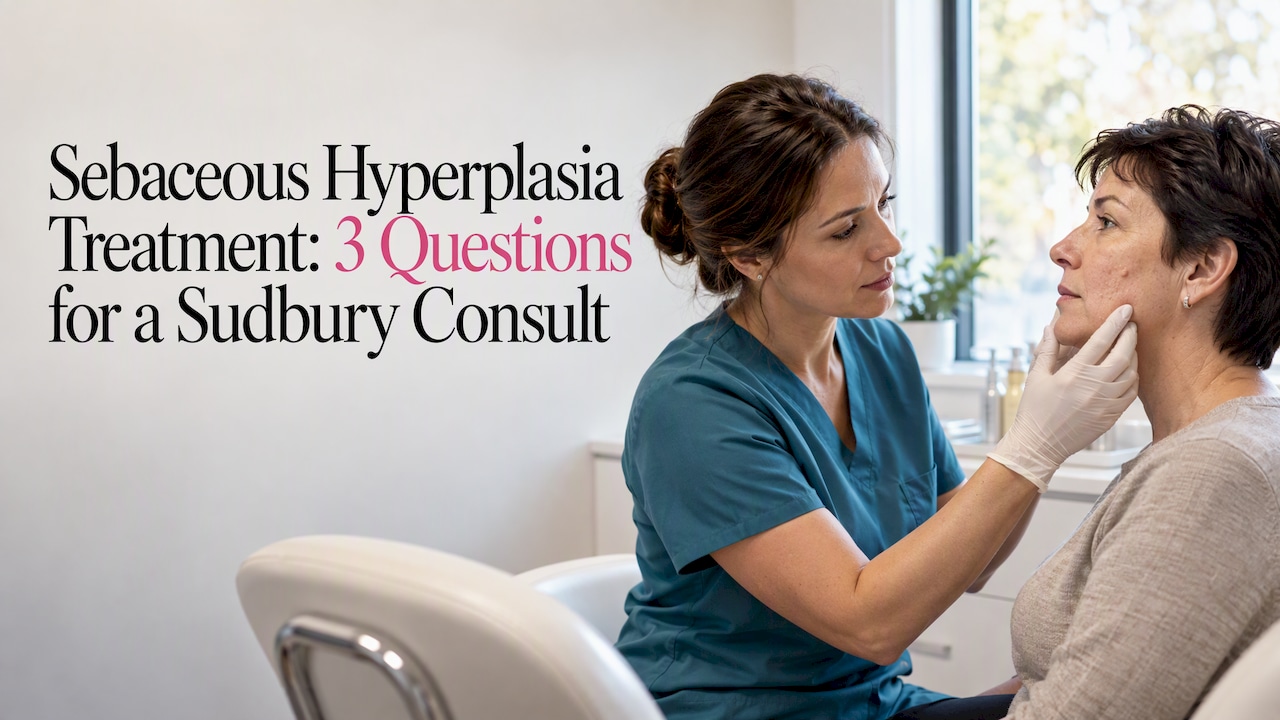

Sebaceous hyperplasia is a benign skin condition, and treatment is elective. If you want the bumps gone for cosmetic reasons, clinic procedures such as CO2 laser with curettage or electrodessication are common, effective routes. Cryotherapy, photodynamic therapy, and oral isotretinoin for extensive cases are also used. Recurrence and scarring risk vary by method.
TL;DR:
- A bump that bleeds, crusts, grows quickly, or differs from the others may need biopsy before cosmetic treatment to rule out another condition.
- A dermatologist survey found electrodessication was used by 84.5% of respondents; CO2 laser with curettage has a reported repair time of 8–15 days.
- Clinicians reserve oral isotretinoin for widespread lesions because side effects limit cosmetic use, pregnancy rules it out, and bumps can return after treatment stops.
- Darker skin types face greater risk of pigment changes after procedures that injure the surface, so discuss scarring, downtime, and regrowth before choosing.
- A small report found complete resolution in 29 of 33 lesions after one HIFU session, but larger studies are needed before routine use.
Table of Contents
- How dermatologists diagnose sebaceous hyperplasia
- When should you consider treatment?
- How do the main treatments compare?
- How do clinicians choose the right treatment?
- What does the research say about recurrence?
- Our perspective on evaluating and treating sebaceous hyperplasia
- Book a consultation at Sudbury Med Spa
- FAQ
- Sources
How dermatologists diagnose sebaceous hyperplasia
Diagnosis is usually clinical: a dermatologist looks at the lesions, often with a dermoscope, a handheld magnifier that shows the surface and blood vessel pattern. Typical bumps are small, soft, and yellowish, with a central dip, and they cluster on the forehead, nose, and cheeks. Cleveland Clinic describes them as benign and typically 1–3 mm across.
Adults over 40 and people with weakened immune systems are affected most often, according to UtahDERM. A few features should prompt a closer look:
- A lesion that bleeds, crusts, or does not heal
- A pearly bump with visible blood vessels that could mimic basal cell carcinoma
- A single lesion that looks different from the others
- Rapid growth or a change in color
In those cases, a biopsy before any cosmetic removal gives you a definite answer and protects you from treating something that needs a different approach.
When should you consider treatment?
Nothing about sebaceous hyperplasia requires removal. People choose treatment because the bumps bother them in photos or mirrors, because makeup and shaving irritate them, or because lesions have spread across a large area of the face.
Skin type matters. Darker Fitzpatrick types carry a higher risk of pigment changes after procedures that injure the skin surface, so the method you choose deserves extra thought.
Ask any clinician these three questions at a consult:
- What result can I realistically expect, and how likely is regrowth?
- How much downtime should I plan for?
- What is my scarring or dark-spot risk, given my skin type?
Pro Tip: Take clear, well-lit photos of your lesions before the consult so you and your clinician can judge progress honestly afterward.
How do the main treatments compare?
A literature review found that effectiveness depends on lesion number, cost, psychological factors, skin phototype, and age, so no single method wins for everyone. Here is how the main options stack up:
- CO2 laser with curettage: The laser ablates the gland, then curettage removes what remains. Repair time is reported as 8–15 days. It is a strong choice for definitive removal when done correctly.
- Electrodessication and shave excision with curettage: These are among the available treatment options. Scarring and pigment change risk can vary with technique and skin type.
- Cryotherapy: Sometimes used, but cosmetic results can be inconsistent and pigment changes are a concern.
- Photodynamic therapy (PDT): This is one of the available treatment options. Ask your clinician about its likely cosmetic result and scarring risk.
- Oral isotretinoin: Effective for widespread lesions, with improvement within weeks. Systemic side effects limit its use for purely cosmetic goals, and lesions can return after you stop.
- Topical trichloroacetic acid (TCA) and retinoids: Clinicians use them in controlled ways. Over-the-counter acids and do-it-yourself attempts have limited evidence and can raise the risk of scarring.
- High-frequency focused ultrasound (HIFU): A report describes results with this treatment, but more evidence is needed to establish its role.
A 20 MHz HIFU report found complete resolution in 87.9% of lesions (29 of 33) after a single session. The cohort was small, so larger studies need to confirm it before HIFU becomes a standard recommendation.
A dermatologist survey found electrodessication was used by 84.5% of respondents and seen as cost-effective with fewer sessions. Those clinicians also viewed electrodessication and CO2 as leading to less recurrence than other methods, though recurrence was still considered likely overall. Photodynamic therapy, cryotherapy, and lasers beyond CO2 are covered in the StatPearls review, which groups outcomes by cosmetic result and scarring risk.
If you want to understand how laser devices work in an office setting, our page on laser treatment for acne scars explains what a laser consult and recovery look like.
How do clinicians choose the right treatment?
Clinicians weigh the same handful of factors, and knowing them makes your consult more productive. They look at how many lesions you have and where, how deep or large they are, your Fitzpatrick skin type, whether you would rather minimize downtime or scarring, medical contraindications such as pregnancy (which rules out isotretinoin), and your budget.
Combination approaches may help reduce recurrence. Ablating the gland and then curetting it is one approach intended to remove deeper tissue.
Bring this checklist to your consult:
- How many sessions will I need, and how far apart?
- What is the recovery timeline for my skin type?
- What is my realistic scarring and pigment risk?
- Do you biopsy anything unusual before treating?
- What will the full course cost, including follow-up?
What does the research say about recurrence?
The strongest procedural evidence centers on pairing CO2 laser with curettage. A published study of that combination reports a mean repair time of about 11.5 days, and describes improved clearance when the whole sebaceous unit is removed.
An isotretinoin trial dropped lesion counts from a mean of 24 per patient to 2 after two months at 1 mg/kg/day, with an average of 4 lesions two years later. Side effects were mostly expected dryness of the skin and lips, plus lipid changes in one patient.
To prevent recurrence, the entire sebaceous unit must be destroyed or excised.
A practical consideration is that the extent of tissue removal may matter when choosing a treatment.
Our perspective on evaluating and treating sebaceous hyperplasia
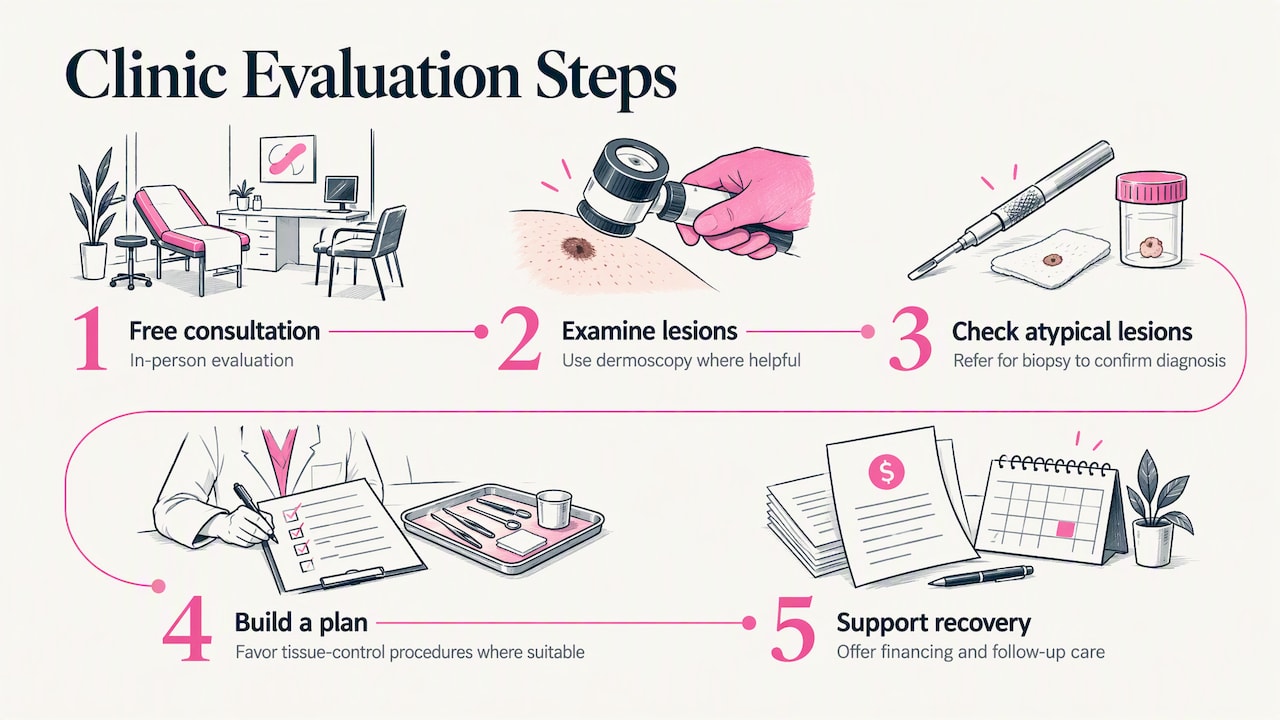
At our clinic, we start with a free consultation and an in-person evaluation. We look closely at your lesions, use dermoscopy where it helps, and refer you for a biopsy when anything looks atypical. We would rather confirm a diagnosis than guess.
From there, we build a personalized plan. Where it fits, we favor in-clinic procedures that give us tissue control, since complete removal of the gland is what keeps bumps from returning. We also offer financing and follow-up care, so recovery feels supported.
— Chris
Book a consultation at Sudbury Med Spa
A free consultation is the simplest way to confirm what your bumps are and learn which in-office options match them. We can map your lesions to the treatments above.

Options we offer include:
- Laser skin treatments, including photorejuvenation
- Morpheus8 and microneedling with PRP
- Personalized facial treatments
Financing and individualized plans make treatment easier to fit your budget. Browse everything we do on our services page and book your visit today.
FAQ
Do sebaceous hyperplasia bumps go away on their own?
Usually not. The lesions are benign and tend to persist, which is why people who dislike them choose removal. Without treatment they generally stay in place, and a clinician can confirm the diagnosis if you are unsure.
Can you remove sebaceous hyperplasia at home?
We do not recommend it. Evidence for over-the-counter acids and do-it-yourself attempts is limited, and they can increase scarring risk. DermNet describes clinic methods such as light electrocautery or laser vaporization for removing individual lesions.
Can salicylic acid treat sebaceous hyperplasia?
The sources we reviewed do not support salicylic acid as a treatment. Clinicians instead use controlled options such as topical retinoids or trichloroacetic acid, plus procedural methods. A moisturizer can keep skin comfortable but will not remove the lesions.
Is a pinhole technique ever used?
Yes. Case-level reports describe a pinhole CO2 and squeezing technique with improvement, though the sample sizes are limited. It shows that procedural variations exist, so ask your clinician which they use.


