

Sun damage on the face can be improved, though not erased. Brown spots, uneven tone, redness, rough texture and fine lines respond best to a combination: daily sun protection, a prescription or medical-grade topical, and one or more in-clinic procedures such as intense pulsed light (IPL), lasers, peels or microneedling. Which procedure fits you depends on what you see in the mirror, your skin tone and how much downtime you can accept.
This guide explains what each option does, what recovery looks like and how to plan treatment around a New England calendar.
TL;DR
- No single treatment fixes everything. Dermatologists usually combine daily sun protection, topical retinoids and in-office procedures.
- Match the tool to the problem: light-based treatments for spots and redness, resurfacing and microneedling for texture and fine lines, and a different approach for laxity.
- Expect a series, not a single visit. Gentler treatments usually take 2 to 4 or more sessions over several months, while stronger ablative lasers need 1 to 3 weeks of recovery.
- Darker skin tones need a more careful technology choice and sometimes pre-treatment, because the risk of dark patches after treatment is higher.
- Changes that look new, bleeding, crusting or a spot that is growing need a dermatologist before any cosmetic treatment.
Table of Contents
- What sun damage on the face actually is
- Match the treatment to the problem
- IPL and photorejuvenation for spots, redness and tone
- Lasers for sun damage: ablative vs. nonablative
- Chemical peels, facials and microneedling
- What you apply at home matters as much
- Darker skin tones and melasma
- When to book: why fall and winter work in Massachusetts
- Our perspective
- Planning treatment with us
- Before you treat: safety checks
- Setting realistic expectations
- FAQ
- Sources
What sun damage on the face actually is
Sun damage, or photoaging, is the cumulative result of ultraviolet exposure over years. It shows up as:
- Flat brown spots (sun spots, solar lentigines, often called age spots)
- Freckles that have multiplied or darkened
- Blotchy or uneven pigment
- Redness and small visible blood vessels
- Rough, leathery texture
- Fine lines and deeper wrinkles
The American Academy of Dermatology notes that much of the damage is permanent, but treatment can reduce some of the signs that make skin look older. That wording matters. A good provider will talk about improvement, not reversal.
There is also a medical side. Because UV damage affects the whole area of skin and not just visible spots, dermatologists think in terms of treating the whole field. The AAD’s page on actinic keratosis describes why widespread damage is treated as a field rather than spot by spot. Cosmetic work should never replace a skin check, and we come back to that below.
Match the treatment to the problem
The fastest way to waste money is to buy a treatment for the wrong concern. Here is how the main options line up.
| Main concern | Common in-clinic options | Typical pace |
|---|---|---|
| Brown spots, freckles, uneven tone | IPL, pigment-targeting lasers, chemical peels | Several sessions, gradual |
| Redness, visible vessels | IPL or vascular light treatment | Several sessions |
| Rough texture, dullness | Peels, hydrating facial treatments, microneedling | Series of visits |
| Fine lines and wrinkles | Retinoids, resurfacing lasers, microneedling, injectables | Weeks to months |
| Acne or textured scars alongside sun damage | Fractional laser, microneedling with PRP | Series of visits |
| Sagging | Radiofrequency-based treatments such as Morpheus 8 | Series, results build over time |
The AAD summarizes the split this way: retinoids and lasers for wrinkles, IPL and chemical peels for age spots and pigmentation, and ultrasound or radiofrequency for skin laxity. Use that as a starting map, then let an exam confirm it.
IPL and photorejuvenation for spots, redness and tone
IPL is the workhorse for sun-related discoloration on the face. It delivers broad-spectrum light that is absorbed by pigment and by blood vessels, so one treatment can address brown spots and redness together. The University of Florida’s dermatology department lists IPL first among its options for diffuse photodamage on the face, neck or chest.
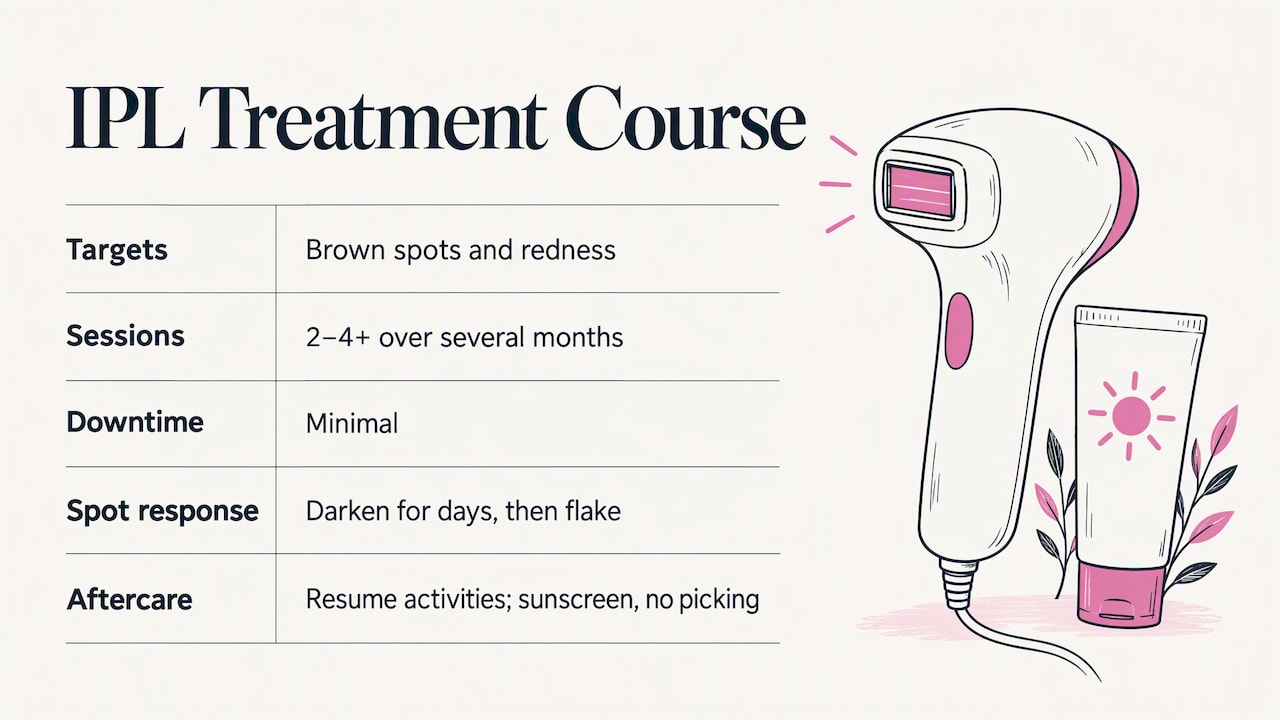
Because IPL is nonablative, it does not remove the top layer of skin. That means minimal downtime, but results are progressive. The same UF source describes nonablative treatments as needing multiple sessions, generally 2 to 4 or more, spread over several months.
What to expect after a session: treated spots often look darker for a few days, then flake off. Skin may be pink for a short time. You return to normal activities, with sunscreen and without picking.
We offer IPL treatment and photorejuvenation at our Sudbury clinic, and you can see our IPL treatments page for how sessions are structured. If your main complaint is freckles, our guide to laser freckle removal explains when one session is enough and when you need more.
Lasers for sun damage: ablative vs. nonablative
When people search for a laser for sun damage, they are really choosing between two families.
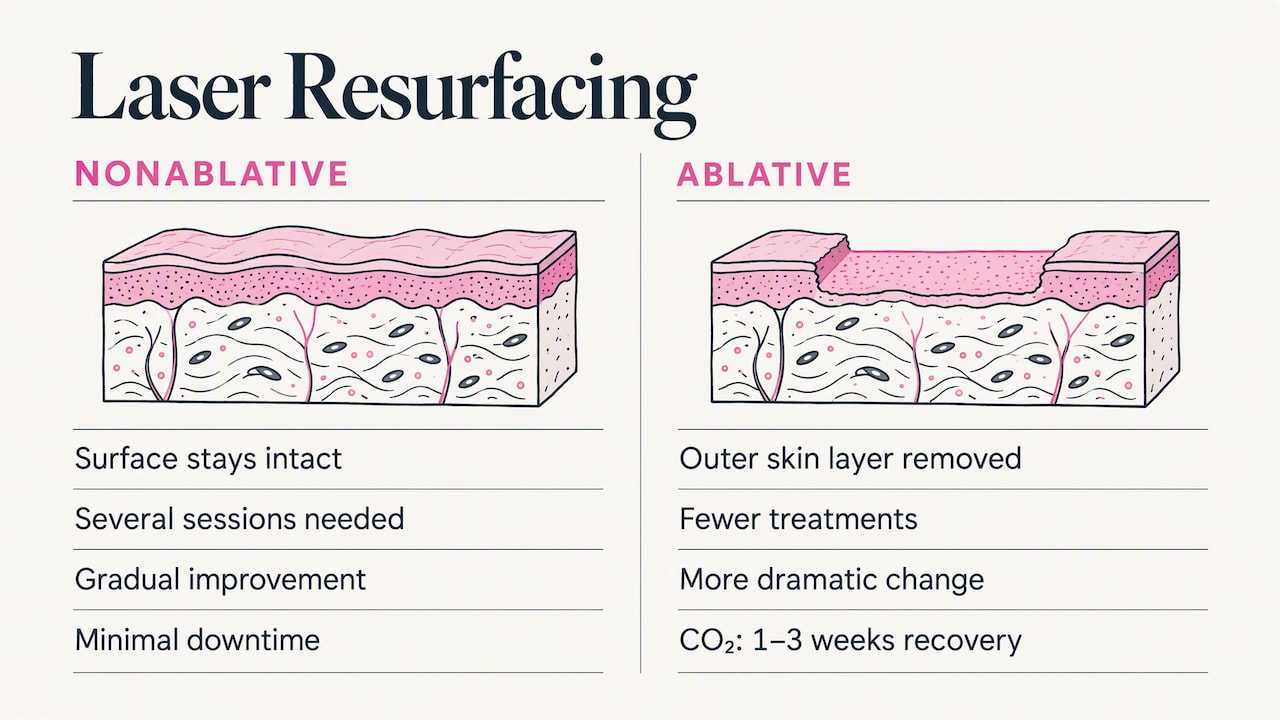
Nonablative lasers heat the deeper skin while leaving the surface intact. Downtime is minimal, improvement is gradual, and you need several sessions.
Ablative lasers, such as CO2 resurfacing, remove the outer layer. According to the UF dermatology page, CO2 resurfacing has a recovery of 1 to 3 weeks, with results that can last 3 to 5 years. The tradeoff is real: you get more dramatic change from fewer treatments, but you will look raw and then pink before you look better.
The Mayo Clinic describes laser resurfacing as an energy-based procedure usually used for fine lines, age spots and uneven skin color on the face, and it adds that it cannot fix sagging skin. That last point is worth remembering if lax skin is your biggest issue.
A practical rule: if you can take a couple of weeks away from social and work obligations and have deeper damage, ask about resurfacing. If you want to keep your routine, a nonablative series is usually the more realistic path.
Chemical peels, facials and microneedling
Not every case needs a laser. For early photoaging, dullness and mild unevenness, peels and medical-grade facials can do a lot at lower cost and with little downtime.
- Chemical peels exfoliate damaged surface cells and can lighten pigment. Depth ranges from light to deep, and so does recovery.
- Hydrafacial and personalized facials cleanse, exfoliate and hydrate. They are maintenance and glow treatments, not a substitute for treating deep pigment.
- Microneedling, especially with platelet-rich plasma (PRP), stimulates collagen and helps texture and fine lines. The AAD lists microneedling among the procedures dermatologists combine for sun-damaged skin.
Our facial treatment page covers Hydrafacial and personalized facials, and microneedling with PRP and Morpheus 8 are described on our skin treatments page. For background on the PRP part, see our PRP injections page. If sun damage has left textured scars from past acne, laser treatment for acne scars may belong in the plan.
What you apply at home matters as much
Procedures get the attention, but the AAD’s guidance puts daily photoprotection at the base of every plan: a broad-spectrum sunscreen of SPF 30 or higher. Prescription retinoids such as tretinoin are the other long-standing pillar, mainly for wrinkles and texture.
Two cautions:
- Over-the-counter creams have limits. Board-certified dermatologists say these products mostly help with early signs and maintenance rather than undoing deep structural change. Do not expect a drugstore serum to do what a laser does.
- Skin-lightening products can be dangerous. The FDA warns consumers against over-the-counter lightening products with mercury or hydroquinone, citing rashes, facial swelling and permanent discoloration. The agency says over-the-counter sale of these products is illegal in the U.S.. If you want a lightening agent, ask a dermatologist about a prescription option instead of ordering one online.
Darker skin tones and melasma
If you have a deeper skin tone (Fitzpatrick types IV to VI), the risk of post-inflammatory hyperpigmentation and burns from lasers is higher. The AAD’s page on conditions lasers treat is a good place to start reading. In practice this means a provider should choose technology and settings for your skin, may use test spots, and sometimes recommends preparing the skin with topical agents before any energy-based treatment.
Melasma deserves its own warning. Those gray-brown patches on the cheeks, forehead or upper lip are triggered by sun and hormones, and the AAD says there is no single best treatment: the most effective approach usually combines sun protection with topical medication and sometimes a procedure. Heat from aggressive treatments can make melasma worse, so tell your provider if you think you have it. Think management, not cure.
When to book: why fall and winter work in Massachusetts
Light-based treatments target contrast between pigment and the surrounding skin, and a tan reduces that contrast while raising the risk of uneven results. Fall, once summer color fades, is the usual window to start a series. Winter continues that window with less sun exposure while the skin heals.
A realistic timeline for a gentle series:
- October to November: consultation, skin assessment, start of a retinoid or other topical if appropriate, first session.
- December to February: remaining sessions, spaced as your provider recommends.
- March onward: assess results, plan maintenance, and step up sunscreen habits before spring.
If you tan, use tanning beds or skip sunscreen after treatment, you undermine the whole investment. AAD experts stress that procedures are only as good as your commitment to aftercare.
Our perspective
Most people who come to us about sun damage ask for one thing, usually a laser. After a consultation, the plan is rarely one thing. Someone with freckles and redness may do best with a light-based series. Someone whose bigger complaint is fine lines and texture may need microneedling or injectables alongside it. Someone with deep wrinkles may need a conversation about resurfacing and downtime.
We built our approach around personalized plans because skin does not follow a menu. We offer free consultations so you can have your skin looked at, ask what is realistic and hear the cost before you commit. We have completed more than 15,000 treatments, and the lesson we repeat most is simple: the best result comes from the right treatment, spaced properly, with sunscreen every day.
We also tell people when a spot is not ours to treat. Anything that is changing, bleeding or not healing should see a dermatologist first.
— Chris
Planning treatment with us
At Sudbury Med Spa, you can start with a free consultation. We will review your concerns, discuss which of our treatments fit, and build a personalized plan. Financing options are available, and we publish a price booklet for reference.
If you expect to return for a series of treatments and facials, look at our annual memberships: Silver is $399 per year, Gold is $499 per year and Platinum is $599 per year. You can browse the full treatment menu or visit our homepage to book.
Before you treat: safety checks
Cosmetic treatment is the second step, not the first, in these situations:
- A spot that is new, changing, itchy, bleeding or crusting. Have a dermatologist examine it. Sun-damaged skin can hide precancerous growths, and treating over them can delay diagnosis.
- Rough, scaly patches that do not go away. These can be actinic keratoses, which are medical lesions.
- Recent tanning or sunburn. Wait until the skin has recovered and the tan has faded.
- Isotretinoin, photosensitizing medications or pregnancy. Tell your provider so the plan can be adjusted by someone qualified to do so.
Then ask any provider these questions: Which technology will you use on my skin tone? How many sessions will I likely need? What is the downtime? What happens if I get pigment changes? What do I need to do at home?
Setting realistic expectations
Here is what a good outcome typically looks like, and what it does not:
- Spots: fade over a series, and some may return with new sun exposure.
- Tone and redness: more even, but maintenance sessions may be needed.
- Texture and lines: smoother, not erased. Deep wrinkles often need injectables or resurfacing.
- Sagging: needs radiofrequency, other tightening or surgery; lasers alone do not fix it, per the Mayo Clinic.
- Longevity: results fade if sun exposure continues. Ablative results may last years, while lighter treatments need upkeep.
Photos at the start and at each visit are the most honest way to judge progress. Your eyes forget what you looked like in October.
FAQ
Can I repair sun damage on my face?
You can improve it, but you cannot fully reverse it. Treatment can reduce spots, redness, texture and some lines, while much of the underlying damage is permanent. Daily SPF 30 or higher is what keeps the improvement from being undone.
What is the best treatment for sun spots on the face?
For flat brown spots, IPL, pigment-targeting lasers and chemical peels are the usual choices, and the right one depends on your skin tone and how deep the pigment sits. Most people need more than one session. A consultation and, for any suspicious spot, a dermatologist exam come first.
How many sessions will I need?
Gentler nonablative treatments such as IPL generally take 2 to 4 or more sessions over several months, according to University of Florida dermatology. Ablative CO2 resurfacing can produce a bigger change in one treatment but needs 1 to 3 weeks of recovery.
Is the best time to treat sun damage in the fall?
Often, yes. Once a summer tan fades, light-based treatments have better contrast to work with, and winter means less sun exposure while skin heals. You still need sunscreen all year.
Can a cream fix sun-damaged skin?
A prescription retinoid and daily sunscreen help, especially for early damage and maintenance. Over-the-counter creams rarely change deep damage. Avoid over-the-counter skin-lightening products with hydroquinone or mercury, and ask a dermatologist about prescription options.
Sources
- How dermatologists treat sun-damaged skin, American Academy of Dermatology
- Actinic keratosis treatment, American Academy of Dermatology
- Skin conditions that lasers can treat, American Academy of Dermatology
- Melasma: diagnosis and treatment, American Academy of Dermatology
- Sun damage, University of Florida Department of Dermatology
- Laser resurfacing, Mayo Clinic
- FDA warns consumers of skin products containing mercury and/or hydroquinone
- Skin product safety, FDA


