
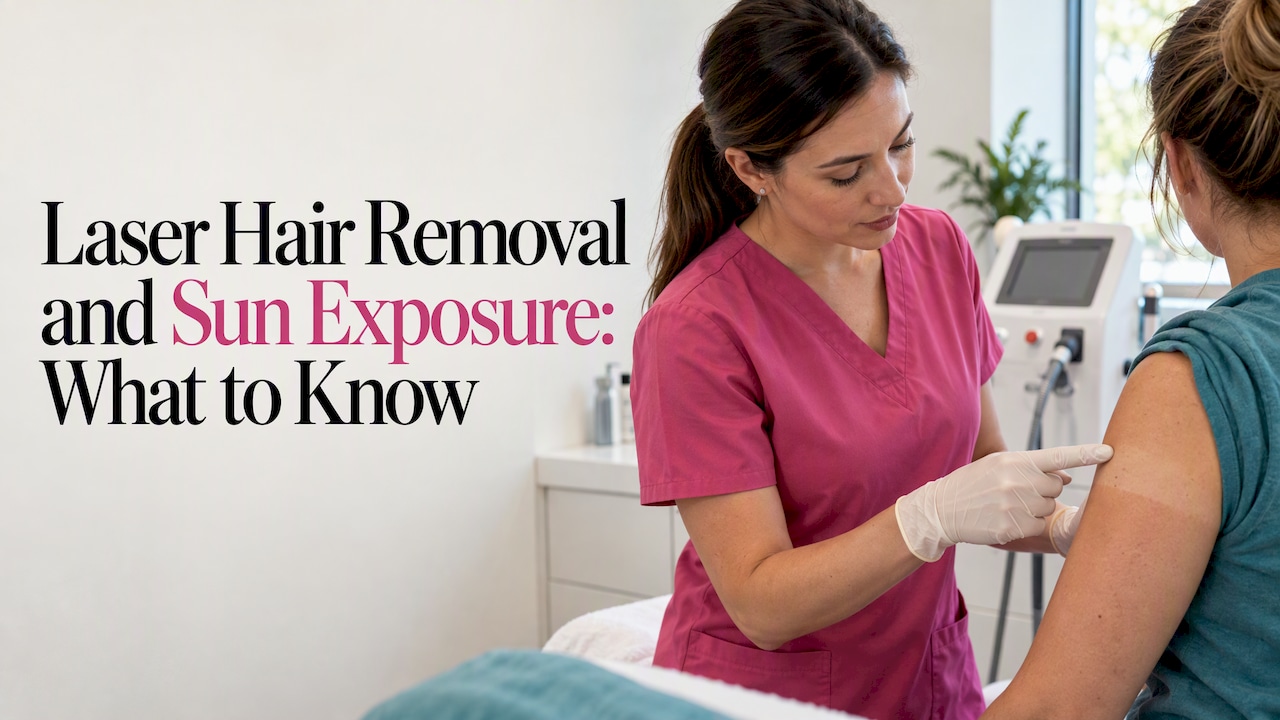

Sun and laser hair removal do not mix well. The laser looks for pigment, and a tan adds pigment to the skin around the hair. That raises your risk of burns and color changes, and it can mean your provider has to delay or turn down a session. Plan on keeping the area out of direct sun before and after every treatment, and cover it with sunscreen whenever it is exposed during your series.
Below you will find how the laser reacts to a tan, how long to stay out of the sun on each side of a session, what the research actually shows, and how to schedule treatments around a New England summer.
TL;DR
- Lasers target melanin. A tan raises the melanin in your skin, so the laser has a harder time telling hair from skin, and burns and pigment changes become more likely.
- Most clinics ask for about two weeks of sun avoidance on each side of a session. Some sources recommend as long as a month, so follow the number your own provider gives you.
- Tanning beds, sun lamps and self-tanners count as sun exposure. Tell your provider about any of them.
- Sunscreen on the treated area is a habit for the whole series, not only the first days after a session.
- Fall and winter are the easiest seasons for laser hair removal, but summer treatment works if you protect the area carefully.
Table of Contents
- Why the sun matters to a hair removal laser
- Before your session: how long to avoid the sun
- After your session: protecting treated skin
- What the research says
- Tanning, summer and picking your start date
- Why not use an at-home laser to skip the appointment?
- Our perspective
- Book with us in Sudbury
- Practical checklist
- FAQ
- Sources
Why the sun matters to a hair removal laser
Laser hair removal works by sending light into the skin that the pigment in the hair follicle absorbs. The absorbed light turns to heat and disables the follicle. The American Academy of Dermatology explains that the laser targets melanin, and that is the whole reason sun protection is part of the process.
Here is the problem with a tan. Tanned skin holds more melanin than untanned skin. The laser can no longer pick out the dark hair cleanly against its surroundings, so more energy is absorbed by the skin itself. The result can be a burn, blistering, or a patch of skin that ends up darker or lighter than before. Dermatologists call these changes hyperpigmentation and hypopigmentation.
There is a second layer. Skin that was just treated is sensitive. Exposing it to ultraviolet light while it heals is another stress on tissue that is already inflamed.
Before your session: how long to avoid the sun
The window varies by clinic, device and skin type. These are the numbers you will run into:
| Source | Before treatment | After treatment |
|---|---|---|
| Healthline | About 1 month | About 1 month |
| Typical clinic guidance | Around 1 to 2 weeks | Around 1 to 2 weeks |
The range is wide because there is no single universal rule. A person with fair skin who rarely tans is in a different position from someone with olive or brown skin that darkens quickly. Your provider will look at your skin type, the device being used and the area being treated, then give you your own timeline.
What counts as exposure before a session:
- Outdoor time with the area uncovered, including walks, golf, boating, beach days and long drives with the window down
- Tanning beds and sun lamps. The AAD tells patients not to use tanning beds, sun lamps or other indoor tanning devices after treatment, and the same logic applies beforehand
- Self-tanning lotions and sprays, which color the skin surface and can confuse the laser. Many clinics ask you to let them fade first
- Sunburn. If the area is pink, peeling or tender, the session should wait
If you did get sun, say so at the appointment. It is far better to reschedule a session than to treat tanned skin and deal with a burn.
After your session: protecting treated skin
Immediately after a session the skin may look pink or slightly swollen, a bit like a mild sunburn. This usually settles in a short time. During that stretch, the AAD advises that you keep direct sunlight off treated skin.
A practical aftercare routine:
- Cover up first. Loose clothing is better protection than any lotion. For a bikini line, underarms or legs, this is easy. For the face and neck, add a wide-brimmed hat.
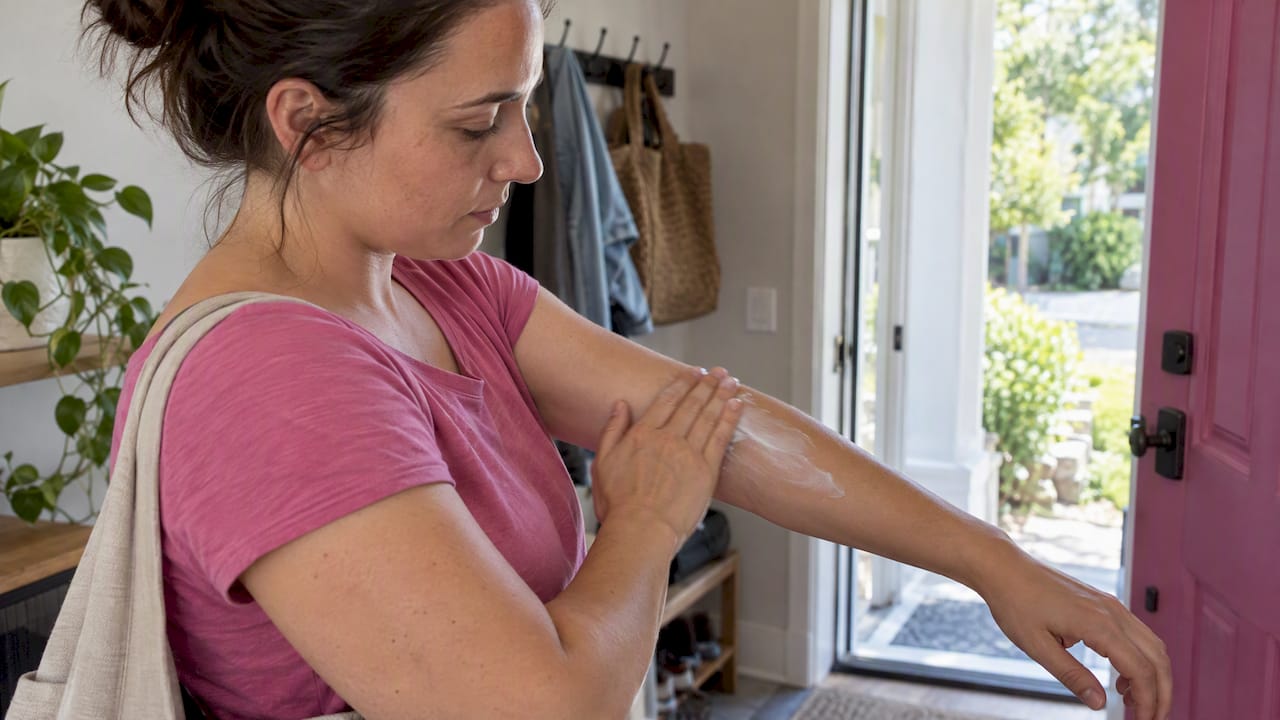
- Use sunscreen on anything exposed. Choose a broad-spectrum product and reapply when you are outdoors. Ask your provider which formula is gentle enough for freshly treated skin, since some products sting.
- Skip heat and friction for the first days. Hot tubs, saunas and intense workouts can irritate sensitive skin. A hospital aftercare sheet from Leeds Teaching Hospitals lists strenuous exercise, swimming, saunas and steam rooms among the things to avoid early on after laser treatment, and it is a sensible baseline for any laser aftercare.
- Do not pick or scrub. If you see blistering, crusting or color change, call your provider rather than waiting for your next appointment.
Sunscreen is not only for the first week. Because hair removal is a series, any tan you pick up between sessions can affect the next one. Treat sun protection on the treated area as a standing habit until you have finished your plan.
What the research says
The guidance can look stricter than the evidence in places, and it is worth knowing why.
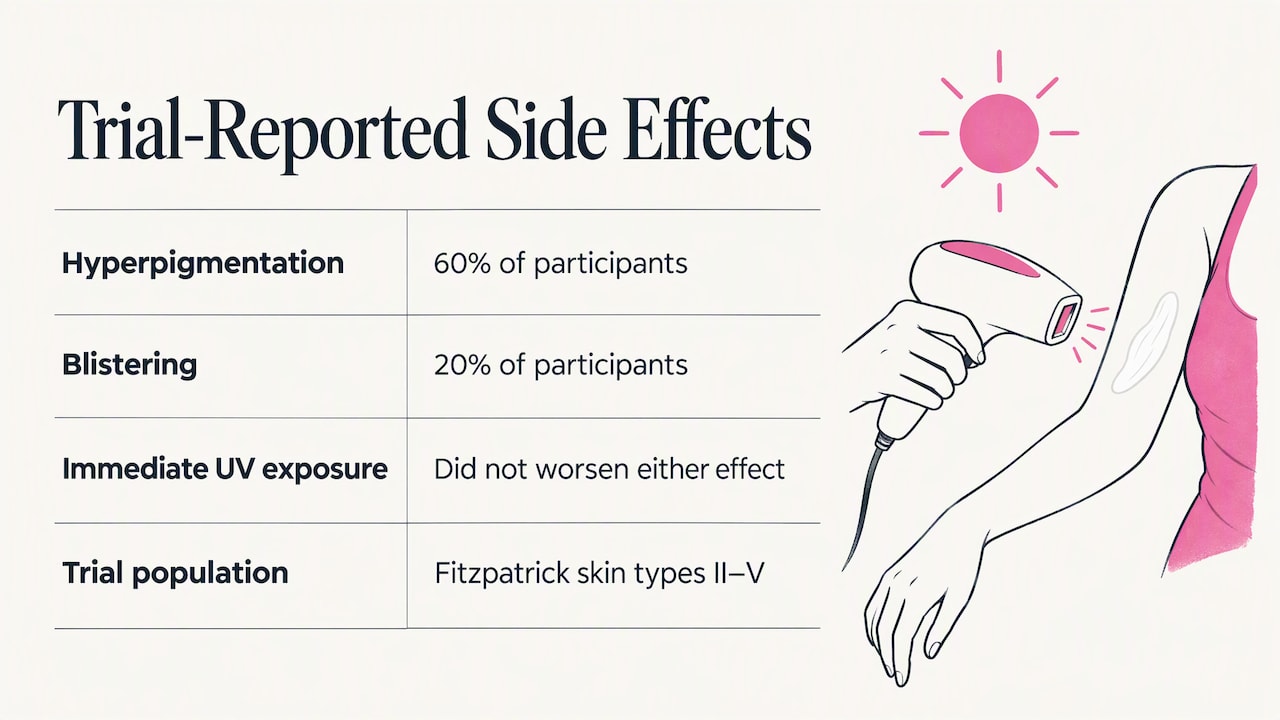
A 2017 randomized controlled trial in Lasers in Surgery and Medicine looked at side effects from intense pulsed light, a related hair removal technology. It found that skin pigmentation and the energy level (fluence) of the device were the major factors behind side effects. Hyperpigmentation showed up in 60% of participants and blistering in 20%, among people with Fitzpatrick skin types II to V. In that controlled setting, ultraviolet exposure right after treatment did not worsen those particular effects.
What should you take from that? Two things.
First, your skin tone and the settings used matter a great deal. That is why a proper consultation, with a provider who adjusts the device to you, is the real safety measure. It is also why darker skin tones call for extra care. Dermatologist Dr. Dhaval Bhanusali notes in an AAD overview of laser treatments that these patients are more prone to burns and post-inflammatory hyperpigmentation, which makes sun-avoidance guidelines and an experienced specialist especially important.
Second, the study was a controlled trial of one device type, with a specific timing of exposure. It does not mean you can sunbathe freely. It does not cover a tan you walk in with, where the extra melanin affects how the laser behaves. Published guidelines for laser hair removal still frame careful patient selection and skin assessment as central to safe treatment. The sensible reading is that sun avoidance is one safeguard among several, and a cheap one to follow.
Tanning, summer and picking your start date
People often ask whether summer is off limits. It is not, but it is more demanding.
Fall and winter are the easy window. In Massachusetts, tans fade by late autumn, you spend more time covered up, and a full series of sessions spaced weeks apart fits comfortably before the next beach season. If you are reading this in October, you are close to the ideal time to start for next summer.
Summer works if you can protect the area. Underarms, bikini line and legs are covered by clothing most of the day, so many people treat them year round with careful sunscreen use. Faces, arms and hands are harder, because they are exposed daily.
Vacations need planning. If a beach trip is coming, tell your provider when you book. A session two or three days before you fly somewhere sunny is a poor idea. A session a few weeks before, followed by a trip where you cover up, is usually fine.
Do not try to “base tan” first. A tan adds melanin, which is the thing that makes treatment riskier. It is not a way of preparing the skin.
Some sample timelines:
| Situation | What to do |
|---|---|
| Fresh tan from a weekend at the Cape | Wait for it to fade and tell your provider before booking |
| Planning a beach vacation in 6 weeks | Schedule your session early enough to clear the post-treatment window, then cover the area on the trip |
| Sunburned area | Reschedule until fully healed |
| Want treatment through the summer | Plan for clothing cover and consistent sunscreen on the treated area |
Why not use an at-home laser to skip the appointment?
If summer scheduling feels hard, an at-home device can look appealing. Dermatologists are cautious about this. The AAD reports that its members are concerned about people using lasers at home to remove unwanted hair, listing it among the unsafe skin care trends to avoid. Without a trained eye checking your skin tone, tan and device settings, the risk of burns rises, particularly on skin that has seen sun. Professional treatment in a medical setting is the safer route.
Our perspective
After many thousands of treatments, the sun conversation is one of the most common we have, and it rarely goes wrong for clients who tell us the truth about their skin. We would rather hear that you were at the lake last weekend and move your appointment than treat a tan and find out later.
We think the best protection is a consultation before your first session. A free consultation lets us look at your skin, ask about your lifestyle and summer plans, and build a personalized plan around them. A client who golfs every weekend and a client who works indoors need different timing, and a tan is only one of the things we weigh. Skin tone, hair color, the area being treated and your history with sun all shape the plan.
We also encourage clients to see sun care as part of the treatment, not an afterthought. Sunscreen and cover-up are free. A burn or a patch of uneven color is hard to undo.
— Chris
Book with us in Sudbury
If you are ready to start, our laser hair removal service is a good place to see what treatment involves. Our team, led by founder Natalie NgocTrang, offers free consultations and personalized treatment plans, and we have financing options. You can also read our guidance on laser hair removal pain if sensation is what is holding you back, or on laser hair removal with PCOS if hormones affect your hair growth. For a full list of what we offer, see our services page.
Practical checklist
Use this list at the time you book.
Before booking
- Note any recent tanning, sunburn, tanning bed use or self-tanner
- Mention medications or skincare products that make your skin sun-sensitive, and ask your provider what applies to you
- Share your travel plans for the next two to three months
In the weeks before a session
- Keep the area covered outdoors
- Avoid tanning beds and sun lamps
- Do not shave aggressively or irritate the skin; ask your provider whether to shave the area before you arrive
After a session
- Keep treated skin out of direct sunlight
- Use broad-spectrum sunscreen on exposed treated areas
- Avoid heat, friction and heavy sweating in the first days
- Call your provider if you see blisters, crusting or unusual darkening or lightening
Between sessions
- Keep protecting the area. A new tan can lead to a postponed appointment
- Tell your provider about any sun exposure before each visit
FAQ
Is it bad to get sun after laser hair removal?
Yes, direct sun on freshly treated skin raises the risk of irritation and pigment changes. The AAD advises keeping treated skin out of direct sunlight. If you must be outdoors, cover the area with clothing and use sunscreen.
Can I get laser hair removal if I have a tan?
Usually not until the tan fades. A tan raises the melanin in your skin, which makes burns and uneven color more likely. Your provider may reschedule you or adjust the settings, so mention any tan at the start of your appointment.
Is summer a bad time for laser hair removal?
It is harder, not impossible. Covered areas such as underarms and the bikini line are easy to protect, while the face, arms and hands need more care. Many people start in fall so most of the series is done before beach season.
How long should I wait before sunbathing?
The answer depends on your skin and the device, and sources range from about a week or two to a full month. Ask your provider for your own number, and keep using sunscreen after that window ends.
Do tanning beds count?
Yes. Tanning beds and sun lamps raise skin pigment just as sunlight does, and the AAD tells patients to avoid them after treatment. Avoid them before treatment too, and avoid self-tanner until your provider says it is fine.
Sources
- Laser hair removal: FAQs, American Academy of Dermatology
- Skin conditions that lasers can treat, American Academy of Dermatology
- Five unsafe skin care trends to avoid, American Academy of Dermatology
- Side effects from intense pulsed light, Lasers in Surgery and Medicine, 2017
- Guidelines for laser hair removal, PubMed
- Laser Hair Removal Aftercare, Healthline
- After your laser treatment, Leeds Teaching Hospitals NHS Trust


