
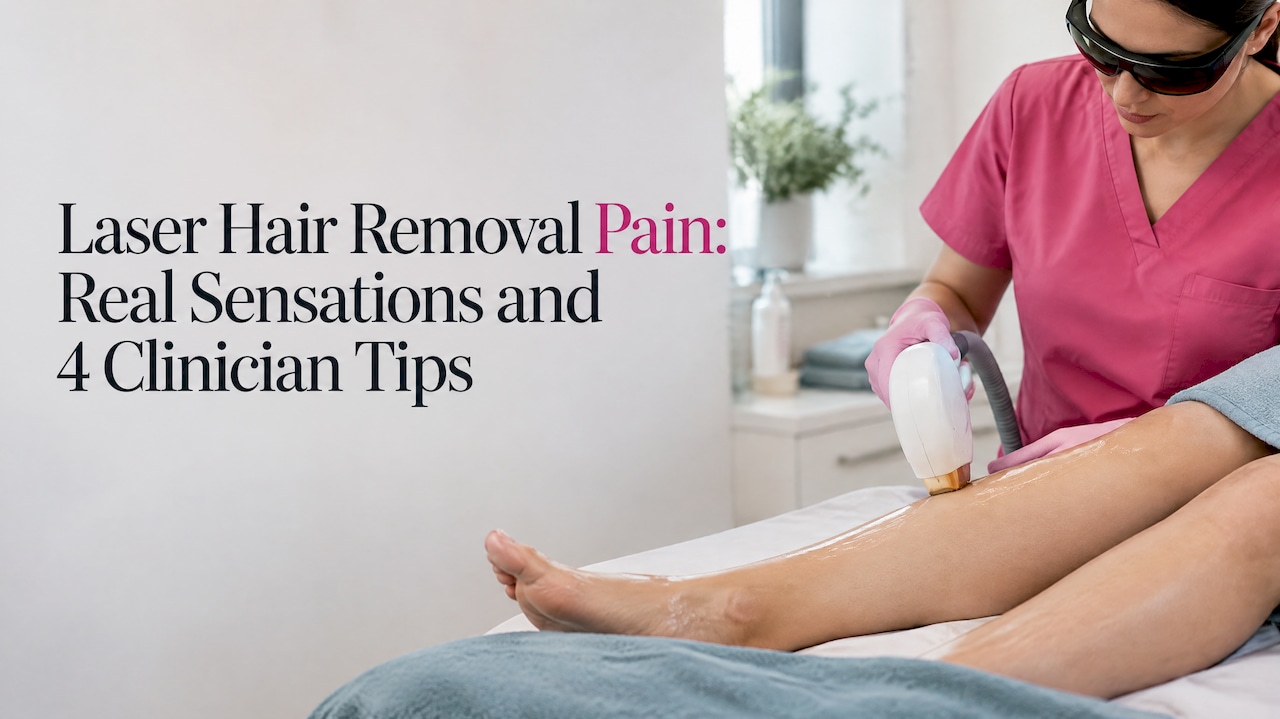

Laser hair removal typically feels like brief, mild to moderate discomfort, often compared to a quick snap or a hot pinprick rather than ongoing pain. Most people describe each pulse as sharp but short, with the sensation fading within seconds. Modern cooling systems and numbing options make sessions far more comfortable than older techniques, and the discomfort rarely stops people from finishing a full course of treatment.
TL;DR:
- Facial areas like the upper lip tend to be more painful due to thinner skin and closer nerve endings, while larger areas such as legs are generally milder but longer in duration.
- Cooling methods like chilled tips and cryogen sprays significantly reduce discomfort, especially when combined with topical anesthetics applied beforehand for sensitive zones.
- Coarse, dark hair absorbs more laser energy, resulting in more heat and higher pain levels, whereas fine hair tends to be more comfortable during treatment.
- Person-to-person pain sensitivity varies widely based on skin tone, hair thickness, hormonal fluctuations, and laser type, making individual pain experience unpredictable.
- Most post-treatment reactions, like redness and swelling, resolve within a few days, but signs of infection, blistering, or skin discoloration require immediate medical attention.
Table of Contents
- What laser hair removal actually feels like
- Which body areas hurt more during treatment
- What makes pain levels different from person to person
- Ways to reduce pain before and during your session
- What recovery looks like in the days after treatment
- Signs that mean you should call your provider
- What to ask Sudbury Med Spa about comfort during treatment
- Is the discomfort worth it in the long run?
- Book a consultation and ask about comfort options directly
- FAQ
- Sources
What laser hair removal actually feels like
Every pulse delivers a burst of light energy into the hair follicle, and that energy reads as heat rather than a cut or a scrape. Patients commonly describe it as:
- A rubber band snapping against the skin, quick and stinging.
- A hot pinprick, similar to a needle warmed before it touches you.
- A flash of electric shock that passes almost as fast as it arrives.
- A warm, tingling sensation between pulses as the treated area heats up.
The rhythm matters as much as the sensation itself. A single pulse lasts a fraction of a second, so the discomfort is more like a string of quick taps than a sustained burn. On small areas such as the upper lip, a session might involve only a few dozen pulses. On the legs or back, hundreds of pulses stack up over 20 to 45 minutes, so the cumulative sensation can feel more tiring even though each individual pulse feels the same.
Cooling technology changes this experience substantially. Many devices use a chilled sapphire tip that contacts the skin before and during the pulse, while others rely on a cryogen spray or a blast of cold air timed to each flash. According to Mayo Clinic, most people describe the sensation as a quick snapping feeling similar to a rubber band against the skin, and built-in cooling systems help protect the outer skin layer while easing that discomfort.
Pain scores during laser hair removal commonly fall in the mild to moderate range, and clinical research comparing anesthetic approaches has found that settings like spot size and wavelength directly influence how much a pulse hurts, which is part of why two people can have very different experiences on the same machine.
Which body areas hurt more during treatment
Pain levels shift noticeably depending on where you’re being treated, mostly because skin thickness, nerve density, and hair coarseness vary so much from one body part to another.
- The upper lip, chin, and other facial areas tend to sting more because the skin is thin and nerve endings sit close to the surface.
- The bikini area, Brazilian treatments, and underarms often rate moderate to high on the discomfort scale due to a mix of dense, coarse hair and sensitive skin.
- Legs, arms, and the back usually feel milder per pulse, though the larger surface area means more total pulses and a longer session.
- Spots close to bone, like the ankle or kneecap, tend to feel sharper since there’s less tissue to absorb the impact.
Hair density plays a direct role too. Coarse, dark hair absorbs more laser energy, which is exactly what makes the treatment effective, but it also means more heat reaches the follicle and the surrounding nerve endings. Finer hair, by contrast, tends to produce a gentler sensation since less energy gets absorbed at each pulse. Knowing which area you’re treating ahead of time helps set realistic expectations rather than assuming every zone will feel the same.
What makes pain levels different from person to person
No two people experience laser hair removal identically, and the differences come down to a mix of personal, technical, and provider-related factors.
- Hair thickness and color: darker, coarser hair absorbs more energy and can produce a stronger sensation.
- Skin tone: contrast between skin and hair color affects how the laser targets the follicle, which can change comfort levels.
- Timing factors: some people notice heightened sensitivity around their menstrual cycle, after caffeine, or when dehydrated.
- Personal pain tolerance: baseline sensitivity varies widely and shapes how any given pulse feels.
On the technical side, the type of laser matters. Research comparing wavelengths found that alexandrite lasers were less painful than diode lasers under matched settings, and that larger spot sizes increased perceived pain even at identical fluence levels. Pulse duration and cooling method also shift comfort, since a longer pulse spreads energy over more time while effective cooling offsets the heat.
Provider experience shapes the outcome just as much as the equipment. A board-certified dermatologist or a clinician working under medical supervision can calibrate fluence and spot size to someone’s specific skin tone and hair type, which lowers both pain and the risk of burns or pigment changes. A less experienced operator using generic settings is more likely to cause unnecessary discomfort or skin reactions.
Pro Tip: Ask your provider which laser type they use and whether settings get adjusted per treatment area, since a one-size-fits-all approach tends to produce more discomfort.
Ways to reduce pain before and during your session
Several approaches, backed by clinical comparisons, can meaningfully lower discomfort without compromising results.
- Built-in cooling (chilled tips, cryogen spray, or cold air) works immediately during the pulse and is standard on most modern devices, making it the simplest way to blunt the sting in real time.
- Topical anesthetics like EMLA or 5% lidocaine cream need to be applied 30 to 60 minutes before treatment to take full effect, and the American Academy of Dermatology notes they should be used cautiously over very large areas because of systemic absorption risks.
- Ice packs or frozen gel packs offer fast, immediate relief and are a reasonable substitute when numbing cream isn’t available, though they don’t provide the longer post-procedure comfort that topical anesthetics can.
- Over-the-counter pain relievers taken beforehand may take the edge off general soreness, but they don’t meaningfully reduce the sharp, momentary sting of each pulse the way cooling or numbing cream does.
Clinical trials comparing these methods back up what many patients report anecdotally: research on topical 5% lidocaine found it reduced pain effectively even when used alongside cooling devices, and that pain increased with larger spot sizes regardless of which numbing method was used. In practice, this means combining a numbing cream with built-in cooling tends to work better than relying on either alone, and discussing both options with your provider before the session is worth the extra planning.
What recovery looks like in the days after treatment
Most people notice redness, slight swelling, and a sensation similar to mild sunburn right after treatment. According to the American Academy of Dermatology, these effects are typically mild and self-limiting, usually resolving within 1 to 3 days with simple home care.
Aftercare that helps during this window:
- Apply cool compresses to calm redness and residual heat.
- Use a gentle, fragrance-free cleanser instead of harsh exfoliants.
- Wear sunscreen and avoid direct sun exposure on the treated area.
- Skip hot baths, saunas, and intense exercise for a day or two to avoid aggravating the skin.
For stronger reactions, a provider may recommend a mild steroid cream to calm inflammation faster, though this is uncommon for routine sessions.
Signs that mean you should call your provider
Most post-treatment reactions fade on their own, but a few signs call for a quick check-in with your provider rather than waiting it out.
Watch for blistering, redness that keeps spreading or intensifying instead of fading, fever, or any sign of infection such as warmth, pus, or increasing pain days after treatment. Lasting changes in skin color, whether darker or lighter patches, are also worth flagging. At your consultation, ask about the specific device being used, its cooling method, and the clinic’s policy on numbing cream, since AAD guidance points out that treatment under qualified medical supervision lowers the risk of burns, scarring, and pigment changes.
What to ask Sudbury Med Spa about comfort during treatment
We offer laser hair removal services and provide free consultations and personalized treatment plans for those considering this option. During a consult, it’s reasonable to ask about the device model in use, the type of cooling it offers, and whether numbing cream is available for sensitive areas. Bring a list of current medications, any history of cold sores, and notes on past reactions to hair removal so your treatment plan accounts for them from the start.
Is the discomfort worth it in the long run?
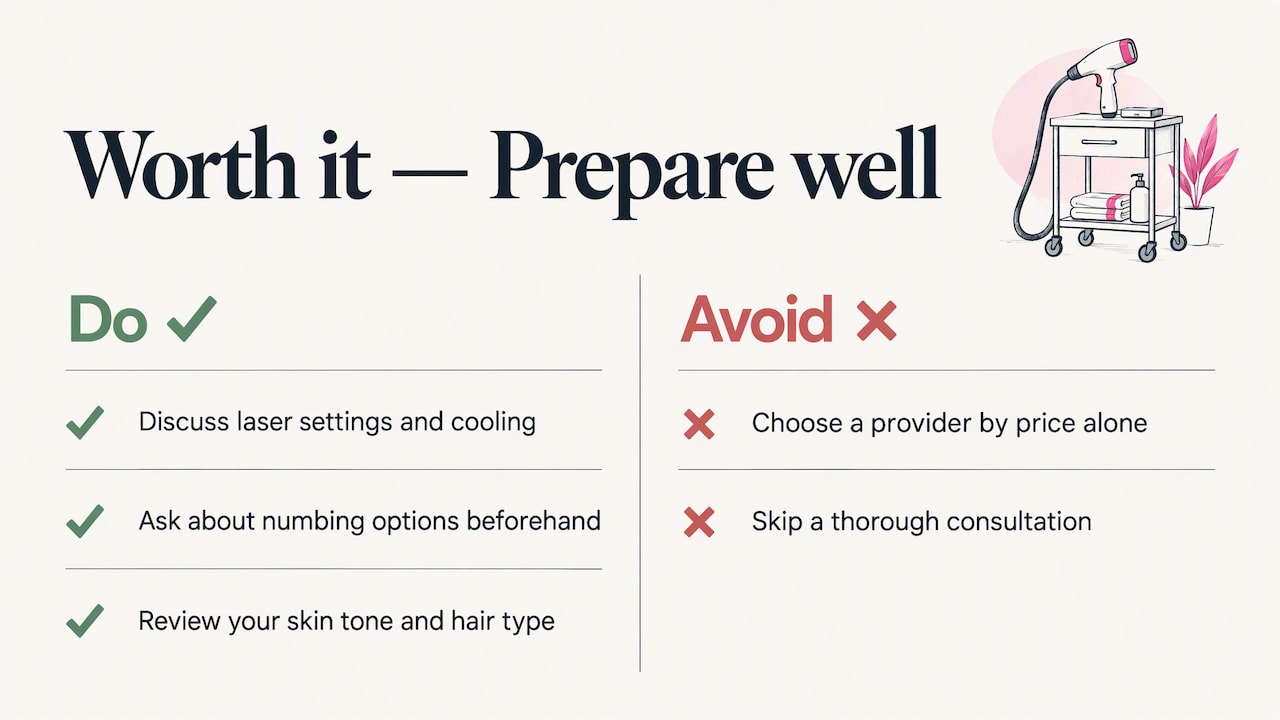
The short answer is almost always yes, but not because the pain is trivial. Each pulse genuinely stings, and pretending otherwise does readers a disservice. What makes it worth tolerating is how brief it is: a few seconds of sharp sensation per pulse, repeated over a session that rarely stretches past 45 minutes, in exchange for a long-term drop in hair regrowth that shaving or waxing can’t match.
The bigger mistake I see people make isn’t underestimating the pain, it’s choosing a provider based on price alone and skipping the conversation about settings, cooling, and numbing options. A rushed consult with no discussion of your skin tone or hair type is a bigger risk factor for both pain and poor results than the laser itself.
— Chris
Book a consultation and ask about comfort options directly
If you’re weighing laser hair removal and want a clear answer on what it will feel like for your skin and hair type, we offer free consultations where you can ask about device type, cooling, and numbing cream before committing to anything.

- Free consultations to review your skin tone, hair type, and expected comfort level before booking.
- Built-in cooling and standard aftercare guidance included as part of every laser hair removal session.
- Membership options through our SILVER, GOLD, and PLATINUM plans for those planning multiple sessions.
Reach out through our laser hair removal page to schedule a consultation and get specific answers about pain management before your first appointment.
This article is general information, not a substitute for advice from a qualified doctor. Consult a qualified healthcare professional about your own circumstances before acting on anything here.
FAQ
Can I shave 2 hours before laser hair removal?
Yes, shaving shortly before your appointment is generally recommended since it removes surface hair without affecting the follicle the laser targets. Shaving the night before or morning of treatment is typically fine and often preferred over waxing or plucking, which remove the follicle itself and can reduce the treatment’s effectiveness.
Where is the most painful place to get laser hair removal?
The upper lip and other facial areas tend to rank among the most uncomfortable spots because the skin is thin and nerve endings sit close to the surface. The bikini area and underarms also tend to be more sensitive due to a combination of coarse hair and delicate skin.
How can I make laser hair removal less painful?
Built-in cooling systems, used during most modern treatments, offer immediate relief by offsetting the heat from each pulse. Topical numbing cream applied 30 to 60 minutes beforehand, as recommended by the American Academy of Dermatology, can further reduce discomfort, especially on sensitive areas.
What hurts worse, Brazilian waxing or laser hair removal?
Many people find Brazilian waxing more painful overall since it pulls hair out by the root across a large area all at once, producing a sharper, more sustained pain. Laser hair removal delivers quick, individual pulses that sting briefly but don’t involve the same mechanical pulling sensation.
Sources
- Laser hair removal: FAQs — American Academy of Dermatology
- Laser hair removal — Mayo Clinic
- Topical anesthesia for laser hair removal: comparison of spot sizes and 755 nm versus 800 nm wavelengths — PubMed


