
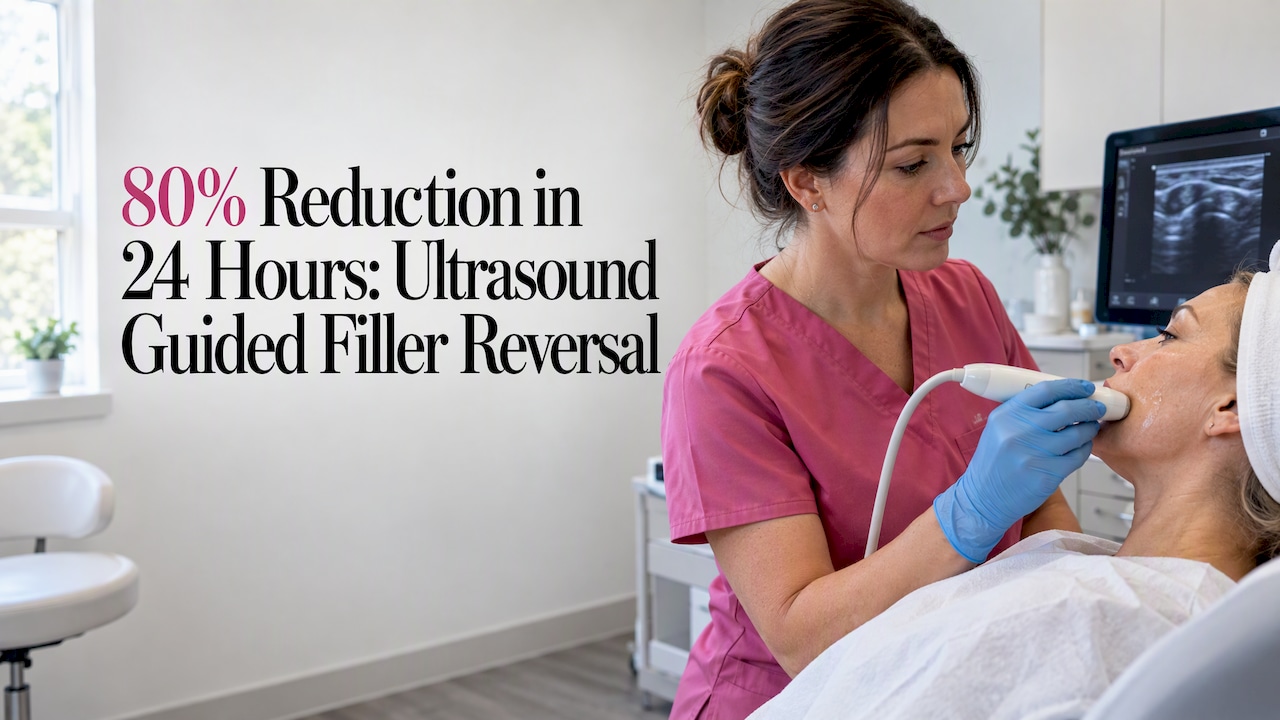

Hyaluronidase is the accepted way to reverse hyaluronic acid fillers, breaking down the gel so your body clears it within days. Fillers made from other materials, such as calcium hydroxylapatite, poly-L-lactic acid, PMMA, silicone, or fat, generally do not respond to this enzyme and are not considered reliably reversible. If you notice severe pain, skin blanching, or vision changes after an injection, seek medical evaluation immediately.
TL;DR:
- Hyaluronic acid fillers typically dissolve within days after hyaluronidase injection, but heavily cross-linked products may require multiple sessions for full clearance.
- Fillers made from calcium hydroxylapatite, poly-L-lactic acid, PMMA, silicone, or fat do not respond to hyaluronidase and are not considered reliably reversible.
- Ultrasound guidance prior to injection helps accurately locate and assess filler spread, improving treatment safety and effectiveness.
- Emergency treatment for vascular occlusion involves high-dose hyaluronidase administered quickly with prompt follow-up, as minutes can impact tissue outcomes.
- A thorough evaluation before dosing, including product verification and imaging, minimizes over-treatment and ensures tailored, safe dissolving procedures.
Table of Contents
- What hyaluronidase is and which fillers it can dissolve
- Cosmetic dissatisfaction versus a true complication
- How the dissolution procedure works, from evaluation to injection
- How fast it works and why some patients need more than one session
- Risks, limits, and what to do when hyaluronidase will not help
- Recognizing and responding to a vascular emergency
- What careful evaluation means for your results and peace of mind
- Getting a safe evaluation at Sudbury Med Spa
- FAQ
- Sources
What hyaluronidase is and which fillers it can dissolve
Hyaluronidase is an enzyme that breaks the chemical bonds in hyaluronic acid, the main ingredient in fillers like Juvéderm and Restylane. Once those bonds break down, your body reabsorbs the material over the following days. How quickly that happens depends partly on how heavily cross-linked the original product is. Densely cross-linked fillers resist the enzyme more than lightly cross-linked ones, which is one reason hyaluronidase effectiveness varies by filler type and sometimes needs repeat dosing.
Not every filler responds the same way:
- Hyaluronic acid fillers (Juvéderm, Restylane, Belotero) typically dissolve with hyaluronidase.
- Calcium hydroxylapatite (Radiesse) does not break down with this enzyme.
- Poly-L-lactic acid (Sculptra), PMMA, silicone, and injected fat are not reversible with hyaluronidase.
Knowing the exact product and injection date matters because it shapes the whole plan. A clinician typically confirms filler type by reviewing your treatment records, palpating the area, and, when records are unclear, using imaging to see what is actually there before injecting anything.
Cosmetic dissatisfaction versus a true complication
Not every concern after filler needs immediate dissolution. Overfilling, visible asymmetry, lumps you simply do not like the look of, or a bluish discoloration under thin skin known as the Tyndall effect are elective reasons people seek reversal, and there is usually no rush. Persistent firm nodules, signs of infection, or anything suggesting a vascular event are a different category entirely and call for prompt assessment.
- Identify whether your concern is purely cosmetic or includes pain, spreading firmness, or skin color changes.
- If swelling or bruising appeared within the last one to two weeks and nothing else is wrong, give it time to settle before assuming the filler itself is the problem.
- Gather photos from before and after treatment, the product name if you have it, and a timeline of when symptoms started.
- Bring that information to a consultation so the clinician can judge urgency rather than guessing from a verbal description alone.
Rushing to dissolve filler for routine post-injection swelling can mean undoing a result that would have settled into something you liked.
How the dissolution procedure works, from evaluation to injection
A proper evaluation starts with a conversation about what was injected, when, and what is bothering you now, followed by a physical exam. Many clinics add high-frequency ultrasound at this stage, which maps exactly where the filler sits, how much is there, and whether it has migrated from the original injection point. That picture changes the plan more often than people expect, since filler does not always stay where it was placed.
- Ultrasound guidance helps the clinician see filler depth and spread before touching a needle to the skin.
- Direct intrabolus injection targets a discrete pocket of filler, while diffuse infiltration treats a broader, less defined area.
- Hyaluronidase is reconstituted to a specific concentration, and local anesthesia is sometimes used depending on sensitivity and the area treated.
- Aftercare typically includes gentle massage, warm compresses, and a follow-up visit to check progress.
Pro Tip: Ask whether your clinic uses ultrasound during the procedure itself, not just for the initial assessment. Real-time imaging during injection is what actually improves precision.
Mild swelling or tenderness right after treatment is common and usually settles within a day or two.
How fast it works and why some patients need more than one session
Clinicians typically start with a conservative dose and reassess, adding more hyaluronidase if the filler has not fully responded, rather than committing to one large dose upfront. Emergency cases are handled differently, with higher doses given rapidly to treat the problem fast rather than titrating slowly.
- Elective dissolution usually starts small and builds up over one or more visits.
- Emergent cases, like suspected vascular occlusion, call for immediate, higher-dose treatment rather than gradual titration.
- Heavily cross-linked products may need repeat sessions spaced days apart to fully clear.
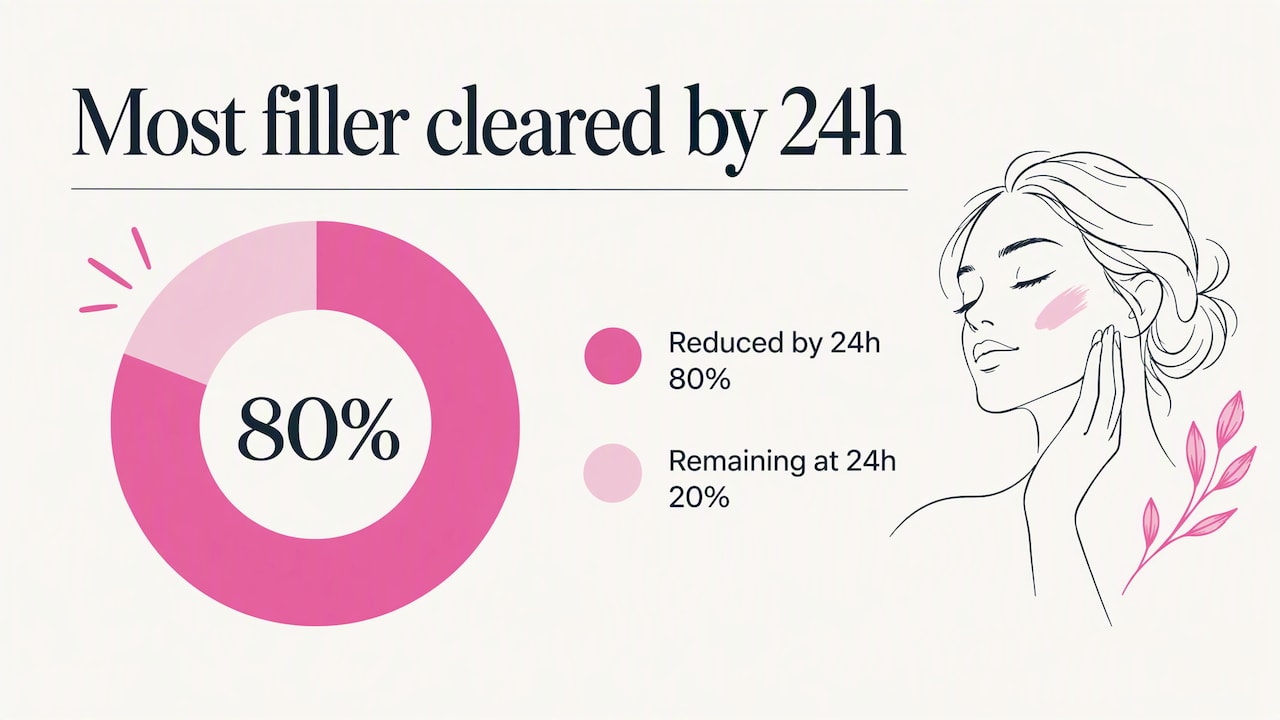
A controlled study using ultrasound imaging found that hyaluronidase produced its largest volume reduction within the first hour, reaching about 80% reduction by 24 hours across a range of hyaluronic acid fillers. That means most people see visible change within a day, though full resolution can take longer depending on the product and the dose used.
Your clinician should schedule a follow-up to check how much filler remains and whether another round is warranted.
Risks, limits, and what to do when hyaluronidase will not help
Hyaluronidase is generally well tolerated, but local swelling, bruising, and, rarely, allergic reactions can occur at the injection site. Because the enzyme cannot tell the difference between injected filler and your body’s own hyaluronic acid, imprecise or excessive dosing can reduce natural HA in the surrounding tissue along with the filler.
- Hyaluronidase will not dissolve calcium hydroxylapatite, poly-L-lactic acid, PMMA, silicone, or fat.
- Firm granulomas or biofilm-related nodules may need antibiotics, steroid injections, or surgical removal instead.
- Choosing between these options depends on what is actually causing the lump, which is why accurate diagnosis comes first.
Some case series have explored combining hyaluronidase with other enzymes for complex overfilled cases, but this approach remains experimental and belongs in specialist hands with imaging support. There is a real trade-off between removing every trace of filler and preserving the tissue around it, which is worth discussing honestly before treatment starts.
Recognizing and responding to a vascular emergency
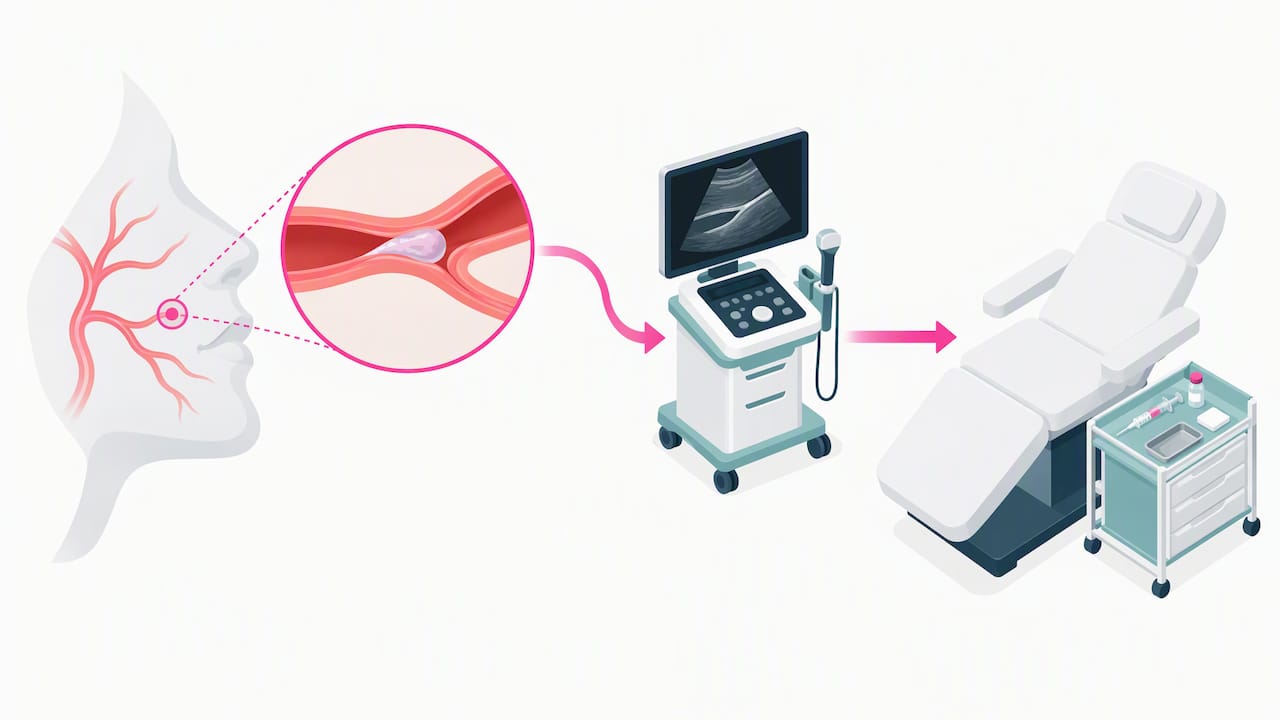
A vascular occlusion happens when filler blocks blood flow to tissue, and it is the complication that demands the fastest response. Warning signs include pain out of proportion to the injection, skin that turns white or mottled, delayed capillary refill, or sudden visual changes.
- Stop injecting immediately and document the area with photos or video to track how it changes.
- Apply warm compresses and gentle massage to the area while arranging urgent care.
- Seek a clinician trained in emergency filler management without delay, since time to treatment affects the outcome.
- Expect rapid, high-dose, repeated hyaluronidase injections across the affected area rather than a single small dose.
Clinical guidance supports rapid, high-dose pulsed hyaluronidase as the standard response to vascular occlusion, with treatment continued until perfusion visibly improves rather than stopping at a preset unit count. Ultrasound can help locate the blockage during an emergency, not only during routine planning.
Pro Tip: If you suspect an occlusion, go to a clinician who treats filler complications regularly rather than waiting for your original injector if they are not available immediately. Minutes matter here.
Wound care and close follow-up continue for days or weeks afterward if any tissue damage has occurred.
What careful evaluation means for your results and peace of mind
A thorough exam before any injection, including a clear look at what filler is present and where, protects you from over-treating a problem that might resolve on its own. The real skill lies in balancing a patient’s cosmetic goals against the risk of removing more than necessary. Asking whether your clinician uses ultrasound, and understanding what informed consent for reversal actually covers, puts you in a stronger position before treatment begins.
— Chris
Getting a safe evaluation at Sudbury Med Spa
If you are weighing whether to dissolve a filler, a free consultation at Sudbury Med Spa gives you a clear read on what is actually in your skin before anyone commits to a plan. We build personalized treatment plans around what we find during assessment, which means you are not guessing about dosing or waiting weeks to see whether something was necessary in the first place.

- A free consultation covers your history, the product involved if known, and what you want the outcome to look like.
- We work with advanced equipment and a safety-first approach to injectable corrections.
- Financing options may be available if staged treatment sessions are part of your plan.
Bring any paperwork or photos from your original filler appointment, since that detail shapes how we approach your dermal filler evaluation. If your original treatment was Juvéderm or a similar HA-based product, that history helps us plan dosing accurately from the first visit. Reach out to book a consultation and get a straight answer on your options.
This article is general information, not a substitute for advice from a qualified doctor. Consult a qualified healthcare professional about your own circumstances before acting on anything here.
FAQ
Is there a way to reverse fillers?
Yes, hyaluronic acid fillers can be reversed with hyaluronidase, an enzyme that breaks down the filler so your body reabsorbs it. Fillers made from other materials, including calcium hydroxylapatite, poly-L-lactic acid, PMMA, silicone, or fat, do not respond reliably to this enzyme and are not considered reversible by this method.
How much does it cost to reverse fillers?
Pricing for hyaluronidase treatment depends on the amount of filler present and how many sessions are needed, and it is not something we publish as a flat rate. A consultation at Sudbury Med Spa gives you an exact cost estimate based on your specific situation.
Do fillers ever go away completely?
Hyaluronic acid fillers can be fully dissolved with enough hyaluronidase, though heavily cross-linked products sometimes need more than one session to clear completely. Non-HA fillers like calcium hydroxylapatite or poly-L-lactic acid break down slowly on their own over months but do not respond to enzymatic dissolution.
Does your face go back to normal after dissolving fillers?
Most people see their tissue return close to its pre-filler appearance once the hyaluronic acid clears, since the enzyme targets the injected gel rather than surrounding structures. Keep in mind that your face may also have changed from aging or volume loss since your original treatment, so “normal” may look slightly different than it did before.
Sources
- Resolve and dissolve—An ultrasound-guided investigation on the effects of hyaluronidase on different soft tissue fillers
- Enzymatic Management of Facial Overfilled Syndrome: A Case Series and Narrative Review


