

Removal is possible, but your pigment’s color, how deep it sits, and your own healing response decide which route gets you there. The three realistic paths are laser fragmentation, saline or chemical extraction, and corrective tattooing to disguise rather than erase. Book a consultation and insist on a test spot before committing to a full plan.
TL;DR:
- Laser sessions are usually spaced six to eight weeks apart; a chart review found an average of 2.8 treatments for eyebrow and eyelid cases.
- Saline extraction often suits unknown, muddy, or layered pigment, and sessions usually need eight to twelve weeks between visits for skin recovery.
- Iron or titanium compounds can darken under laser heat, and treatment may also thin brow hair temporarily or reactivate a dormant pigment allergy.
- Keep the area clean, leave scabs intact, avoid sun for several months, and skip nonprescription removal creams because the FDA approves none for pigment removal.
Table of Contents
- How microblading removal methods actually work
- Laser removal: process, timeline, and what can go wrong
- Saline and chemical removal: how it differs and who it suits
- How many sessions, how long, and what it costs
- Aftercare, healing, and when to see a professional
- How Sudbury Med Spa approaches microblading removal
- What I would prioritize if I needed this done
- Ready to book your microblading removal consultation
- FAQ
- Sources
How microblading removal methods actually work
Microblading pigments are not standard tattoo ink. They sit more superficially in the skin and often contain iron oxide blends or titanium-based additives mixed to mimic natural brow tones. That composition means they can behave unpredictably when exposed to laser heat, which is part of why removal strategy depends so heavily on what pigment went in originally.
- Laser removal fragments pigment particles with targeted light, and the immune system gradually clears the debris, a mechanism the American Academy of Dermatology describes as pigment shattering followed by immune clearance.
- Saline or chemical removal draws pigment outward through a controlled wound and scabbing process rather than breaking it apart internally.
- Corrective tattooing does not remove pigment at all. It uses color theory to neutralize unwanted tones or reshape the brow when the goal is improvement rather than full erasure.
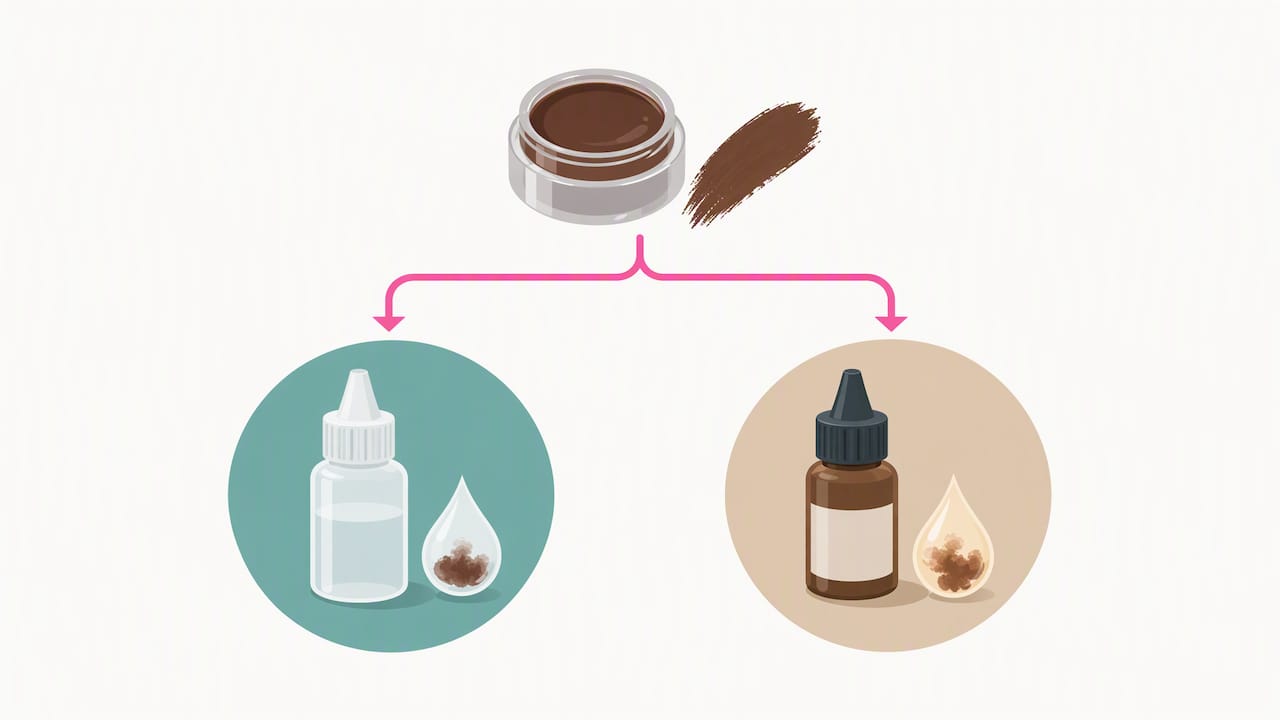
Laser tends to work best on dense, dark, or black pigment because those particles absorb light efficiently. Saline is often the better fit for muddy, multi-colored, or unknown pigment mixes, since it is not selective about color the way laser wavelengths are. Choosing wrong is not just a matter of slower progress. It can trigger pigment unmasking or unwanted color shifts, which is why a short consultation up front saves time later.
Laser removal: process, timeline, and what can go wrong
Laser removal typically relies on Q-switched or picosecond devices tuned to wavelengths like 1064nm, 755nm, and 532nm, each targeting different pigment colors. Picosecond lasers in particular have broadened what is treatable, since they fragment particles with shorter pulses that reduce heat spread into surrounding tissue.
- An initial test spot checks how the pigment reacts before any full treatment begins.
- Sessions are spaced roughly six to eight weeks apart to give the immune system time to clear fragmented pigment.
- Progress is reassessed at each visit, since some pigments lighten gradually while others shift color before fading.
A five-year retrospective chart review of eyebrow and eyelid tattoo removal found a mean number of laser treatments per case, with picosecond devices at 755nm and 532/1064nm commonly used, according to a chart review of laser tattoo removal.
Other risks include paradoxical darkening, where iron or titanium compounds oxidize under laser heat and turn visibly darker instead of fading, along with temporary hair thinning in the treated area and the possibility of reactivating a dormant pigment allergy. A clinician experienced specifically with cosmetic brow inks — not just body tattoos — is far better positioned to anticipate these reactions.
Saline and chemical removal: how it differs and who it suits
Saline and chemical extraction lift pigment outward through the skin’s surface rather than breaking it apart with light. That makes the technique color-blind in a useful way: it does not depend on matching a wavelength to a specific pigment tone, so it tends to perform more consistently on multi-colored or muddy brows where laser risks an unpredictable shift.
- Works well when pigment sits under old scar tissue or layered corrective work.
- Often preferred when the original pigment mix is unknown or undocumented.
- Avoids the paradoxical darkening risk associated with certain laser-reactive pigments.
Healing follows a scabbing pattern, and the pigment lifts out as the scab forms and sheds, which makes technician skill and aftercare discipline just as important as the method itself. Saline sessions are commonly spaced further apart than laser, often eight to twelve weeks, since the skin needs more complete recovery between controlled wounds. Guides describing how saline removal works note it is frequently the safer first choice when previous treatments left behind an unclear pigment blend.
Pro Tip: Ask your provider which method they recommend based on your specific pigment, not a one-size-fits-all house preference.
How many sessions, how long, and what it costs
Most people need more than one visit regardless of method. A cross-sectional study found that among microblading recipients who chose laser removal, many needed one to three sessions, with about two-thirds reporting complete removal after their laser sessions, according to a study on microblading safety and removal. Saline removal often runs a similar multi-session course, sometimes more, depending on how much pigment remains after each round.
- Laser sessions are typically spaced six to eight weeks apart.
- Saline sessions are typically spaced eight to twelve weeks apart.
- Pigment density, prior allergic reactions, and skin type can all extend the total number of sessions needed.
Per-session pricing and total cost vary by clinic, pigment complexity, and geographic market, so treat any figure you see online as a range rather than a guarantee. The clearest way to get an accurate number for your own brows is a direct consultation and test spot, since pigment composition drives cost almost as much as session count does.
Aftercare, healing, and when to see a professional
Healing after either laser or saline removal follows a predictable pattern: redness and mild swelling in the first day or two, scabbing over the following week, and temporary thinning of brow hair that typically grows back. Treat the area gently during this window.
- Keep the area clean and avoid touching or picking at scabs, which raises infection and scarring risk.
- Avoid direct sun exposure on the treated area for several months, since UV exposure during healing raises the risk of pigment or skin discoloration, a precaution dermatology sources consistently recommend.
- Use any prescribed ointment exactly as directed, and skip over-the-counter removal creams entirely.
The FDA warns against at-home tattoo removal kits and creams, noting that no topical product is approved for pigment removal and that laser devices are cleared only for use by or under the supervision of trained health professionals. See a dermatologist promptly if you notice signs of infection, a severe allergic reaction, a personal history of keloid scarring, or unusual pigment changes that do not resolve within the expected healing window. If you are reapplying sunscreen over healing skin or existing makeup, a guide to sun protection over makeup walks through how to layer it without disturbing the area.
How Sudbury Med Spa approaches microblading removal
We start every removal case with a free consultation, where we look at your existing pigment, discuss your goals, and build a personalized treatment plan rather than defaulting to a single method. Our laser tattoo removal service is the primary tool we use for brow pigment cases, paired with a test spot before any full session.
- We document before-and-after progress so you can see how pigment responds between visits.
- We offer financing options for clients planning multiple sessions over several months.
- We maintain a clean, comfortable clinic environment and an experienced team for every removal appointment.
You can read more about our approach to laser tattoo removal and the technical rationale behind how it works.
What I would prioritize if I needed this done
If this were my brows, I would insist on a test spot before anything else and ask directly how many cosmetic-brow cases, not body tattoos, the practitioner has handled. I would set my expectations around meaningful lightening or a clean base for correction, not a guaranteed blank slate. Speed matters less than picking the right method the first time and following aftercare without shortcuts.
— Chris
Ready to book your microblading removal consultation
We offer a free consultation where we review your brows in person, discuss your pigment history, and map out realistic session counts before you commit to anything.

- Bring photos of your original microblading and any prior touch-up or removal records.
- We will walk through test-spot results, a personalized removal plan, and financing options if multiple sessions make sense for your budget.
- Explore our laser tattoo removal page to see what a session involves, or check our membership plans if you are budgeting for a multi-session plan.
This article is general information, not a substitute for advice from a qualified doctor. Consult a qualified healthcare professional about your own circumstances before acting on anything here.
FAQ
How can you make microblading fade faster naturally?
Sun exposure gradually breaks down pigment over time, which is why unprotected brows often fade faster than consistently sun-protected ones, though this is a slow and uneven process compared to active removal. Gentle exfoliation around the brow area may support natural fading, but it will not fully erase pigment and carries its own irritation risk.
Can lasers be used to remove eyebrow tattoos?
Yes, laser treatment is one of the primary methods used for eyebrow tattoo and microblading removal, fragmenting pigment so the immune system can clear it over several sessions. A chart review of brow and eyelid tattoo removal found a mean of about 2.8 laser treatments per case.
What are the aftercare steps after laser microblading removal?
Aftercare centers on keeping the area clean, avoiding picking at scabs, and protecting the skin from sun exposure for several months to reduce the risk of pigment or skin discoloration. Any prescribed ointment should be used exactly as directed, and over-the-counter removal creams should be avoided since none are approved for this use by the FDA.
Is it possible to remove a tattoo completely?
Complete removal is possible in some cases but depends heavily on pigment composition, depth, and individual healing. One study found that 66.7% of participants reported complete removal after their laser sessions, according to research on microblading removal outcomes, though others may see significant lightening rather than total erasure.
Should you choose saline or laser removal?
The choice depends on your pigment: laser tends to work best on dense, dark pigment, while saline is often better suited to multi-colored or muddy pigment where laser could cause unpredictable color shifts. A consultation and test spot with an experienced practitioner is the most reliable way to decide which fits your specific case.
Sources
- Laser removal of eyeliner and eyebrow tattoos: chart review, experiences, and learnings – PMC
- Tattoo removal options and results – FDA


