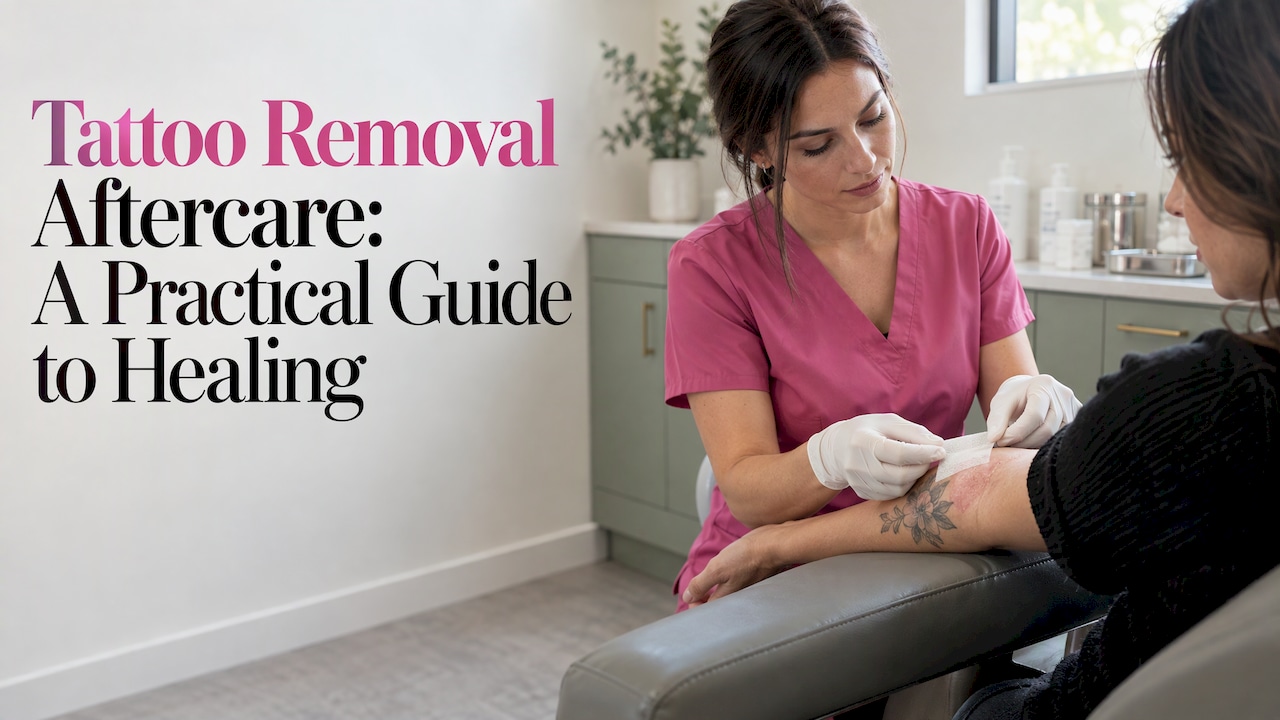

Good aftercare after laser tattoo removal comes down to a few habits. Keep the area clean, keep it moisturized with a petrolatum-based ointment, cover it while it is open or blistered, stay out of the sun, and never pick at scabs or blisters. Most reactions in the first day or two are expected. Real warning signs, such as fever, a foul odor, red streaks or yellow-green drainage, mean you should call a clinician. Below is what to do hour by hour, what healing usually looks like, and when to get help.
One rule outranks everything here: if your provider gave you written instructions, follow those first. Lasers, skin types and tattoo sizes differ, and the person who treated you knows what they did.
TL;DR
- Cool the area right after treatment, then wash gently, apply a petrolatum ointment and cover it with a nonstick dressing until the skin has healed.
- You can usually shower the next day without scrubbing. Skip pools, hot tubs, the ocean and baths until the area has healed.
- Do not pick, peel, rub or pop blisters, and protect the area from the sun and sweaty workouts in the first days.
- Redness, swelling, blistering and pinpoint bleeding are common. Fever, pus, a foul smell, red streaks or worsening pain are not.
- Plan on a few weeks between sessions. The skin heals first, then your body clears the ink over time.
Table of Contents
- What happens to your skin during recovery
- The first 24 to 48 hours
- Showering, swimming and soaking
- What to avoid after laser tattoo removal
- Normal healing versus warning signs
- How long does tattoo removal take to heal?
- Easing itching, swelling and discomfort
- Special cases
- Our perspective
- Thinking about tattoo removal with us?
- FAQ
- Sources
What happens to your skin during recovery
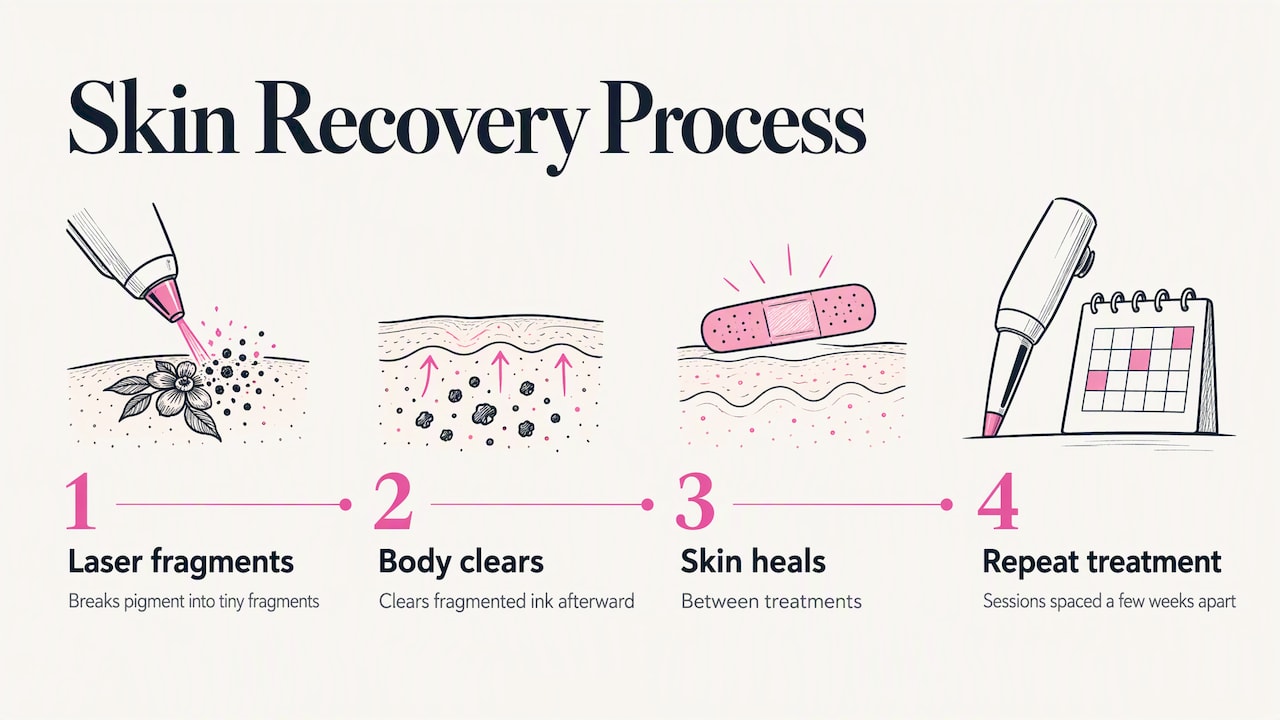
A laser breaks tattoo pigment into tiny fragments. The laser does not remove them. As the American Academy of Dermatology explains, the body clears the fragmented ink afterward, and the treated skin may show redness, swelling and a little blistering. That is why the weeks between sessions matter. Your skin needs time to recover, and your body needs time to flush out the particles.
The FDA notes that laser removal takes multiple treatments, spaced a few weeks apart so the skin can heal. Size and colors affect how many sessions you need. So aftercare is not a one-time step. You repeat it after every session, and the better each recovery goes, the smoother the whole series tends to be.
If you are still deciding whether the process fits you, our page on whether laser tattoo removal works walks through what to expect from a full course.
The first 24 to 48 hours
These first hours set the tone for healing.
Right after the session
Immediately after treatment you may see white discoloration (often called frosting), redness, swelling and tiny points of bleeding. University of Rochester Medicine’s post-care sheet lists these as possible immediate effects and suggests a cool compress, plus Tylenol for discomfort. Cleveland Clinic likewise mentions an ice pack to soothe the area. Wrap ice or a cold pack in a clean cloth so it never sits directly on broken or blistered skin.
The Aesthetic Society says mild discomfort can last up to 48 hours, while the white discoloration, pinpoint bleeding and minimal swelling or redness typically settle within 24 hours.
Cleaning and covering
Clean the area once a day, using your fingertips and mild cleanser or as your provider directs. Pat it dry with a clean towel or gauze. Do not rub. Then apply ointment and cover it. Rochester’s guidance is to care for the area delicately, clean it daily, use Aquaphor two to three times a day, and cover it with a nonstick Telfa pad until it has healed.
What to put on the treated skin
The common thread across medical sources is a plain, petrolatum-based ointment and a nonstick covering. The details differ a little, which is why your provider’s instructions come first.
| Source | Ointment | Covering |
|---|---|---|
| University of Rochester Medicine | Aquaphor, two to three times daily | Nonstick Telfa pad until healed |
| UCSF Health | Petrolatum ointment for several days | Clean, sterile bandage for about a week, until the skin heals |
| Los Angeles County | Petroleum jelly such as Vaseline or Aquaphor, three or four times daily for the first three days | Nonstick bandage if a blister needs protection |
One detail to note: Los Angeles County advises against over-the-counter antibacterial ointments because they may cause an allergic reaction. Cleveland Clinic mentions that you may need a topical antibiotic ointment. Because those two views differ, ask your provider which product they want you to use rather than guessing in the pharmacy aisle.
A note on keeping a wound clean and covered
The mechanics of cleaning, applying ointment and protecting with a bandage are the same ones that apply to any healing skin. If you want a plain-language look at how small mistakes slow things down, this piece on aftercare mistakes that slow healing covers habits such as over-cleaning and touching with dirty hands that apply just as well here.
Showering, swimming and soaking
Showering is fine for most people. According to Cleveland Clinic, you can shower the next day, but you should not scrub the treated area. Let the water run over it, pat it dry and put your ointment and dressing back on.
Submerging is different. Los Angeles County’s instructions say to avoid pools, the ocean, hot tubs and tub soaking for five to seven days or until healed. Rochester also says to avoid swimming and hot tubs until the wound heals. If you have an open blister or scab, wait until the skin has closed.
Practical shower tips:
- Use lukewarm water. Very hot water can irritate treated skin.
- Use a soft touch with a gentle cleanser, no washcloth or loofah on the spot.
- Dab dry. Never rub with a towel.
- Reapply ointment and a fresh nonstick dressing afterward.
What to avoid after laser tattoo removal
Most aftercare problems come from doing too much to the area, not too little.
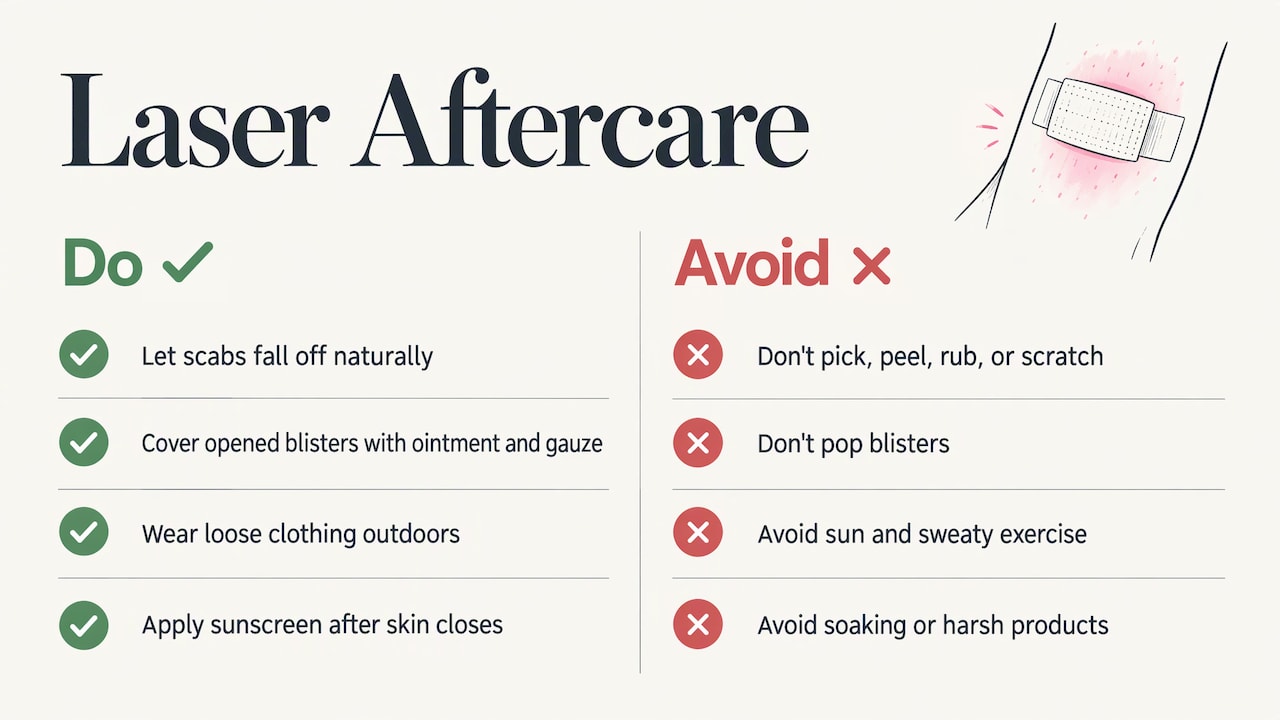
Picking, peeling, rubbing, scrubbing or scratching. Rochester’s guidance is firm on this. Let scabs fall off on their own. Cleveland Clinic adds that picking can cause scarring, which is the one outcome you most want to avoid after investing in removal.
Popping blisters. Blisters are your skin’s natural cushion over the treated area. Rochester says not to pop them. If one opens by itself, cover it with healing ointment and gauze. Los Angeles County adds that a nonstick bandage can protect a blister.
Sun exposure. Rochester advises avoiding sun exposure for at least two to seven days, and Cleveland Clinic says to cover the area with sunscreen when you are outdoors. Practically, that means loose clothing over the spot first, then broad-spectrum sunscreen once the skin has closed. Tanned skin is a topic in its own right with lasers. Our article on laser treatments and sun exposure explains why timing around sun matters for laser work in general.
Sweaty exercise. Rochester suggests avoiding exercise that makes you perspire for at least two to seven days. Sweat and friction on a fresh treatment site are a poor mix, especially for tattoos on the ribs, inner arm, thigh or feet, where clothing and shoes rub.
Soaking. As covered above, no pools, hot tubs, ocean or baths until the skin has healed.
Harsh products. Skip scrubs, exfoliating acids, retinoids and fragranced lotions on the area until it has healed, unless your provider tells you otherwise. Plain ointment is enough.
Normal healing versus warning signs
Knowing the difference keeps you calm when things look dramatic and keeps you safe when they are not right.
| What you see | Usually normal | Call your provider or a clinician |
|---|---|---|
| Skin color | White, pink or red skin | Red streaks spreading from the area |
| Swelling | Mild to moderate swelling, settling within about a day | Swelling that grows or lasts |
| Blisters | Blistering that resolves in one to two weeks | A blister that looks infected or will not settle |
| Fluid | Pinpoint bleeding, red, yellow or clear discharge | Yellow-green drainage, pus or a foul odor |
| Pain | Mild discomfort for up to 48 hours | Extreme or long-lasting pain, or tenderness that worsens |
| Body | Nothing systemic | Fever above 100°F |
The left column draws on Los Angeles County’s list of normal reactions and the Aesthetic Society’s recovery guidance. The right column reflects the county’s infection warning signs: foul odor, fever above 100°F, red streaks, yellow-green drainage and persistent pain. For those, the county directs people to contact a primary-care physician. Rochester advises contacting the treatment office for blistering or possible infection, including redness, tenderness or pus. The Aesthetic Society says to contact the surgeon for extreme or long-lasting pain, redness or swelling.
In plain terms: if you have a fever, spreading redness, pus or a bad smell, do not wait for your next appointment. Call your primary-care doctor or the clinic the same day. If something looks wrong but you are unsure, a quick call or photo to your provider is always appropriate.
How long does tattoo removal take to heal?
There are two clocks running.
The skin clock. The Aesthetic Society says recovery varies by person. Discomfort fades within about 48 hours. Swelling and redness typically ease within a day. A scab may fall off after about two weeks. Los Angeles County puts blister resolution at one to two weeks, and overall healing at five to 25 days or longer, a wide range that reflects differences in skin, tattoo size and treatment intensity.
The ink clock. The tattoo itself fades gradually over roughly an eight-week healing period, according to the Aesthetic Society, as your body clears the shattered pigment. That is why sessions are spaced weeks apart. The FDA notes that size and colors affect the length of treatment, and that complete removal may take many treatments or may not be possible for every tattoo.
What affects your personal timeline:
- Tattoo size and density. Larger, denser areas generally mean more skin to heal.
- Location. Spots with friction, such as feet, waistbands or bra lines, need more protection from rubbing.
- Aftercare habits. Picking, sun and soaking can slow things down, while steady ointment and covering support recovery.
- Treatment settings. The intensity your provider uses shapes how much blistering and scabbing you get.
A realistic week-by-week picture
- Day 0 to 1: frosting, redness, swelling and possibly pinpoint bleeding. Cool compress, ointment, nonstick dressing.
- Days 2 to 7: the area may blister or scab. Keep it clean and covered, shower gently, avoid sun and sweaty workouts.
- Weeks 1 to 2: blisters settle and scabs come away naturally. Keep moisturizing and protecting from sun.
- Weeks 2 to 8: the skin looks normal again while the ink continues to fade. Book your next session when your provider says the skin is ready.
Easing itching, swelling and discomfort
Some practical comfort measures, all consistent with the sources above:
- For soreness: a cool compress or ice pack wrapped in cloth, and Tylenol as Rochester suggests.
- For swelling: cool compresses in the first day, and keeping the area elevated if it is on a limb is a sensible habit.
- For dryness and itching: keep ointment on consistently. Itching is a sign the skin is healing, and scratching is the thing to resist. Tapping or gently pressing over the dressing is a better option than scratching the skin.
- For blisters: leave them intact. If one opens, cover it with healing ointment and gauze.
Severe pain or swelling is a reason to call, not a thing to tough out, as Cleveland Clinic notes.
Special cases
Facial and eyebrow areas. Skin on the face is thinner and more visible, so protect it carefully from sun and follow your provider’s guidance. If you are removing cosmetic pigment, our article on microblading removal explains why brow pigment can behave differently under a laser.
Cover-ups. If you plan to get a new tattoo over a partially faded one, wait until your provider confirms the skin has fully healed.
Makeup and skincare. Keep makeup and fragranced products off open skin until it has closed. Ask your provider when you can return to your usual routine.
Our perspective
We see aftercare as half of the treatment. A laser session can be done perfectly and still give a poor result if the skin is picked, sunburned or left unprotected afterward. Our approach is to make recovery simple enough that people actually follow it: one ointment, one dressing, clear dos and don’ts, and a plain list of what counts as normal.
Because we have completed more than 15,000 treatments, we know the questions people ask at the front desk: whether that blister is okay, whether they can go to the gym, how long until they can swim. We would rather you call us with a small worry than sit on a real one. Our team is led by founder Natalie NgocTrang and focuses on personalized care, which for tattoo removal means a plan matched to your tattoo, your skin and your schedule.
If you are considering removal, a free consultation is the best place to start. You can ask about aftercare for your specific tattoo before you commit to anything.
Chris
Thinking about tattoo removal with us?
If you are ready to start, or just want to know what your tattoo would involve, we offer free consultations and personalized treatment plans. You can read about our laser tattoo removal service, browse tattoo removal results, or see everything we offer on our services page.
We also offer financing options and annual memberships. Our membership tiers are Silver at $399 per year, Gold at $499 per year and Platinum at $599 per year.
FAQ
Can I shower after a tattoo removal session?
Yes, in most cases you can shower the next day. Cleveland Clinic advises not scrubbing the treated area. Keep the water lukewarm, pat the skin dry and reapply ointment and a clean nonstick dressing. Follow any different instruction from your provider.
What can I put on my tattoo after laser removal?
Medical sources point to a petrolatum-based ointment such as Aquaphor or petroleum jelly, covered with a nonstick bandage. Los Angeles County advises against over-the-counter antibacterial ointments because of allergy risk, while Cleveland Clinic mentions that an antibiotic ointment may be needed. Ask your provider which one they prefer.
What should I avoid after laser tattoo removal?
Avoid picking, peeling, rubbing, scrubbing and scratching, popping blisters, sun exposure, sweaty exercise, and swimming, hot tubs or baths until the skin has healed. Rochester recommends avoiding sun and perspiration-producing exercise for at least two to seven days.
How long does tattoo removal take to heal?
Discomfort usually fades within about 48 hours, and a scab may fall off after around two weeks, according to the Aesthetic Society. Los Angeles County gives a wider range of five to 25 days or longer for full healing. The ink itself keeps fading over about eight weeks, and the FDA notes that you need multiple sessions spaced a few weeks apart.
When should I call a doctor?
Call if you have a fever above 100°F, a foul odor, red streaks, yellow-green drainage, pus, or pain, redness or swelling that is extreme or keeps getting worse. Contact your primary-care physician or the clinic that treated you the same day.
Sources
- PicoSure Laser Tattoo Removal Pre and Post Care, University of Rochester Medicine
- Laser Tattoo Removal, UCSF Health
- Tattoo Removal Aftercare Instructions, Los Angeles County
- Tattoo Removal: How It Works, Process, Healing and Scarring, Cleveland Clinic
- Laser Tattoo Removal: Recovery and Aftercare, The Aesthetic Society
- Tattoo Removal: Options and Results, FDA
- Tattoo removal: Lasers outshine other methods, American Academy of Dermatology
- Piercing Aftercare Mistakes That Slow Healing, Love Thy Ears