
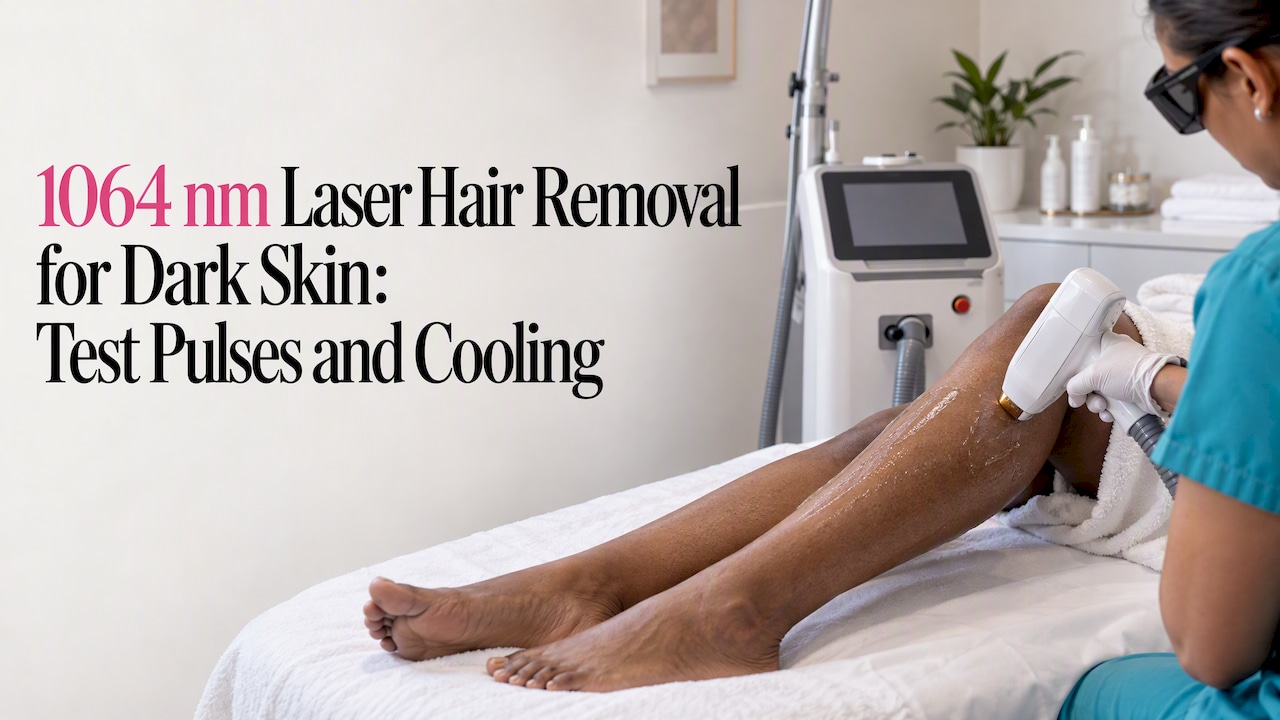

Laser hair removal may be an option for dark skin under medical oversight. A long-pulsed Nd:YAG ( 1064 nm ) is one commonly used choice. Safety depends on a skilled provider, a test pulse before the full treatment, active cooling, and conservative settings. Expect multiple sessions rather than a single visit.
TL;DR:
- Nd:YAG at 1064 nm is the usual choice; diode is an alternative, though blended diode results come from a small, single site pilot study.
- Delay treatment after tanning or while using photosensitizing medicines or products, and ask about physician oversight, test patches, settings, and cooling.
- Several visits spaced weeks apart are typical because only actively growing follicles respond; expect reduction, not guaranteed permanent removal, and possible maintenance.
- Redness, swelling, and discomfort usually last one to three days, but blisters, spreading redness, infection signs, or worsening pain need urgent medical care.
- Protect treated skin with sunscreen, avoid exfoliants until it heals, and contact the clinic about dark patches instead of using harsh bleaching products.
Table of Contents
- How does laser hair removal work on darker skin?
- Which lasers are recommended for dark skin?
- What are the safety risks, and how do clinicians reduce them?
- How many sessions will I need, and what will it feel like?
- How should I prepare and care for my skin?
- How do I choose a provider for dark-skin laser treatment?
- Why we insist on individualized, supervised care
- Laser hair removal for dark skin at our med spa
- FAQ
- Sources
How does laser hair removal work on darker skin?
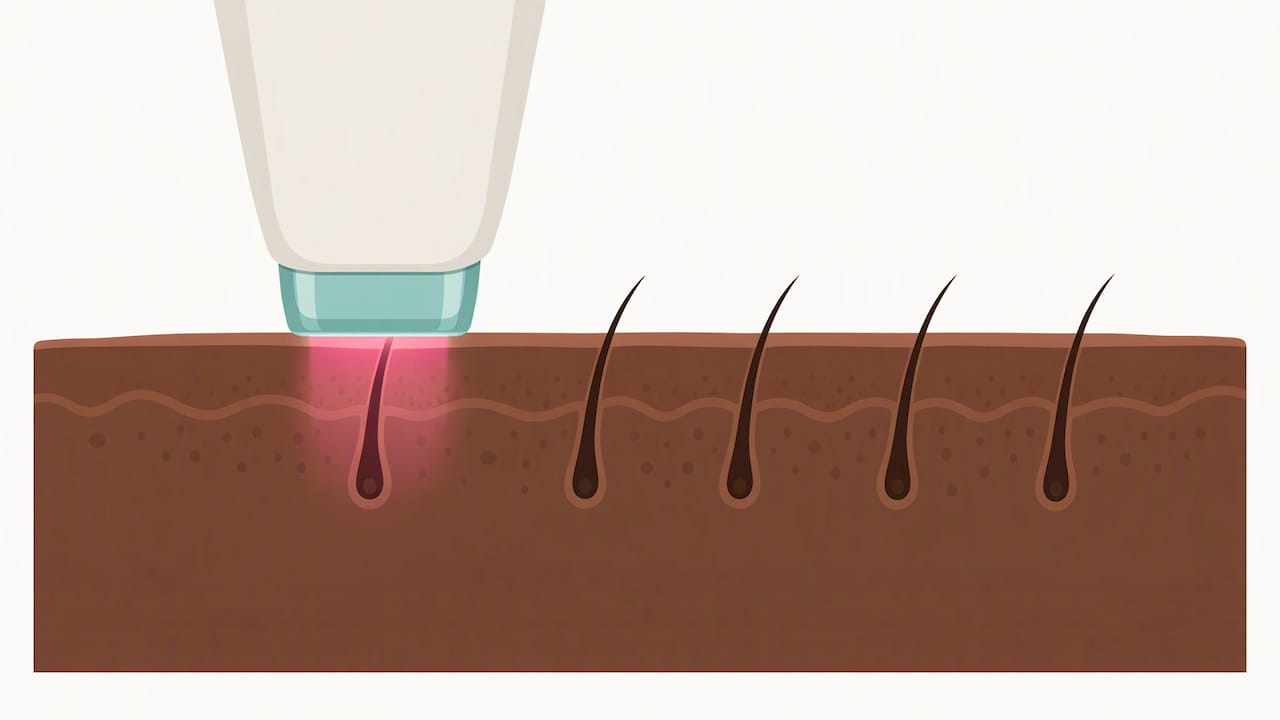
Lasers rely on selective photothermolysis: the light is absorbed by melanin in the hair follicle, heats it, and disables its ability to regrow hair. The complication is that your skin also holds melanin, and the more epidermal melanin you have, the more light the surface absorbs instead of the follicle. That is how burns and pigment changes happen.
Clinicians use the Fitzpatrick scale to assess risk. People with darker skin may need individualized settings, so the treatment plan should be tailored to your skin.
- Cooling: contact or cryogen cooling protects the skin surface during each pulse.
- Test pulses: a small patch is treated first, and we assess how your skin responds before treating the full area.
These precautions may help reduce risk, and your clinician can explain which are appropriate for your treatment.
Which lasers are recommended for dark skin?
The long-pulse Nd:YAG is the usual first choice. Clinical reviews describe it as commonly the safest option for hair removal in skin of color, and a systematic review and meta-analysis found long-pulsed Nd:YAG had favorable results for postinflammatory hyperpigmentation compared with IPL. The same analysis did not name one device as best across every outcome, so the right pick depends on your skin and your hair.
Diode lasers are the other main option. Reviews report them as mainly safe with low complication rates, and a small pilot study of skin types III and IV found a blended diode (810, 940 and 1064 nm) produced higher hair reduction and satisfaction than a standard 810 nm diode, with no long-term adverse effects. It was a single-site study with a small sample, so treat it as encouraging rather than settled.
Alexandrite has been reported to cause blistering in some patients with skin types V and VI, and IPL is generally a poor fit for very dark skin. We explain how IPL differs on our IPL treatments page.
- Nd:YAG (1064 nm): the common choice for deeper skin tones, with a favorable pigment-change profile when used correctly.
- Long-pulse or blended diode: a reasonable alternative when the settings are matched to your skin.
- IPL and short-wavelength devices: higher risk of burns or pigment changes on dark skin.
Pro Tip: Ask which wavelength the device uses, what pulse widths it offers, how it cools the skin, and whether a test patch comes first. A confident provider answers all four without hesitating.
What are the safety risks, and how do clinicians reduce them?
Most side effects are minor. The American Academy of Dermatology says discomfort, redness and swelling typically last one to three days. Rare complications include burns, blistering, infection, scarring, and permanent lightening or darkening of the skin. The AAD stresses that laser hair removal is a medical procedure that can be dangerous in inexperienced hands, and that these serious problems are rare when a medical doctor or a dermatologist’s direct supervision is involved.
Here is how we reduce the risk:
- Ask about the oversight available during treatment.
- A test pulse before the full area, with a wait to see how your skin reacts.
- Fluence raised gradually, never started high.
- Active cooling during every pulse.
- Sessions spaced to match your hair growth and skin recovery.
Treatment should wait if you have a recent tan or have used medications or products that make skin light-sensitive. Seek immediate emergency care if you develop blisters, spreading redness, signs of infection, or worsening pain after treatment.
How many sessions will I need, and what will it feel like?
Plan on a course of treatments, with the timing based on your hair growth cycles. Hair that is thick and dark generally responds better than fine or light hair, and results vary from person to person.
- Sessions: several visits spaced weeks apart, since only follicles in the active growth phase respond.
- Results: expect a meaningful reduction in hair, not a guarantee of permanent removal. Some regrowth, usually finer, is common, and occasional maintenance sessions may help.
- Sensation: most people describe a quick snap or warm sting. Cooling and topical numbing make it easier, and our laser hair removal pain guide covers what to expect.
- Cost: price depends on the size of the area and the number of sessions, so a consultation is the only way to get an accurate estimate.
How should I prepare and care for my skin?
Darker skin is more prone to postinflammatory hyperpigmentation, so the steps around the appointment matter as much as the laser.
Before treatment:
- Avoid tanning and sun exposure on the area.
- Stop any photosensitizing medications or products only as your clinician instructs.
- Shave the area as directed.
- Have a patch test first.
After treatment:
- Use sunscreen strictly on the treated skin.
- Skip exfoliants and harsh products until the skin heals.
- Use gentle moisturizers.
- Follow any topical melanogenesis inhibitor your clinician prescribes if pigment changes appear. Reviews of laser care in skin of color note that photoprotection and topical inhibitors help limit pigmentary complications.
Pro Tip: If you notice dark patches after a session, call us rather than reaching for home bleaching. Harsh products can irritate the skin and make discoloration worse. Our darkspot removal work is a follow-up option when it is needed.
How do I choose a provider for dark-skin laser treatment?
Use this checklist when you compare clinics:
- Confirm that a dermatologist or physician provides oversight, and ask about the credentials of the person operating the laser.
- Ask which device and wavelength they use, whether they do test pulses, and how they choose starting settings.
- Request before and after photos of patients with a similar Fitzpatrick type, and ask about their complication rate and follow-up care.
- Check that cooling and numbing options exist and that you get a written aftercare plan.
A clinic that welcomes these questions is a good sign. One that dodges them is not.
Why we insist on individualized, supervised care
We treat skin of color as its own clinical case, not a setting on a dial. That means an individual assessment first, a patch test, conservative starting protocols, and aftercare written for your skin. If you want an honest read on whether laser is right for you, schedule a consultation and let us look at your skin and hair.
— Chris
Laser hair removal for dark skin at our med spa
We offer laser hair removal, with plans built around your skin tone and hair type. Our protocols are designed for treatment on darker skin.

- Every plan starts with an assessment that determines the device and settings recommended for you.
- We use patch testing and conservative starting protocols.
- Free consultations let you ask questions before committing to anything.
- Financing and membership options are available to help spread the cost of a full course.
Book a consultation on our laser hair removal page and we will tell you what we would recommend for your skin.
This article is general information, not a substitute for advice from a qualified doctor. Consult a qualified healthcare professional about your own circumstances before acting on anything here.
FAQ
Will laser hair removal work on dark skin?
Yes, with the right device and protocols. Long-pulse Nd:YAG and carefully tuned diode lasers are commonly used on darker skin, and results depend on your hair color, texture and the number of sessions.
What disqualifies you from laser hair removal?
Recent tanning, certain photosensitizing medications, and active skin infection or irritation in the area are common reasons to wait. A consultation and patch test confirm whether treatment is right for you.
What’s the downside of laser hair removal?
It takes multiple sessions, and results are hair reduction, not a guarantee of permanent removal. Temporary redness and swelling are common, and the AAD notes serious complications are rare under medical supervision.
Does IPL work for brown skin?
It can reduce hair, but IPL is generally less suitable for darker skin because of the higher risk of burns or pigment changes. A meta-analysis found Nd:YAG had more favorable pigment outcomes than IPL.


