

Glutathione IV therapy is a drip that delivers the body’s own antioxidant straight into your bloodstream, and it is marketed for brighter, more even skin. The honest summary: published evidence for that skin claim is thin, no standard dose exists, and the FDA issued a safety alert on contaminated IV glutathione in August 2026. If your real goal is a clearer, more even complexion, there are treatments with a clearer track record for dark spots and dullness, and we walk through them below.
TL;DR
- Glutathione is a natural antioxidant made of three amino acids. IV drips are promoted for skin brightening, but the research behind that use is small and inconsistent.
- No dose or session count has been established. Published IV regimens ranged from 500 mg to 1200 mg per session, once or twice a week.
- On August 27, 2026, the FDA reported at least 30 adverse events tied to one contaminated lot of glutathione used in IV products. Where the ingredient comes from matters.
- IV glutathione is not FDA-approved for skin lightening, and insurance does not cover it. Drips typically cost hundreds of dollars per session.
- For hyperpigmentation and uneven tone, a free consultation at Sudbury Med Spa lets you compare treatments designed for exactly that concern.
Table of Contents
- What glutathione IV therapy actually is
- What the research shows for skin brightening
- Glutathione IV dosing: what is actually known
- Safety: the FDA’s August 2026 alert
- How much does a glutathione drip cost?
- If the goal is brighter, more even skin
- What to ask any provider offering a glutathione drip
- How we can help
- Our perspective
- FAQ
- Sources
What glutathione IV therapy actually is
Glutathione is a small molecule your cells make from three amino acids: glutamate, cysteine and glycine. It is one of the main antioxidants inside your cells, which is why it shows up in wellness and beauty marketing. A 2026 academic review explains that the IV route is promoted because it should, in theory, deliver the most glutathione to the body, since nothing is lost to digestion.
For skin, the idea goes like this: glutathione may interfere with tyrosinase, the enzyme that builds pigment, and may shift your skin’s pigment toward a lighter type. The same review stresses that the clinical significance of these mechanisms is still uncertain. In plain terms, the theory is plausible, but nobody has shown that it plays out reliably in people receiving a drip.
One practitioner interviewed by an American dermatology publication put it modestly: glutathione will not actually make skin lighter, but it can contribute to a more even complexion and glow. That is a useful way to set your expectations.
What the research shows for skin brightening
This is the part most pages ranking for this topic skip or soften, so here it is plainly.
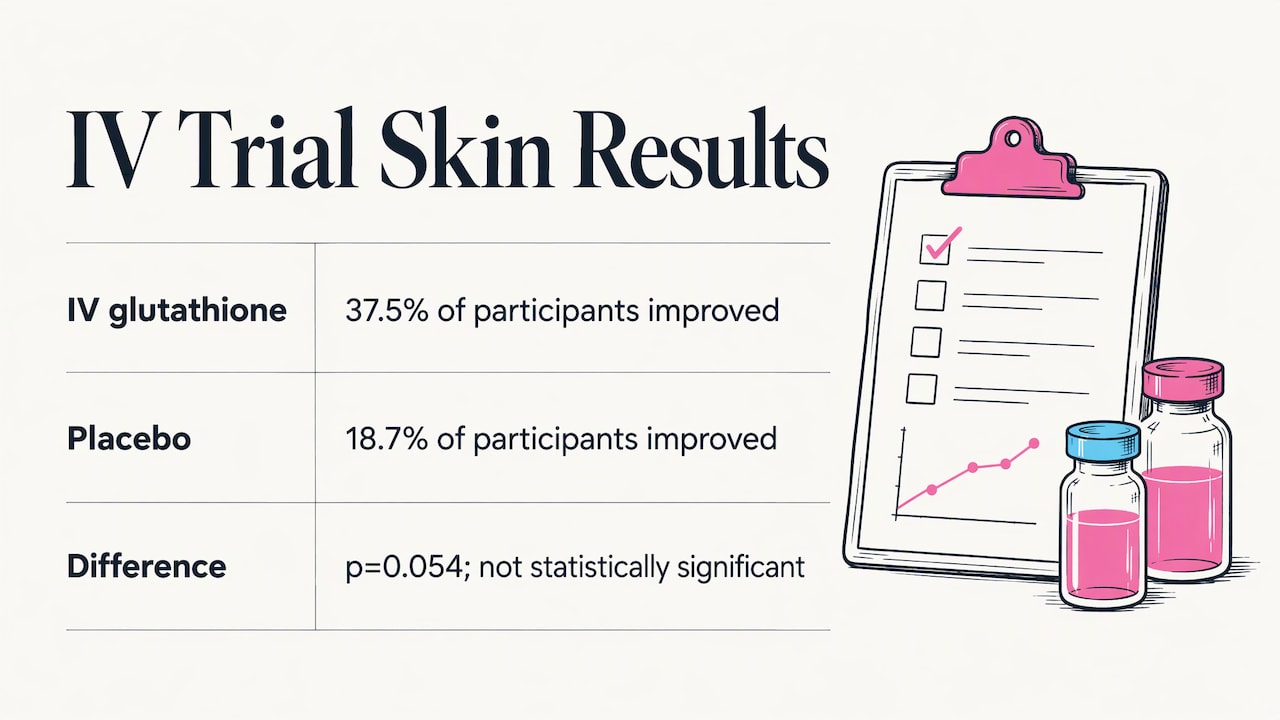
The IV trial record is small. A 2024 systematic review found only one placebo-controlled study of IV glutathione for skin lightening. In it, 37.5% of treated participants improved versus 18.7% on placebo, a difference that did not reach statistical significance (p=0.054). The review’s authors concluded that IV glutathione was not supported for skin lightening, while topical and oral forms showed modest lightening with fewer side effects.
Reviews keep landing in the same place. A 2026 narrative review searched the literature through March 2026 and found the evidence too limited to justify routine cosmetic use. It cited small studies, inconsistent methods, no standard way of measuring results, short follow-up, and the fact that vitamin C is routinely given alongside glutathione, which makes it impossible to know what the glutathione alone is doing. A 2026 systematic review on skin aging reached a similar view about IV use for cosmetic purposes.
Results may not last. A 2020 review of three trials found that effects were limited to some body areas and that skin color returned to its original state after treatment stopped.
Oral and topical forms have somewhat better support. A 2019 systematic review found that oral glutathione at 500 mg a day and a 2.0% topical oxidized glutathione could brighten sun-exposed skin as measured by melanin index, with no significant change in sun-protected skin. The authors still called the overall evidence inconclusive.
What does this mean for you? If a clinic promises a specific shade change or a guaranteed number of drips, that promise goes beyond what the studies can support. A drip may be part of a wellness routine you choose, but for a visible change in dark spots or tone, plan around treatments built to address pigment directly.
Glutathione IV dosing: what is actually known
People searching for dosing usually want a number to compare against what a clinic quoted. Here is what the published record says.
- The 2026 review above reports that published IV regimens ranged from 500 mg to 1200 mg per session, given weekly or twice weekly. No dose-response studies exist to show an optimal amount.
- The one placebo-controlled trial used 1200 mg twice weekly for 6 weeks.
- A survey of 71 dermatologists in India found that the most common IV dose was 1200 mg weekly over 30 minutes, repeated after 3 to 6 months depending on response. Notably, 54% of those dermatologists felt safety data for the therapy were insufficient.
- A dermatology reference notes that manufacturers suggest 600 to 1200 mg once or twice a week for skin whitening, with no guidance on how long to continue.
The practical takeaway: a quoted dose is a practice habit, not a standard. Any dose and schedule belongs in a conversation with a licensed physician who knows your health history, medications and kidney and liver function. Do not copy a regimen from a website or from a friend.
Safety: the FDA’s August 2026 alert
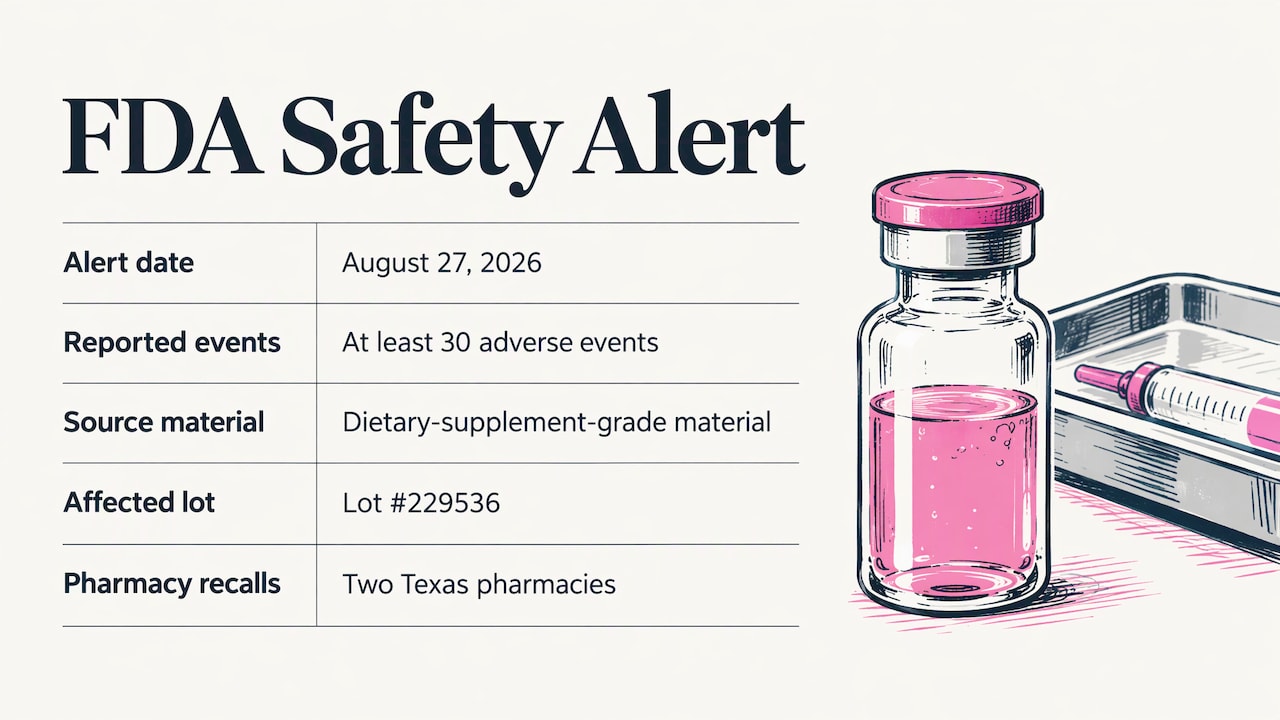
The most important recent development is a safety notice. On August 27, 2026, the FDA reported at least 30 adverse events after patients received IV glutathione, alone or mixed with other ingredients, compounded from dietary-supplement-grade material from a single lot (Lot #229536). Symptoms included fever, chills, pain, dizziness, signs of shock and sepsis-like reactions, and some people were hospitalized. The pattern was consistent with endotoxin exposure, which means fragments of bacteria in a product that is supposed to be sterile. Two Texas pharmacies recalled products for elevated endotoxin levels.
The FDA reminded compounders not to use dietary-supplement-grade ingredients to make injectable drugs. Compounding means a pharmacy prepares a custom product rather than an FDA-approved, mass-manufactured drug. Injectable and IV glutathione are typically made this way, according to a 2026 cost analysis. The FDA advises anyone with concerns to talk to a health care professional.
Other documented risks come from the research literature. A 2018 review described reports of severe skin reactions (Stevens-Johnson syndrome and toxic epidermal necrolysis), abdominal pain, thyroid and kidney problems, air embolism and sepsis linked to unsterile administration or counterfeit product. A Medscape article from November 2026 adds that most studies lasted weeks to six months with a few dozen participants, so rare effects and long-term high-dose risks are unknown.
Who should see a doctor before considering any glutathione drip
Talk to your physician first if you have kidney or liver disease, a thyroid condition, asthma or allergies, if you are pregnant or breastfeeding, or if you take regular medication. Ask which pharmacy prepared the product and whether it was made from pharmaceutical-grade ingredients. If you develop fever, chills, dizziness, rash or trouble breathing after any infusion, seek emergency care.
How much does a glutathione drip cost?
Prices vary by city and by what is added to the bag. A 2026 cost analysis reports that a glutathione infusion costs hundreds of dollars per session at drip bars, mobile services and aesthetic clinics, and cites one national mobile service listing an in-home beauty drip containing glutathione, B vitamins, vitamin C and biotin at $349. The same analysis notes that consult fees, hydration bags and vitamin add-ons often push the final receipt above the glutathione line item, and that no form of glutathione for skin whitening or anti-aging is FDA-approved or insurance-covered.
Because the studies suggest repeated sessions over weeks, the total can climb quickly. Before paying for a package, ask for the full price in writing, including every add-on.
If the goal is brighter, more even skin
Most people who search for glutathione drips want one of three things: fewer dark spots, a more even tone, or a fresher glow. Those goals have well-established routes, and this is where an in-person skin assessment pays off.
Start with the cause of the discoloration
Sun spots, melasma, post-acne marks and general dullness are different problems with different answers. A treatment that fades sun damage may not be the right call for another kind of pigment. That is why we begin with a free consultation: we look at your skin, ask about your history and sun exposure, and build a plan around your concern rather than around one product.
Treatments we offer for pigment and tone
- Dark spot removal targets individual areas of hyperpigmentation. You can see examples in our dark spot before-and-after gallery.
- Photorejuvenation and intense pulsed light (IPL) use light-based energy to address sun damage and uneven color. Our guide to sun damage face treatment explains what works and when to start.
- Microneedling with PRP uses your own platelet-rich plasma to support skin restoration. Clinicians also discuss add-ons such as tranexamic acid microneedling for pigmentation, and we can talk through what suits your skin.
- Hydrafacial and personalized facials are a gentler route to a fresh, even-looking complexion without downtime.
Protect the results
Pigment returns when skin is left unprotected. Daily broad-spectrum sunscreen is the single habit that keeps any brightening plan working. A side-by-side look at two popular daily facial sunscreens can help you pick one you will actually wear every day.
What to ask any provider offering a glutathione drip
If you decide to explore it anyway, with your physician’s go-ahead, these questions keep you safe:
- Who is the licensed clinician supervising the infusion, and will I be screened by a physician first?
- Which pharmacy compounded the glutathione, and is it made from pharmaceutical-grade material rather than dietary-supplement-grade powder?
- What dose and schedule are you proposing, and what is the reasoning for my case?
- What is the full price, with every add-on itemized?
- What happens if I react, and how will I be monitored during and after the infusion?
A provider who answers clearly and without promising a guaranteed shade change is behaving the way the evidence calls for.
How we can help
At Sudbury Med Spa, led by founder Natalie NgocTrang, we offer non-invasive treatments for fine lines, wrinkles, skin restoration and hyperpigmentation, with personalized treatment plans, free consultations and financing options. We have completed over 15,000 treatments in a clean, comfortable environment. Your first step is a consultation, where we look at your skin and map out what fits your goals. You can browse the full list on our services page or see our IV therapy and wellness offerings.
If you expect to come back regularly, our membership plans are priced at $399 per year (Silver), $499 per year (Gold) and $599 per year (Platinum).
Ready to talk through dark spots, uneven tone or dullness? Book a free consultation at Sudbury Med Spa and we will build a plan around your skin.
Our perspective
When someone tells us they want a glutathione drip, what they usually mean is: I want my skin to look clearer and more even. That goal is completely reasonable, and it deserves a plan that starts with your skin, not with a trend.
The research we have read says the same thing in different words. Reviews describe small studies, no agreed dose and short follow-up for IV glutathione, and in August 2026 the FDA flagged a contaminated ingredient lot. That tells us ingredient sourcing and medical supervision are not details. They are the whole point.
What we trust is a clear look at what is causing your pigment, a personalized treatment plan, and treatments designed for hyperpigmentation and skin restoration, delivered in a clean clinic by an experienced team. Our free consultation exists so you can ask every question before you commit to anything, including how we would combine treatments and keep results with daily sun protection.
If you are weighing a drip, bring the questions from this article with you. We are glad to go through them together.
Chris
FAQ
Is a glutathione IV better than a glutathione injection?
No study we found shows one is clearly better for skin. The IV route is promoted for higher bioavailability, but a 2026 review found evidence for skin benefit limited and inconsistent. Both are usually compounded products, so the quality of the pharmacy and the supervision of the clinician matter more than the delivery method.
How many glutathione drips does it take to see results?
No session count is established. The only placebo-controlled IV trial used 1200 mg twice weekly for 6 weeks, and its improvement over placebo did not reach statistical significance. Any clinic quoting a guaranteed number of drips is going beyond the published evidence.
Is glutathione IV FDA-approved for skin lightening?
No. According to the 2026 cost analysis and the evidence reviews above, injectable or IV glutathione is not FDA-approved for skin whitening, anti-aging or detox, and it is not covered by insurance. In August 2026 the FDA also reminded compounders not to use supplement-grade material in injectable products.
What are the side effects of a glutathione drip?
The FDA’s August 2026 report described fever, chills, pain, dizziness and shock-like reactions in patients who received IV glutathione made from one contaminated lot. Literature reviews also describe rare severe skin, kidney, thyroid and liver reactions. See a physician before any infusion if you have kidney, liver or thyroid conditions, are pregnant or take regular medication.
What can I do for dark spots instead?
Start with a skin assessment so the treatment matches the cause of your pigment. At our clinic that can include dark spot removal, photorejuvenation, IPL, microneedling with PRP or facials, plus daily sunscreen to protect your results. A free consultation is the place to begin.
Sources
- Glutathione for skin lightening via intravenous, oral, and topical routes (2026 review)
- Aesthetic IV: Bypassing the gut to get glowing (The Dermatology Digest)
- Glutathione as a skin-lightening agent and in melasma: a systematic review (2024)
- Glutathione in Skin Aging and Tissue Regeneration: a systematic review (2026)
- Systemic Glutathione as a Skin-Whitening Agent in Adults (2020)
- The clinical effect of glutathione on skin color and other conditions (2019)
- Analysis of usage pattern of glutathione by dermatologists (IJCED)
- Glutathione, Altmeyers Encyclopedia
- FDA: reminder to compounders not to use dietary supplement grade glutathione in injectables
- Glutathione for skin lightening: a regnant myth or evidence-based? (2018)
- Glutathione Supplements: Health Benefits or Just Hype? (Medscape)
- Glutathione cost in 2026: IV drip vs. injection vs. oral
- Tranexamic acid microneedling
- EltaMD UV Clear vs Supergoop! Unseen Sunscreen


