
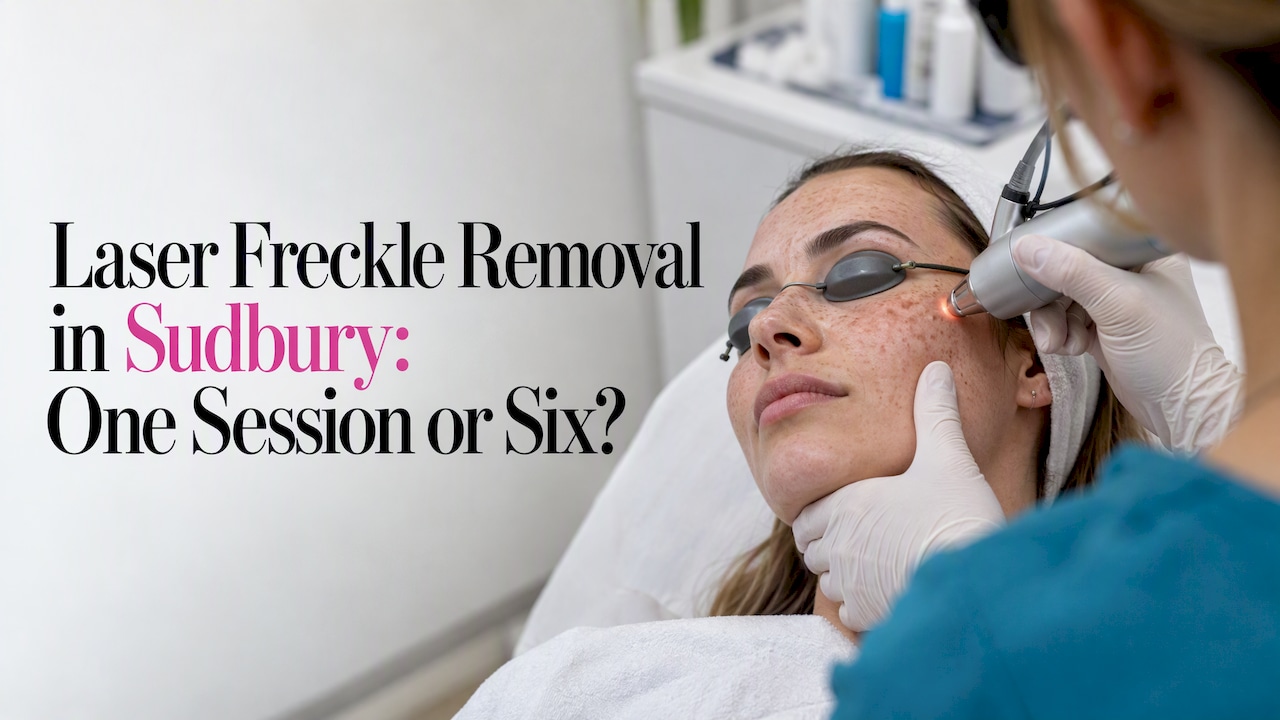

Laser treatment can meaningfully fade or clear many freckles, especially with picosecond or Q-switched devices that target melanin directly. Most people need one to six sessions depending on the device and the depth of pigment, with a short recovery of scabbing and redness lasting one to two weeks; consider professional care packages for comprehensive treatment plans available at Boost Beauty Lounge. Results hold up best when you choose a qualified provider and commit to strict sun protection before and after treatment.
TL;DR:
- ASDS guidance puts Q-switched and picosecond treatments at one to three sessions, while IPL commonly takes three to six, depending on pigment depth and response.
- A prospective study reported about 74.5% average clearance after one session using a 730 nanometer picosecond laser, but results vary with skin tone and pigment depth.
- Darker skin tones face greater risk of postinflammatory pigment changes; one small picosecond study reported such changes in about 8.3% of cases.
- Avoid sun and tanning for several weeks before treatment, postpone if recently tanned or sunburned, and protect healing skin with daily SPF 30 or higher.
- Choose a dermatologist certified by a medical board or a clinic with physician oversight, ask about device and wavelength choices, and expect informed consent.
Table of Contents
- How lasers and light treatments work on pigment
- Common device types used for freckles and when each is chosen
- Sessions, expected results, and timeline
- Risks and side effects: what to expect and how they vary by skin tone
- Before and after care: preparation, sunscreen rules, and follow-up
- Who should perform the procedure and how to choose a safe provider
- What we look for in a freckle assessment
- Is freckle removal worth it for most people?
- Ready to talk through your options in person?
- FAQ
- Sources
How lasers and light treatments work on pigment
Laser and light devices work by targeting melanin, the pigment that makes freckles visible. The energy is absorbed by that pigment and converts to heat or mechanical force, breaking the clustered melanin into smaller fragments that the body clears naturally over the following weeks.
Two main effects come into play:
- Photothermal effect: longer pulse durations heat the pigment, which works well but carries more risk of heat spreading to surrounding skin.
- Photomechanical effect: ultra-short picosecond pulses shatter pigment with pressure waves rather than heat, which tends to reduce collateral injury.
Where the pigment sits also matters. Freckles sitting in the epidermis respond differently than deeper dermal pigment, and that depth is part of why providers choose different wavelengths and pulse settings for different patients.
Common device types used for freckles and when each is chosen
Several device families are used for freckle reduction, each with its own pulse behavior and ideal use case:
- Q-switched lasers (ruby, alexandrite, Nd:YAG): deliver nanosecond pulses and have long been a standard choice for epidermal pigment.
- Picosecond lasers: use shorter, picosecond-range pulses that work photomechanically. A prospective study of a 730-nm picosecond laser reported strong single-session clearance with relatively low rates of pigment complications.
- IPL and broad-spectrum light: treat pigment across a range of wavelengths in one pass, often requiring more sessions but useful for superficial pigmentation spread across larger areas.
- Alexandrite and Nd:YAG: chosen partly for skin tone, since certain wavelengths carry lower risk of pigment complications in darker skin types.
Wavelength selection is not one-size-fits-all. A provider who asks about your skin tone and freckle depth before picking a device is doing the assessment correctly, not stalling.
Sessions, expected results, and timeline
Session counts vary by device. ASDS guidance notes that Q-switched and picosecond lasers typically need a few sessions, while IPL series may require more sessions.
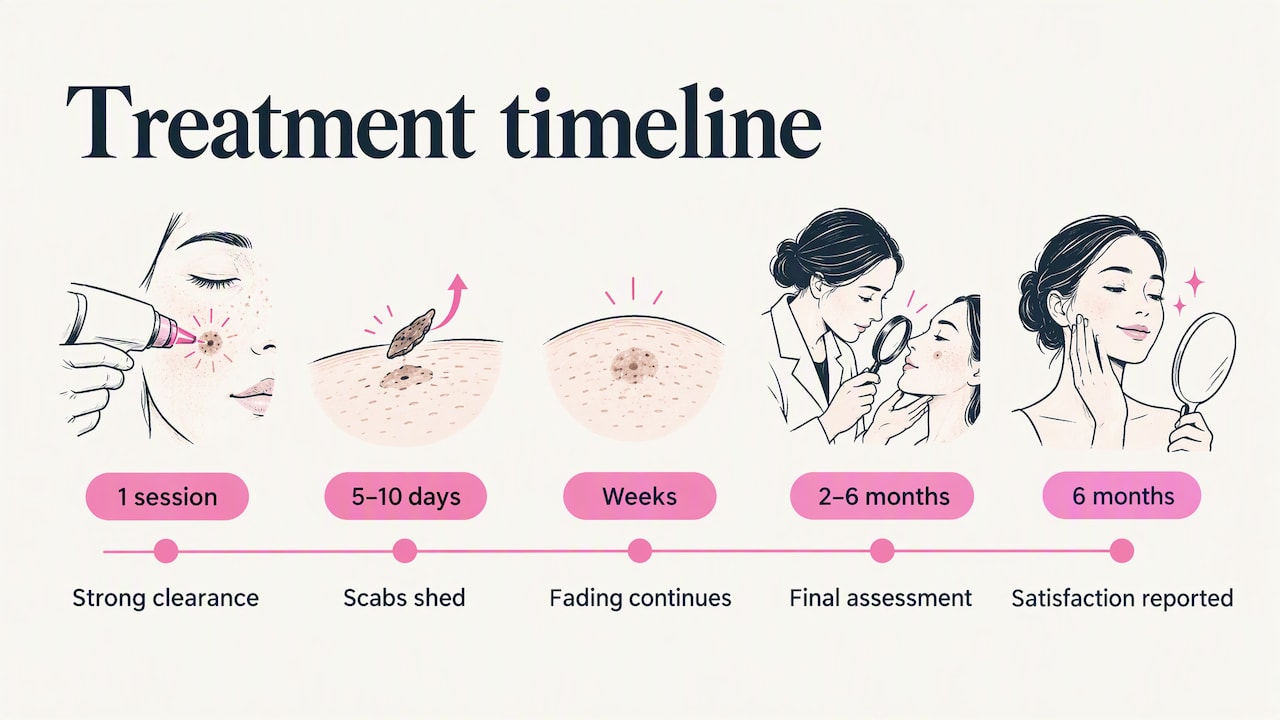
A prospective study of a 730-nm picosecond laser reported strong freckle clearance after a single session, with scabs shedding within 5 to 10 days. Broader clinical reviews describe high patient satisfaction with pigment-targeting lasers at the six-month mark. Expect fading to continue over several weeks, with a final assessment typically made between two and six months. New freckles can still form from sun exposure, so touch-up sessions down the road are common.
Risks and side effects: what to expect and how they vary by skin tone
Most people experience redness, swelling, and temporary scabbing that resolves within one to two weeks.
- Pigment changes: post-inflammatory hyperpigmentation is more common in darker skin tones, and hypopigmentation can also occur. One small picosecond study found hyper- or hypopigmentation in about 8.3% of cases.
- Burns and scarring: uncommon when an experienced provider selects the right settings, but risk rises when treatment is performed without proper training or supervision.
- Mitigation: a conservative test spot on a less visible area, cautious energy settings, and following every pre- and post-treatment instruction given at consultation.
Before and after care: preparation, sunscreen rules, and follow-up
Preparation starts before you ever sit in the treatment chair.
- Avoid tanning beds and direct sun exposure for several weeks ahead of your session.
- Reschedule if you have a recent tan or sunburn, since treating sun-affected skin raises the risk of pigment changes.
- After treatment, cleanse gently and resist the urge to pick at any scabs that form.
- Apply SPF 30 or higher daily and add a hat or physical barrier when outdoors, a point the American Academy of Dermatology treats as critical to preventing pigment complications.
- Contact your provider promptly if you notice blistering, worsening pain, or signs of infection.
Pro Tip: Keep treated skin out of direct sun for at least four weeks after your session, even on cloudy days, since UV exposure during healing is the most common reason freckles return faster than expected.
Who should perform the procedure and how to choose a safe provider
Treatment outcomes depend heavily on who holds the device. The American Academy of Dermatology notes that safety and results are closely tied to the provider’s training, and professional guidance favors board-certified dermatologists or physician-supervised clinics for laser pigment work.
Before booking, ask about:
- The provider’s credentials and whether a physician oversees treatments on-site.
- The specific device and wavelength being used, and why it fits your skin tone.
- Before-and-after examples from real patients and a clear informed-consent process.
Walk away from any provider who skips consent discussion entirely, has no physician oversight, or promises guaranteed, flawless results.
What we look for in a freckle assessment
Every freckle pattern responds differently depending on depth, density, and skin tone, so we build a treatment plan around an individual assessment rather than a one-size-fits-all protocol. Our approach draws on laser pigment treatment experience across different devices and skin types, which shapes how we match wavelength and settings to each patient.
Is freckle removal worth it for most people?
Freckle removal often delivers a visible, satisfying change, but it is not a permanent fix. New freckles can form wherever skin sees unprotected sun again, so the real commitment is pairing treatment with daily sun protection, not just the sessions themselves. If any freckle changes color, shape, or size before or after treatment, that calls for a medical evaluation rather than a cosmetic one.
— Chris
Ready to talk through your options in person?
Free consultations are available to assess your freckles, skin tone, and goals before recommending a device or session plan, so you are never guessing at what a treatment will involve. Our photorejuvenation and laser services cover pigment-focused treatments, and we can walk you through pricing and membership options such as our SILVER, GOLD, and PLATINUM plans if you are planning for multiple sessions.
- Ask us directly about which device and wavelength fit your skin tone.
- Bring questions about aftercare and sun protection to your consultation.
- Review financing and membership options if you are budgeting for a series of sessions.
Book a consultation through our services page to get a personalized plan started.
This article is general information, not a substitute for advice from a qualified doctor. Consult a qualified healthcare professional about your own circumstances before acting on anything here.
FAQ
Can freckles be removed through laser?
Yes, laser and light-based devices can reduce or clear many freckles by targeting melanin directly. A prospective picosecond laser study reported average clearance of about 74.5% after a single session, though individual results depend on skin tone and freckle depth.
How much does it cost to laser off a freckle?
Pricing depends on the device used, the number of freckles treated, and how many sessions your skin needs, so costs vary by clinic and treatment plan. We recommend requesting a free consultation to get an accurate quote based on your specific skin and goals.
Which laser is best to remove freckles?
Picosecond and Q-switched lasers are commonly favored for freckles because they target pigment efficiently, often clearing it in fewer sessions than IPL. The right choice depends on your skin tone and freckle depth, which a qualified provider should assess before treatment.
Is freckle removal worth it?
Many patients see noticeable fading or clearance and report high satisfaction with results at six months, according to clinical reviews of pigment-targeting lasers. It is not permanent, though, since new freckles can form with future sun exposure, so ongoing sun protection matters as much as the treatment itself.
How many sessions does laser freckle removal typically take?
Most Q-switched and picosecond treatments take one to three sessions, while IPL series often run three to six sessions, according to ASDS guidance. The exact number depends on freckle density, depth, and how your skin responds to the first session.
Sources
- Clinical reviews/meta-analyses on pigment laser efficacy (Wiley, 2023)
- ASDS pigment treatments guidance (PDF)
- Prospective study of 730-nm picosecond laser for freckles (PMC)
- American Academy of Dermatology clinician guidance


