
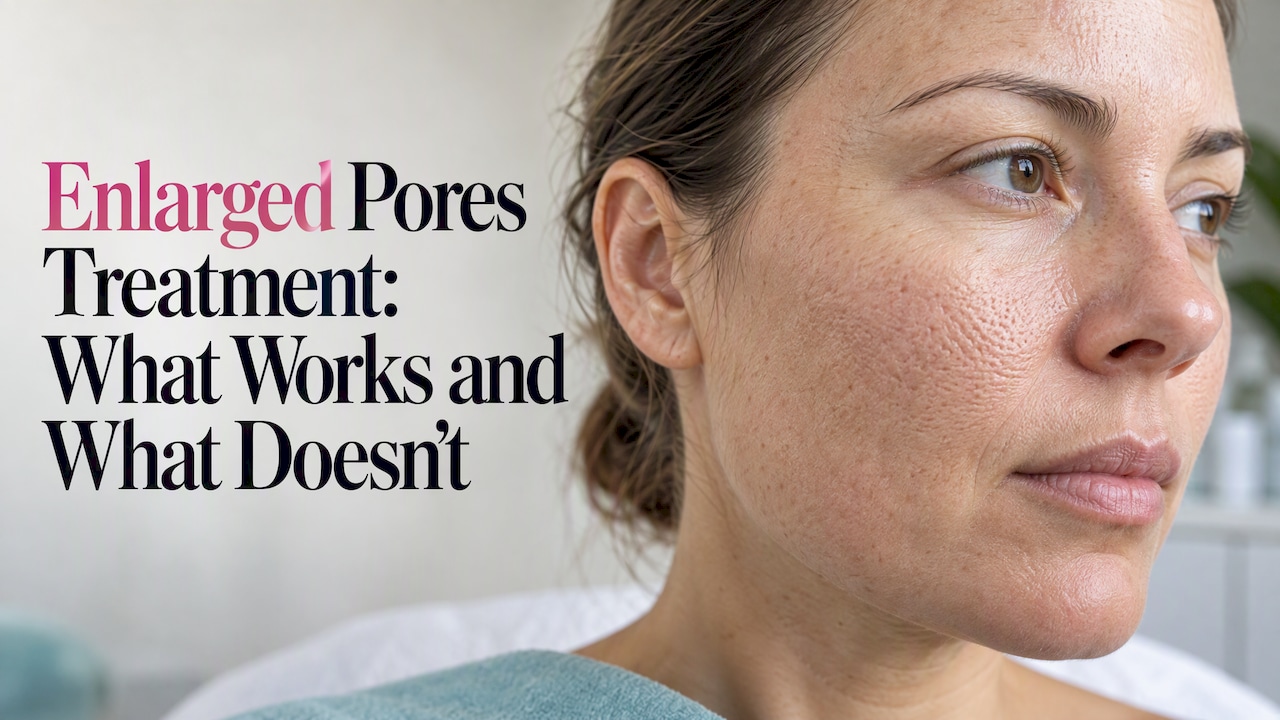

You can’t permanently change the size of your pores, but you can make them look smaller. The best results come from a steady home routine, topical retinoids, and, for stubborn cases, in-office procedures such as microneedling, radiofrequency microneedling, chemical peels and fractional lasers. Below, we explain why pores look larger, what each option can realistically do, how many sessions to plan for, and when it’s worth booking a professional.
TL;DR
- Pore size is largely genetic, so no treatment “closes” pores for good. The goal is to keep them clear and to build collagen around them so they look less noticeable.
- Start with the basics: a non-comedogenic cleanser twice a day, daily SPF 30 or higher, and a nightly retinoid if your skin tolerates it and you are not pregnant or breastfeeding.
- In-office options (microneedling, radiofrequency microneedling, peels, fractional lasers) work in a series, usually 3 to 6 sessions spaced weeks apart, with results building over months.
- Skip at-home microneedling and DIY procedures. The infection and scarring risk is real, and the devices are too short to do much.
- A free consultation is the quickest way to learn which option fits your skin type, budget and schedule.
Table of Contents
- Why pores look enlarged in the first place
- Start with the routine that supports every other treatment
- In-office treatments for enlarged pores
- What results to expect, and how fast
- Why not do it at home?
- Our perspective: match the treatment to the pore
- Plan your pore treatment with us
- Choosing a provider: questions worth asking
- FAQ
- Sources
Why pores look enlarged in the first place
A pore is the opening of a hair follicle and its oil gland. Everyone has them, and their baseline size is mostly inherited. As the Cleveland Clinic explains, genetics set pore size, so you can’t shrink them permanently. What you can change is how visible they are, by keeping them clear of oil and debris and by boosting collagen in the surrounding skin.
A review of facial pore treatments in the Journal of Cosmetic Dermatology lists several factors that make pores more prominent: age, gender, genetics, UV exposure, ethnicity and sebum production. In practice, that means a few common patterns:
- Oily skin. More sebum stretches the pore opening and traps debris, especially across the nose, forehead and chin.
- Sun damage and aging. Collagen breaks down over time, and the walls around the pore lose support, so openings look wider and more oval.
- Clogged pores. The American Academy of Dermatology notes that when pores clog, they expand, which makes them more noticeable.
- Picking and squeezing. The resulting inflammation can make pores look larger and may leave permanent scars.
Knowing which pattern is yours matters, because oil-driven pores respond well to retinoids and peels, while age-related, “sagging” pores usually need collagen stimulation.
Start with the routine that supports every other treatment
Board-certified dermatologists describe a consistent, gentle routine as the foundation of any pore plan. Professional treatments work better, and last longer, when this part is in place.
- Cleanse twice a day with a non-comedogenic cleanser. Don’t scrub.
- Use only non-comedogenic products. The AAD recommends choosing skin care and makeup labeled non-comedogenic, meaning they won’t clog pores. Oil-free labels help too.
- Wear sunscreen every day. Broad-spectrum SPF 30 or higher protects the collagen you’re trying to build.
- Leave your pores alone. Picking and squeezing cause inflammation that backfires.
Retinoids: the best-studied topical
According to the AAD, topical retinoids, including retinol, can help manage enlarged pores by unclogging them and increasing collagen production. They can irritate at first. The AAD suggests washing your face, waiting 30 minutes, then applying the product at night, since retinoids increase sun sensitivity. Retinoids are not recommended during pregnancy or breastfeeding, so check with your doctor if either applies.
Salicylic acid and other exfoliating ingredients
Salicylic acid is a beta hydroxy acid that works inside the pore to dissolve oil and debris. It can make pores look cleaner and smoother, but like all home products, it manages appearance rather than changing structure.
What doesn’t do much
Ice, cold rollers and similar “tighteners” give only a temporary effect lasting a few minutes. Clay masks and pore strips can lift surface debris, but pores refill. If you feel you’ve outgrown what your cabinet can do, that’s the point where professional options make sense.
In-office treatments for enlarged pores
When home care plateaus, in-office procedures target what creams can’t reach: the collagen framework around the pore and the deeper oil gland. Here is how the main categories compare.
| Treatment | How it helps | Typical plan | Best for |
|---|---|---|---|
| Microneedling (with or without PRP) | Controlled micro-injuries trigger collagen production | Series of sessions weeks apart | Texture, acne scars, mild to moderate pores |
| Radiofrequency microneedling | Adds heat energy at the needle tip to remodel deeper tissue | Series of sessions | Larger pores, mild laxity |
| Fractional laser | Creates tiny columns of treated skin to resurface and tighten | Series of sessions | Pores plus texture, sun damage |
| Chemical peels | Exfoliate the surface and clear the pore lining | Repeated, often monthly | Oily, clog-prone skin |
| HydraFacial-style cleansing facials | Extract debris and hydrate | Regular maintenance | Congested pores, pre-event polish |
Microneedling
The AAD describes microneedling as a medical treatment that uses tiny needles to puncture the skin, and lists large pores among the concerns dermatologists treat with it. The tiny injuries prompt the skin to produce collagen, which is why it’s sometimes called collagen induction therapy. It suits all skin tones, but it isn’t for everyone: active infections, keloid scarring, or current isotretinoin use are reasons to avoid it. Your provider may also ask you to pause retinoids for a period beforehand.
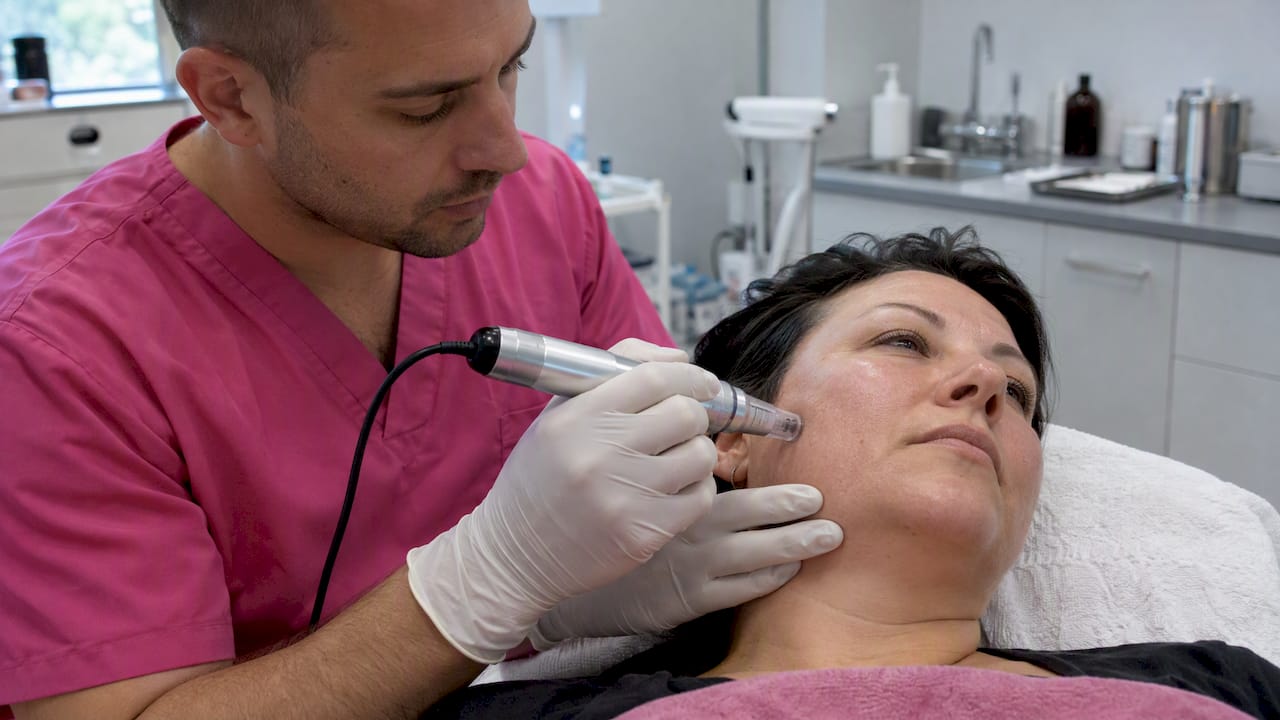
Platelet-rich plasma (PRP) is often added. The idea is to apply your own concentrated platelets to the skin after needling to support healing. At Sudbury Med Spa, we offer microneedling with PRP as part of our skin treatment menu, and you can read how we use PRP more broadly on our PRP page.
Radiofrequency microneedling
This approach combines needles with radiofrequency energy. A retrospective study of 75 patients looked at fractional microneedle radiofrequency for enlarged facial pores and found that results varied by facial area and that efficacy improves with more sessions. Pain and redness were common but transient. Morpheus 8, which we offer, belongs to this radiofrequency microneedling family; we’ll tell you in your consultation whether it or standard microneedling better suits your skin.
Fractional CO2 and other lasers
Laser is one of the most searched routes for pores, and the research gives a measured picture. In a study of fractional CO2 laser at low energy, participants saw a 54.5% reduction in the number of enlarged pores after three sessions spaced four weeks apart. That is a meaningful improvement, not a disappearance. The study involved Korean patients, and results can differ by skin type and device, so treat the figure as an indication of what’s possible rather than a promise.
If your pores come with acne scarring or uneven texture, laser resurfacing may address several concerns at once. You can see how we approach laser treatment for acne scars, and our photorejuvenation page covers light-based treatment for sun damage and tone.
Chemical peels and facials
Peels exfoliate the surface and loosen what’s packed into the pore. They are a good fit for oily, clog-prone skin, and they work well as a maintenance layer between more intensive sessions. Our facial treatments, including personalized facials and Hydrafacial, focus on deep cleansing and hydration, which can make pores look cleaner right away. Think of them as upkeep rather than a structural fix.
What results to expect, and how fast
The most common mistake is expecting overnight change. Effective clinical treatments, including lasers and microneedling, usually take a series of about 3 to 6 sessions spaced weeks apart, and improvement shows up gradually over several months as collagen builds. The AAD notes that some people need annual maintenance sessions for microneedling, and that sun protection helps keep results.
A realistic timeline looks like this:
- Week 1 after a session: redness, mild swelling or tightness are typical and settle in days. Side effects in the studies above were generally mild and temporary.
- Weeks 4 to 8: skin texture often looks smoother as the next session is scheduled.
- Months 3 to 6: collagen remodeling continues, and the full effect of the series becomes visible.
- Afterward: daily sunscreen, a good routine and occasional maintenance keep the gains.
Be wary of anyone promising permanently smaller pores after one visit. The honest answer is improvement in appearance, which varies from person to person.
Why not do it at home?
Dermarolling and home microneedling pens are everywhere on social media. Dermatologists consistently advise against them. The Cleveland Clinic points out that in-office devices typically use needles of 1.5 to 2 mm, while at-home tools are generally limited to 0.5 mm or less. That means lower efficacy, and poor technique or unclean tools bring a high risk of infection and scarring.
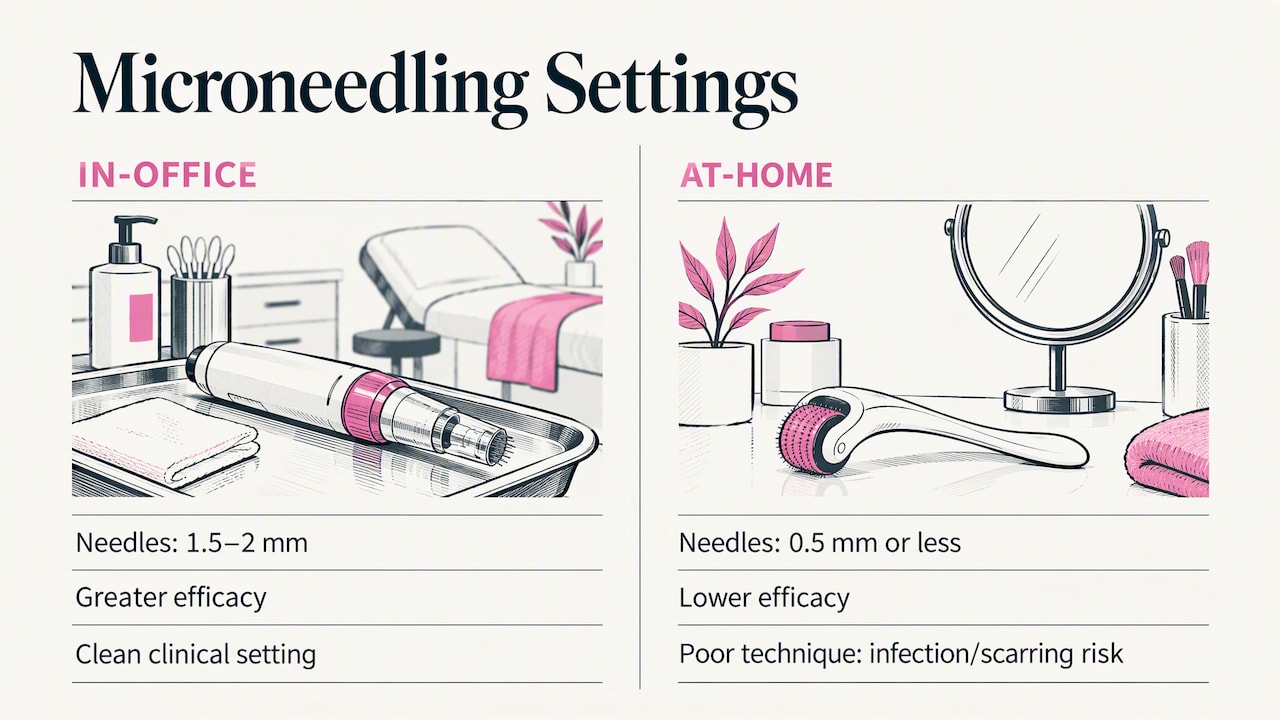
The AAD has also warned about the trend of performing complex cosmetic procedures at home, noting that results shown online may owe a lot to filters and lighting, and that at-home users can’t manage serious reactions. If you want microneedling, have it done by a trained professional in a clean clinical setting.
Our perspective: match the treatment to the pore
We see many people arrive having tried five serums and a dermaroller, frustrated that nothing “closed” their pores. Our first job is to reset that expectation kindly: pore size is inherited, and what we can change is how the skin around the pore looks and behaves.
That’s why we don’t start with a device. We start with a look at your skin: is it oily and congested, or is collagen loss making the openings look stretched? Oily, clogged pores usually do well with peels, facials and a retinoid. Age and sun-related pores tend to need collagen stimulation, such as microneedling with PRP or radiofrequency microneedling. Many people end up with a combination, planned in stages so your skin can recover between visits.
We also think the plan should be honest about time. A series of treatments, a strong sunscreen habit and patience beat any single appointment. And if a treatment isn’t right for you, for example because of active infection, keloid-prone skin or isotretinoin use, we’ll say so. Collagen supplements come up often in these conversations; if you’re curious about that side of skin health, this comparison of collagen and gelatin supplements is a place to read more, but supplements are not a substitute for the procedures above.
— Chris
Plan your pore treatment with us
At Sudbury Med Spa, we offer microneedling with PRP, Morpheus 8, laser treatments for acne scarring, facial peels and Hydrafacial, all under one roof. Consultations are free, and we build a personalized plan around your skin concerns, schedule and budget. Financing options are available, and you can see the details on our cosmetic financing page.
If you expect to come back regularly for facials and skin care, our memberships are listed at SILVER $399 per year, GOLD $499 per year and PLATINUM $599 per year. You can compare them on our membership page. Ready to talk through your options? Explore our skin treatments or book a free consultation through sudburymedspa.com.
Choosing a provider: questions worth asking
Whoever you choose, ask these before you book:
- Who performs the treatment, and what is their training? The AAD notes that microneedling usually calls for an expert, such as a board-certified dermatologist, for safety and results.
- Is this treatment suited to my skin tone and history? Past keloids, active infections, isotretinoin use, pregnancy and breastfeeding all change the answer.
- How many sessions will I need, and what will they cost in total? A clear plan avoids surprise bills.
- What should I stop using beforehand? Dermatologists often recommend a 2 to 4 week prep routine before microneedling, which can include pausing retinoids temporarily.
- What does aftercare look like? Expect strict sun protection and a gentle routine while the skin heals.
If your pores are paired with persistent acne, rosacea or sudden skin changes, see a board-certified dermatologist first. Those conditions can drive pore appearance, and treating the cause comes before cosmetic work.
FAQ
Can enlarged pores be permanently shrunk?
No. Pore size is mostly set by genetics. You can make pores look smaller by keeping them clear and by boosting collagen with retinoids, microneedling, radiofrequency treatments or lasers. Results hold best with daily sunscreen and, for some treatments, periodic maintenance.
Is laser good for large pores?
It can be. In one study, fractional CO2 laser treatments reduced the number of enlarged pores by 54.5% after three sessions four weeks apart. Results depend on the device, your skin type and the number of sessions. A consultation will show whether laser, microneedling or a peel makes more sense for you.
Is retinol good for pores?
Yes, for many people. Retinoids help unclog pores and increase collagen production, according to the AAD. Start slowly, apply at night and wear sunscreen daily. Avoid them if you are pregnant or breastfeeding unless your doctor says otherwise.
How many sessions will I need?
Most in-office pore treatments are done as a series of about 3 to 6 sessions, spaced a few weeks apart. Collagen keeps remodeling for months afterward, so the best results appear gradually. Your provider will set a schedule based on your skin.
Does at-home microneedling work?
Not well, and it carries risk. At-home devices are generally limited to 0.5 mm needles, while professional devices use 1.5 to 2 mm, and poor technique can cause infection or scarring. A trained professional is the safer route.
Sources
- What can treat large facial pores? (American Academy of Dermatology)
- Microneedling can fade scars, uneven skin tone, and more (American Academy of Dermatology)
- Five unsafe skin care trends to avoid (American Academy of Dermatology)
- 7 Dermatologist Approved Tips to Shrink Your Pores (Cleveland Clinic)
- Fractional CO2 laser for enlarged facial pores in Korean patients (PubMed)
- Fractional microneedle radiofrequency for enlarged facial pores, 75 patients (PubMed)
- The efficacy and adverse effects of treatment options for facial pores (Journal of Cosmetic Dermatology)


