
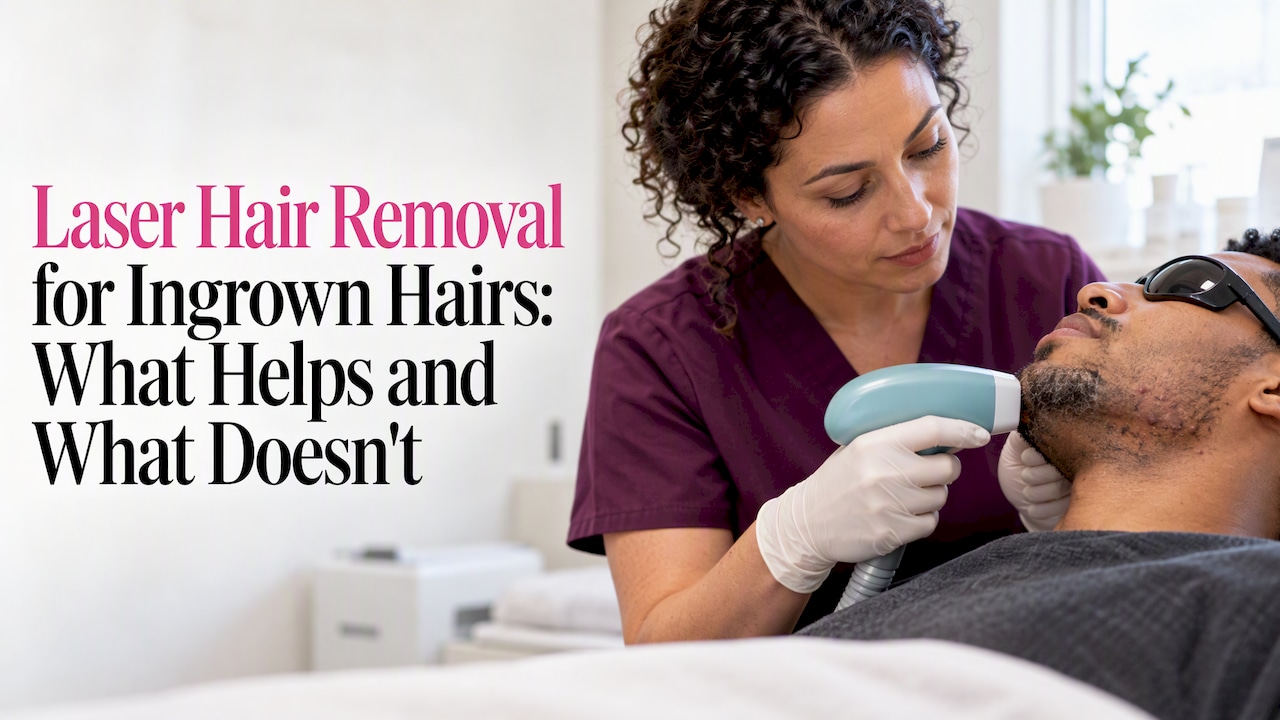

For most people with chronic ingrown hairs, laser hair removal helps, because it targets the thing that causes them: the hair follicle. Fewer and finer hairs mean fewer chances for a hair to curl back into the skin. It isn’t instant, it isn’t permanent for everyone, and a few mistakes (shaving the wrong way, picking at bumps, tanning) can make the first weeks look worse before they look better.
This guide covers how laser treatment works on ingrowns, what the research shows, who gets the best results, and how to handle the bumps that appear along the way.
TL;DR
- Laser hair removal reduces hair growth at the follicle, which is why it is a recognized option for chronic ingrown hairs and razor bumps (pseudofolliculitis barbae).
- Expect a series of sessions, not one visit. Studies and dermatology groups describe several treatments spaced weeks apart.
- Skin tone, hair type and the right laser settings matter more than the brand name on the machine. Darker skin needs a provider who knows how to adjust.
- Stop shaving close, tweezing and waxing between sessions, avoid sun, and don’t pick at bumps.
- Bumps that are painful, spreading or pus-filled belong in front of a clinician, not a DIY routine.
Table of Contents
- Why ingrown hairs happen in the first place
- How laser hair removal helps ingrown hairs
- What the research actually shows
- A realistic timeline
- Why you may still get bumps after laser
- Skin tone and hair type: where the right laser matters
- Getting ready: what to do before your first session
- Aftercare when you’re prone to ingrowns
- Our perspective: ingrowns are a plan, not a single treatment
- Laser hair removal at Sudbury Med Spa
- When laser is not the right answer
- Choosing a provider if you’re prone to ingrowns
- FAQ
- Sources
Why ingrown hairs happen in the first place
An ingrown hair is a hair that grows back into the skin instead of out of it. The body treats it like a splinter: you get a red bump, sometimes a pustule, sometimes dark marks that linger long after the bump flattens.
The usual triggers are close shaving, waxing and tweezing. They leave a sharp or broken hair tip that can pierce the skin as it grows. Thick, curly hair is the classic setup. A JAMA Dermatology study describes pseudofolliculitis barbae as a common disorder in people with thick, curly hair, and notes that treatment options are limited.
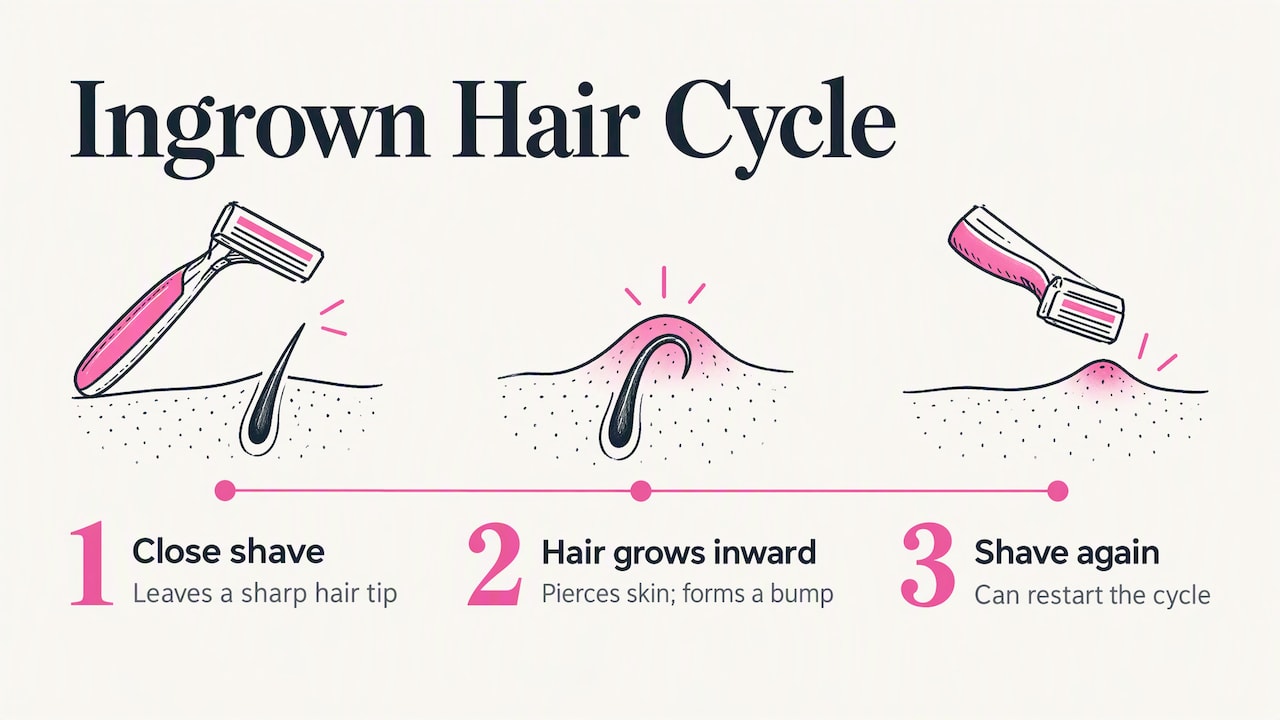
Here is the key point for this topic: a cycle forms. You shave to get rid of the bumps, shaving creates new ingrowns, and the cycle repeats. The Mayo Clinic advises stopping shaving, tweezing or waxing until the condition improves, which usually takes 1 to 6 months. That advice works, but many people can’t or won’t stop removing hair, which is where laser comes in.
How laser hair removal helps ingrown hairs
A laser sends light energy into the hair follicle. The pigment in the hair absorbs it, the follicle heats up, and over repeated sessions the follicle produces thinner, lighter hair or stops producing hair at all.
That affects ingrowns in three ways:
- Fewer hairs. Fewer follicles means fewer places for a hair to turn inward.
- Finer hairs. Thinner hair is less able to pierce skin and trigger inflammation.
- No more close shaving. As growth thins, you shave less often, so you stop re-creating the sharp tips that cause the problem.
The American Academy of Dermatology notes that laser hair removal can help treat issues like razor burn and ingrown hairs. The FDA-side evidence points the same direction: laser hair removal is formally indicated for pseudofolliculitis barbae, so this is a recognized medical use, not just a cosmetic perk.
What the research actually shows
The numbers are encouraging, with limits worth knowing.
In an observational study using an 810-nm diode laser, all patients had more than 75% improvement in papules and pustules after three treatments, with more than 50% reduction in hair density at follow-up. Sessions in that study were spaced 6 to 8 weeks apart.
Two caveats:
- It was a small, older observational study, not a promise for every person.
- “Reduction” is the honest word. The Cleveland Clinic says laser hair removal isn’t permanent, though results last longer than shaving or waxing, and most people need about six treatments.
For a related condition, the AAD says laser can help people with hidradenitis suppurativa. Sessions are typically about 6 weeks apart, and it can take 6 or more to reach the results you want. If your “ingrown hairs” are deep, recurrent and painful in the underarms, groin or under the breasts, that may be a different condition, and a dermatologist should look at it.
A realistic timeline
| Stage | What you may notice |
|---|---|
| Sessions 1 to 2 | Hair sheds over a couple of weeks. Existing ingrowns may still surface as the hair is pushed out. Skin may be pink or bumpy for a day or two. |
| Sessions 3 to 4 | Fewer new bumps. Hair is sparser and finer. Shaving gets easier. |
| Sessions 5 to 6 and beyond | Many people see a clear drop in bumps. Thicker or hormone-driven areas may need more sessions. |
| Maintenance | Touch-ups as your provider recommends if some hair returns. |
This is a general pattern, not a guarantee. Your provider should set expectations after seeing your skin and hair in person.
Why you may still get bumps after laser
It is common to see small bumps in the days after a session. Most are simple irritation of follicles that were just treated. Others are the old ingrowns finally working their way out as treated hairs shed. These are different from a true flare-up, and the next section helps you tell them apart.
Here are the usual reasons laser and ingrowns clash:
- Shaving with a worn razor or going against the grain between sessions. You need to shave before treatment, but a gentle, single-pass shave is better than a close, irritating one.
- Waxing or tweezing between sessions. The laser needs the hair root present to work, so these methods undo your progress. They also bring back the sharp hair tip problem.
- Aggressive scrubbing. The AAD points out that many people wrongly blame hygiene and scrub harder. Conditions like pseudofolliculitis barbae are medical conditions that respond best to non-irritating care, not harsh exfoliation.
- Settings that are too low. A rare risk called paradoxical hypertrichosis, where new hair is stimulated, is suspected to be linked to too-low energy. It typically appears after 3 to 7 sessions, more often on the face and neck in women or the shoulders and back in men. Fixing it can take extra sessions or a switch to electrolysis.
- Sun exposure. Tanned skin raises the risk of burns and pigment changes, which can leave marks that look like lingering ingrowns.
Skin tone and hair type: where the right laser matters
People with darker skin and tightly curled hair are often the ones most affected by ingrown hairs, and also the ones told that laser isn’t for them. That is outdated.
A 2023 review found that modern, properly operated Nd:YAG 1064 nm systems are considered gold standard for treating darker skin safely, and that older or non-specialized equipment is where the risk lies. A separate literature review points to long-pulsed Nd:YAG 1064 nm lasers for Fitzpatrick types IV to VI, and stresses that success depends on choosing the right fluence, pulse duration and wavelength for your skin type, hair texture and body area.
In practice, ask any provider:
- Which laser wavelengths do you have, and which would you use on my skin?
- Do you do a test pulse first?
- How do you cool the skin?
- Who adjusts the settings, and how often do they treat my skin type?
We explain how this works in our guide to 1064 nm laser hair removal for dark skin, including test pulses and cooling.
Getting ready: what to do before your first session
Preparation changes how your skin responds, and it matters even more if you are prone to ingrowns.
- Skip tanning. The AAD says to avoid indoor and outdoor tanning and sunless tanners, and to use broad-spectrum, water-resistant SPF 30 or higher sunscreen daily. Tanned skin raises the risk of burns and pigment changes. Our page on laser hair removal and sun exposure goes into more detail.
- Tell your provider your history. Mention any tendency to form keloids, any history of herpes outbreaks, and any medications such as isotretinoin. The same AAD page lists these as things to disclose.
- Stop waxing and tweezing. The laser needs the hair root. Trim or shave gently instead.
- Shave the area the way your provider tells you. Usually this means a clean, single-pass shave a day before, with a fresh blade.
- Show up with calm skin. If you have open, infected or very inflamed bumps, tell your provider. They may want you to wait.
Pain is another common worry. We cover what laser hair removal feels like and how clinicians manage it.
Aftercare when you’re prone to ingrowns
The first week after treatment is when most people go wrong.
- Keep the area cool and clean. A cool compress and gentle cleanser are enough for the first day or two.
- Skip friction and heat. Tight clothing, hot tubs, saunas and hard workouts can irritate treated follicles.
- Exfoliate gently, and only later. Many clinics suggest light exfoliation a few days after treatment once the skin has settled. Follow your provider’s timing and avoid scrubs, brushes and harsh acids on irritated skin.
- Don’t pick. Squeezing or digging at a bump can cause scarring and dark marks. If a hair is visible at the surface and loose, a clean approach is to let it work its way out.
- Use sunscreen. Treated skin is more sensitive to sun.
- Shave only if needed. Use clippers or a single gentle pass. The Skin of Color Society notes clippers are often suggested to prevent close shaving.
How to tell what you’re seeing
| What you see | Likely meaning | What to do |
|---|---|---|
| Small pink bumps within a day or two of treatment | Normal follicle reaction | Cool compress, leave it alone |
| Dark specks pushing out of the skin over 1 to 3 weeks | Treated hairs shedding | Be patient, no tweezing |
| One bump with a hair trapped under it | Old ingrown surfacing | Gentle care, no picking |
| Painful, swollen, pus-filled or spreading redness | Possible infection | Contact a clinician |
| Deep, recurrent nodules in the underarms or groin | May be another condition | See a dermatologist |
Our perspective: ingrowns are a plan, not a single treatment
At Sudbury Med Spa, when someone comes in asking about ingrown hairs, we start with their skin, not the machine. The same laser settings are not right for everyone. Hair thickness, skin tone and the body area all shape the plan, which is why we build personalized treatment plans and offer free consultations before you commit.
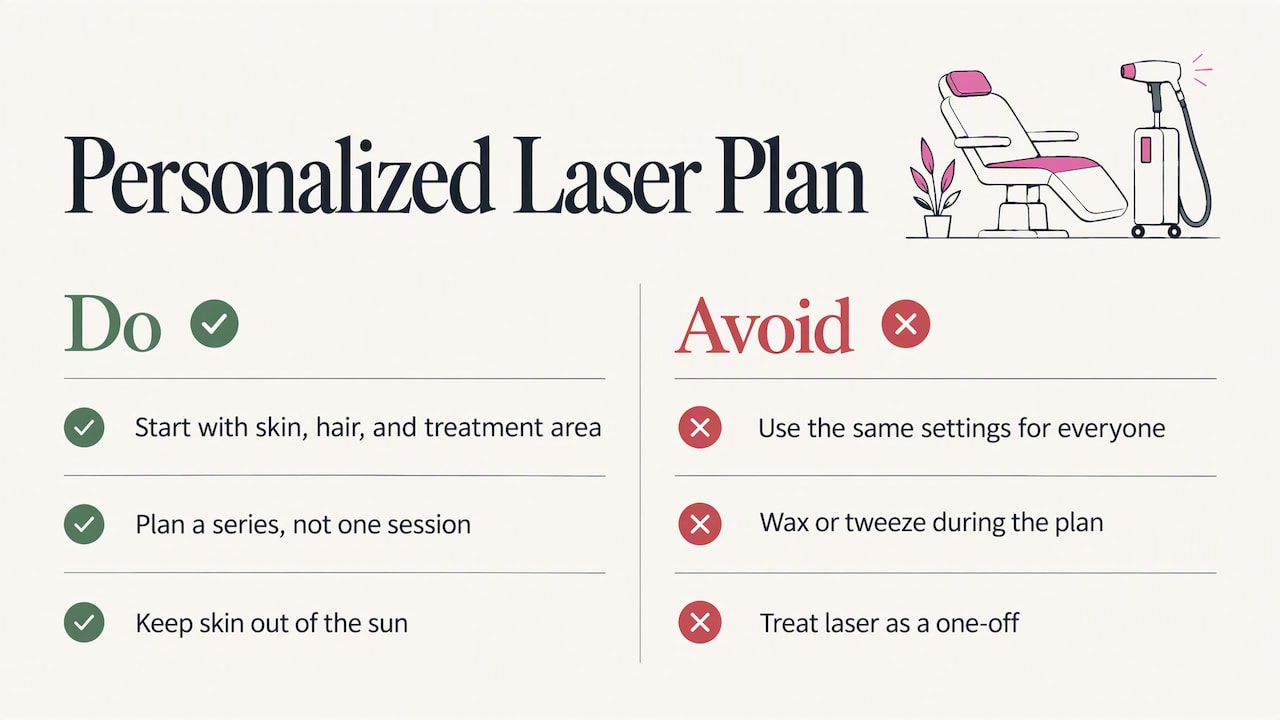
We also tend to say the unglamorous part out loud: laser is a series, and the best results come from patients who stop waxing and tweezing and keep their skin out of the sun. Clients who treat the series as the plan, not a one-off, tend to be happiest with the outcome. If hormones may be involved, for example with PCOS, expect more sessions and possibly medical care alongside; we explain that in our guide to laser hair removal for PCOS.
Our team, led by founder Natalie NgocTrang, has completed more than 15,000 treatments, and we keep the clinic clean and comfortable so you can focus on the plan, not the setting.
— Chris
Laser hair removal at Sudbury Med Spa
If you’re dealing with ingrowns and want an honest read on whether laser is right for you, book a free consultation. We look at your skin tone and hair type, talk through the number of sessions to expect and build a plan around your schedule. You can see our laser hair removal service or browse our full services menu. Financing options are available.
When laser is not the right answer
Laser has real limits, and a good provider will tell you so.
- Very light, gray or red hair. Lasers target pigment. Hair with little pigment responds poorly, and a different method such as electrolysis may suit you better.
- Active infection or open lesions. Treatment waits until skin has healed.
- Suspected folliculitis or another skin disease. Not every bump is an ingrown hair. Infected or inflammatory follicle conditions need a diagnosis, and sometimes medication, before or alongside laser.
- Recent sun exposure or tanning. Wait until the tan fades.
- Certain medications or histories. Isotretinoin, keloid tendency and herpes history all change how a provider plans treatment, as the AAD preparation guidance notes.
If you have any of these, a consultation is the right first step. For bumps that are painful, keep coming back in the same deep spots, or don’t respond to home care, see a board-certified dermatologist or your primary care clinician.
Choosing a provider if you’re prone to ingrowns
The questions that matter most:
- Who performs the treatment, and what is their training? In Massachusetts, laser treatments sit within regulated practice, so ask who will be holding the device and who supervises.
- Which lasers do you use? A clinic that treats a range of skin tones should have options beyond a single wavelength.
- Do you do a test spot? For skin prone to dark marks, a test pulse is a sensible step.
- What is the plan for the number of sessions? Be wary of anyone who promises permanent results after one visit.
- What aftercare will you give me in writing? Clear instructions reduce flare-ups.
- Can I have a consultation first? At our clinic it is free.
FAQ
Does laser hair removal help ingrown hairs?
Yes, for most people. Laser reduces the number and thickness of hairs by damaging the follicle, which means fewer hairs to curl back into the skin. A diode laser study found more than 75% improvement in bumps after three treatments. Results vary by skin, hair and settings.
Can I get laser hair removal if I already have ingrown hairs?
Often yes, as long as the skin isn’t infected, open or badly inflamed. Tell your provider about the bumps at your consultation. They may ask you to let the skin calm down first, and you should avoid picking or tweezing before treatment.
Why do I have bumps after laser hair removal?
Small bumps in the first days are usually a normal reaction of treated follicles. Hairs shedding over the next few weeks can also look like new ingrowns. Painful, swollen or pus-filled bumps, or ones that spread, need a clinician to check for infection.
Is laser safe for darker skin that gets razor bumps?
It can be, with the right equipment and technique. Reviews describe Nd:YAG 1064 nm lasers as the gold standard for Fitzpatrick types IV to VI, with settings individualized to the person. Ask about test pulses, cooling and experience with your skin tone before you book.
How many sessions do I need?
Most people need about six, according to the Cleveland Clinic, and some need more depending on the area and hormones. Sessions are spaced weeks apart so the follicles can be caught in their growth phase. Your provider can give you a better estimate after seeing your skin.
Sources
- Treatment of Pseudofolliculitis With a Pulsed Infrared Laser, JAMA Dermatology
- Ingrown hair: Diagnosis and treatment, Mayo Clinic
- Laser hair removal: Overview, American Academy of Dermatology
- Laser hair removal: Preparation, American Academy of Dermatology
- Hidradenitis suppurativa: Tips dermatologists give their patients, American Academy of Dermatology
- FDA 510(k) summary, CoolGlide aesthetic lasers
- Laser Hair Removal: How it Works & What to Expect, Cleveland Clinic
- Adverse Events of Light-Assisted Hair Removal: An Updated Review
- Laser Hair Removal: An Update and Literature Review (2023 to 2025)
- Pseudofolliculitis Barbae, Skin of Color Society


